Small towns 1950’s America is the world view from a child’s perspective
This blog is a retrospective view of small towns life in 1950s Midwest America. Small towns is a child’s view from the age of 4 to 12 some 50 years after the fact using historical records, personal experience, family folklore, letters, and photographs. The content is both anecdotal and theme based using multiple posts to present story lines.
Housing, work life and economics, and recreation define small towns culture. Family relationships, food, and the social and geographic structure of the neighborhoods shape daily life. Climate and geography influence everything. The content is light on genealogy and heavy on relationships and context. The blog themes are: Agricultural Roots, Small Town Traditions, American History Connections, Family Customs, Family Economic Values, and Recreation and Leisure.
Home is a unique place
Knowing where home is and why it feels like home is one the core themes of this small towns narrative. The series Roots, in 1977, had the highest rating in TV history. Some education methodologies use the term “sense of place” to signify a unique configuration of environmental and psychological factors that, taken together, elicits a feeling that this place is unique and has an easily recognizable identity. The Eastern Colorado Plains wind was the sound of home to my father.
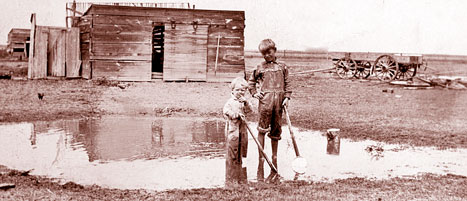
Children make a playground out of a mud puddle after an Eastern Colorado
storm in 1925. An 1885 Illinois farmer’s son has moved to Colorado.
Photo edit by Rodger 2007.
The Colorado plains wind had some very unpleasant effects if it was blowing dust or the temperature was 20 below zero. However, for my father, it was still the sound of home. This narrative is about the sounds, hills, or country roads that create the feeling that a place is home. One of the themes of this blog is that a child’s habitat must include playgrounds and toys. The mud puddle in the picture became a toy on a playground. The year 1953, Roxana, Illinois, extended German family, oil refineries, the agricultural heartland, and the 8th largest city in the United States define the sense of place for this story.
Highways and byways bind events, people, places and time
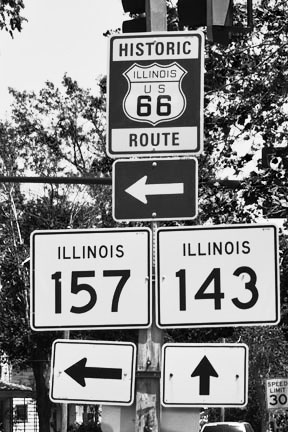
Edwardsville Illinois intersection is the way to
grandmother’s. Weekly trips bind family life.
Photo by Rodger 2007
Frequently traveled roads become links that create personal connections to a place. Grandmother’s house, the Mississippi River at sunset, and the fishing cabin, are some of the locations that connect the threads of this narrative.
Some of the roads, like Illinois HWY 143, are only few miles in length, serve only a few thousand people, and will not show up on a national map. Illinois 143 retains much of its family farm country flavor almost 70 years after I first saw it. Others, like Route 66 have a deep history and a cult following for the folklore. The restoration and preservation effort for Route 66 includes many states from Illinois to California. The Chain of Rocks Bridge state park memorializes the section that crossed the Mississippi river between Illinois and Missouri.
One of the country roads that I frequently walked was only 1 mile in length. The road was almost 100 years old when I first saw it. The canopy of fall colors created by the strange fall weather patterns is more memorable than any national park scene I have experienced.
Events before and after 1947 illuminate the small towns story
The plot for small towns begins in 1947. Backstory events and action beginning in the 19th century and early 20th century set the stage and unveil the plot. The small towns backstory, the wide master shot of the theme, is an extension of the idea of sense of place. The settling of western Illinois in the 1830’s, the coal mining industry boom, the development of the oil industry in the 1920’s, the Great Depression, and World War II are part of the matrix of events behind the story for small towns.
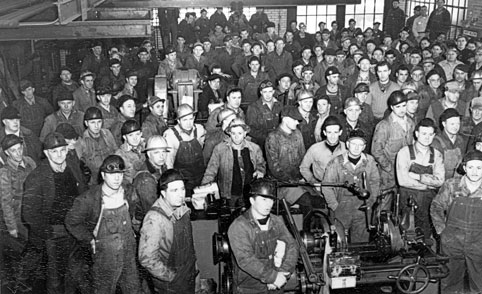
Roxana, Illinois Shell Oil Refinery pipefitter employees pose for a picture
1952. The refinery employed 3000, and powered a growing middle class.
Photo edit by Rodger 2005
Standard Oil Co constructed an oil refinery at the newly formed town of Wood River Illinois in 1908. Shell Oil Co constructed an oil refinery at a location adjacent to Wood River in 1918. The Village of Roxana, incorporated in 1922, included the, location of the Shell Oil Co refinery. This industry created a rapidly growing economy that provided jobs, local products such as heating oil, and gasoline for the rapidly growing markets in the US and Europe where the the price of gasoline increased from 9 cents in 1911 to $1 in 1913.
My aunt moved from Missouri to Illinois in the 1920s when her husband went to work for Shell Oil Company. When my mother was orphaned in 1927, she moved from Missouri to Illinois to live with her sister and brother in law in Wood River, Illinois.
The search for paradise and the American Dream were on hold
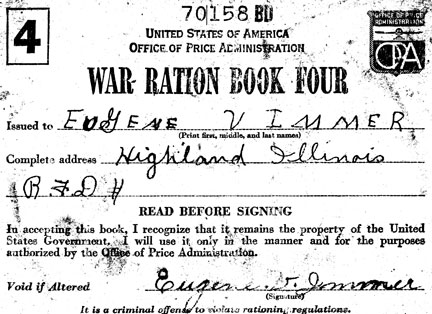
Food ration book issued to my uncle in 1944. The war effort influenced your job, what you ate, and where you lived.
Photo by Rodger.
Ration books defined shopping for groceries During World War II. Ration books listed the items of food, such as rice and beans, and the quantities you were allowed to buy. Life was slowly returning to normal after World War II but normal was not a pleasant state for many Americans. The economy was still recovering from the depression of 1929. Families, like my mother and I, that had moved in with relatives during the war, adjusted to the surge in housing demand created by returning servicemen. The search for paradise was on again as the economy and attitudes transitioned from war and depressi9on. New cars, housing, and even children’s toys slowly became available.
I believe that paradise found is a good perspective for life from age 4 to 12. On balance life was very good and the stresses were brief and largely forgotten. Many dimensions of the world began to open. Athletics became a preoccupation, a joy, and a passion. Reading became a joy and a passion. Family recreation and quality family time increased steadily throughout this time period.
The way this website works
- The smalltowns button on the menu bar at the top of this page will open the list of posts. The slide show at the top of the page displays images that represent site themes. Click an image to display of the posts for that theme currently on the site.
- Provide feedback in the comments form at the bottom of the post. The site administrator reviews comments before posting for view. Please focus comments on the specifics of site themes.
- The schedule for new posts added is approximately weekly. The schedule for completing content for small towns is several months.
- Demographics and other statistics referenced in posts are researched. Notes for more in depth history will be included for some topics, e.g. the sports leagues maintained by the armed services during WWII.
- I will send links on Facebook to people who have expressed interest in this history. Comments are welcome, the best way to send comments is on the web site in the comments form on the post page.
- Information regarding updates and frequently asked questions are be posted on the Galleries and Site Info page.
The menu of topics for this site
- Agricultural Roots
- Small Town Traditions
- American History Connections
- Family Customs
- Family Economic Values
- Recreation and Leisure