The rotating pictures above represent the categories of topics displayed by clicking in the box at the right.

50s childhood backroad memories biology geology and history

My 50s childhood includes many backroad memories. Travel to visit relatives, recreation, and the agriculture extended family life of my home state of Illinois and neighboring states influenced the experience. Grandparents, aunts, uncles, and cousins lived on dairy farms in Illinois and Missouri. Although Urban sprawl was well underway, the highway system to connect the rapidly growing cities and towns was decades in the future. In 1950 there were 200 thousand family farms in the state of Illinois. My extended family’s dairy farms on dusty dirt roads, or sometimes graded gravel roads, created childhood backroad memories. An Uncles’s Illinois River fishing cabin was located on a network of sometimes paved and often unsigned county roads with the final destination on a dusty dirt road. Backroad travel included up-close views of hardwood forest colors, picturesque creeks, caves, and fireflies. Finding solitude and a unique sense of place were around the next turn on a dusty dirt road.
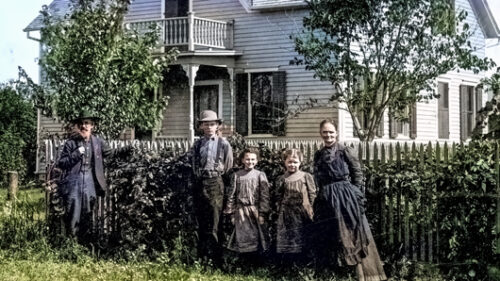
50s childhood backroad memories of extended family on a dusty dirt road Madison County, Illinois dairy farmer and Civil War veteran with daughters' family in 1903 his daughters two older girls had died in childhood, Victorian house portrays prosperity in the gilded age

extended family at the end of an Illinois prairie dusty dirt road great, great grandfather and daughters’ family photo edited and colorized by rodger

My first camping trip created forever 50s childhood backroad memories
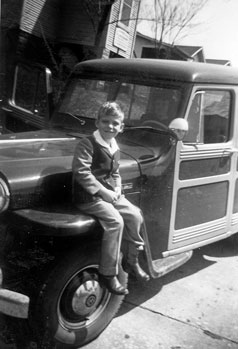
50s childhood backroad memories transportation for family camping trips crossed creeks and navigated dusty dirt roads

transportation for camping trips on dusty dirt roads photo edit by rodger

My 50s childhood backroad memories begin with a Missouri Ozark rivers camping trip. The experience previewed my parents’ traditions for recreation and extended family relationships. My 4-year-old senses were focused on people tubing on the river, our campsite on the beach, and the crayfish in pools on the edge of the river. The trip was multipurpose, recreation and a mini family reunion with my uncle’s family. My father and his brother had returned from WWII service less than 2 years earlier and were adapting to civilian life. Before the war their interests had been fishing, swimming, baseball, and work. Vivid memories of Ozark rivers and a sense of place never faded during subsequent decades.


I had unsuccessfully searched for that campsite on a trip to Missouri in 1970, 23 years earlier. When I travelled to Missouri and Illinois to introduce relatives to my wife, I could not find the river. Thirty-seven years later in 2007 I asked my aunt who had been on that trip if she could remember which river, it was. I reviewed the photos I had taken a few days earlier in the Ozarks. There it was the beach on the North Fork of the White River where I had camped 60 years earlier. My adult knowledge of family history strengthened my emotional connection to the beach location where I had experienced the unknown river.
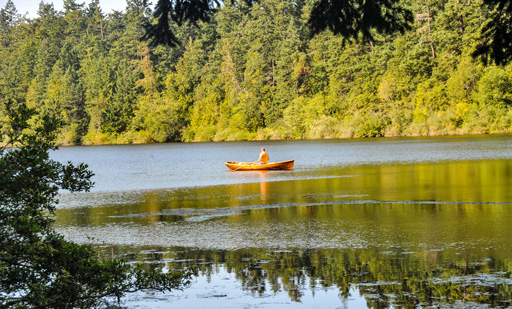
50s childhood backroad memories Heart Lake a frequent hangout for several years one half mile from my house on a dusty dirt road in Anacortes Washington, trails, sandy beaches for swimming, fishing, and frequent hangouts with friends

Heart Lake Anacortes Washington childhood hangout in the 50s
photo by rodger 2011

The family culture for backroad adventures became the context for my childhood in Illinois and Washington and then my adult life exploring more than 100 national and state parks with my park ranger wife.

The streets in my newly created Washington State neighborhood, the tract where we had purchased a house, was still under construction when we arrived for my father to begin work in 1955. The streets in the tract, about 50 houses on 4 short streets were paved. The streets leading out of the tract to the commercial district and to other parts of the Island were not paved. As a result, daily routines to work, shop, and school travelled dusty dirt roads. Forty first street, the first street south of the neighborhood where I lived, the way to the playgrounds of neighborhood children on trails and hills in a nearby forest, was a dusty dirt road.

Thousands of dusty dirt roads lead to a unique sense of place
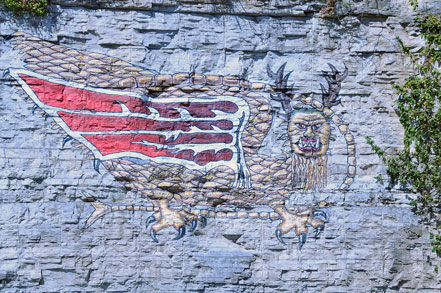
Recreation of Mississippian Indian culture drawing on the bluffs at Alton. the Indian village at nearby Cahokia was larger than London England in 1100 ad 50s childhood backroad memories traverse 11th century highways

Indian culture Piasa Bird drawing on the bluffs at Alton, Illinois photo by rodger 2007

I was born in Alton, Illinois and lived part of my early life on a dairy farm near Highland, Illinois. The Alton location was a crossroads for millennia of civilizations and United States development. French explorers Jaquet and Lafayette, Lewis and Clark, and Mark Twain sailed the Mississippi there. The Piasa Bird drawing was observed by the French explorers in 1673 during their exploration. The original drawing, created centuries earlier by native Americans, was destroyed during the 19th century by quarrying rock from the bluffs. The picture above was recreated to preserve the history. I lived in a log house during WWII was built in 1885 by my great grandfather. The farmhouse was at the end of a dusty dirt road. The road was level and only about one eighth of a mile in length, however it could become impassable by car during heavy rain or sometimes a combination of freezing rain and snow. Road maintenance was readily accomplished by hitching a rake to the tractor.
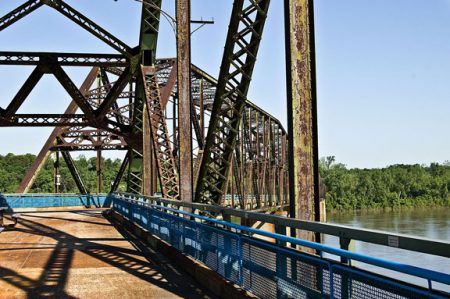
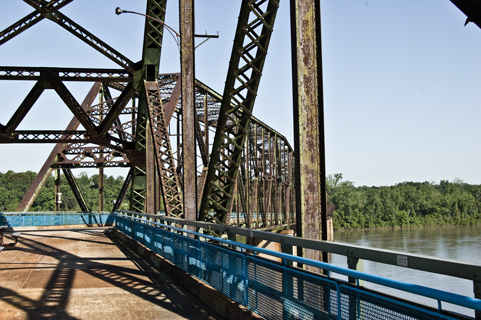
Route 66 Mississippi River crossing in 1935 then a backroad when newer bridges were built the State Park and trail for tourists became 50s childhood backroad memories

Route 66 Mississippi River crossing childhood memories of the 50s photo by rodger

Illinois dairy farms were laid out in sections, with a common plot size of 100 to 160 acres. From a wide view driving on sections of Route 66 and Illinois HWY 143, the route from my industrial town of Roxana to my grandmother’s house, there was a degree of symmetry created by the size of the fields and the color scheme from the crops. Fields were either light brown for wheat or barley to dark green for corn. The farms of the 50s were similar to previous generations of farms. The beginning stages of agriculture in the early 19th century dictated the scheme. A man with a horse could cultivate no more than 100 acres, the scheme was preserved for generations due to the continuity of the family farm profession.

My extended family of the 1950s had been farmers in the 1920s when horse drawn plows were still common and trips to town were in horse drawn buggies. The maintenance of country roads in the 50s was often done by a tractor hitched to a rake that was used to prepare fields for planting. Roads were maintained on an ad hoc basis after rain had eroded them.
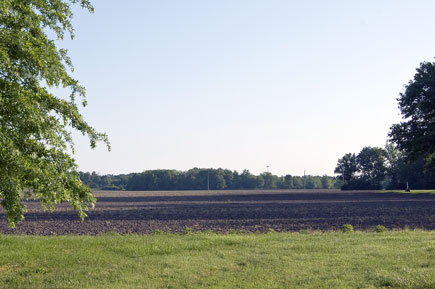
50s Childhood backroad memories of my hardwood forest playground on the other side of the field Silver Creek follows the edge of the forest

Immer family farm on a dusty dirt road East side Prairie Rd my 50s childhood playground

My research of Illinois State history disclosed that there were approximately 200,000 dairy farms, the vast majority on dusty dirt roads, in 1950. Although Illinois is the flattest state, variations in topography involving creeks, lakes and hardwood forests resulted in many locations with a unique sense of place.  My grandparent’s farm was distinguished by a hardwood forest and Silver Creek that in combination covered more than half of the property. From my childhood perspective it served as a playground and an adventure domain. From my 8-year-old perspective, having travelled 100s of miles of backroads in Illinois and Missouri, there was no other place like it. The farm is always in view of my 50s childhood backroad memories.

A location on a forest road on the northern edge of the farm, called the ford, where it crossed Silver Creek was in dreams for decades. The sensation of solitude and sense of place had not faded 40 years later. This spot was shaded, below the level of the fields surrounding it, canopied by the hardwood forest, and cooled by a breeze coming off of the creek which was near the temperature of the water table. The vision of this place affected my adult personality, my attitudes, my mind meld with my wife for backroads beauty of geology, hiking the San Gabriel and San Bernadino mts, and my definition of a vacation being a geology and biology field trip.

Dusty dirt road 50s childhood backroad memories
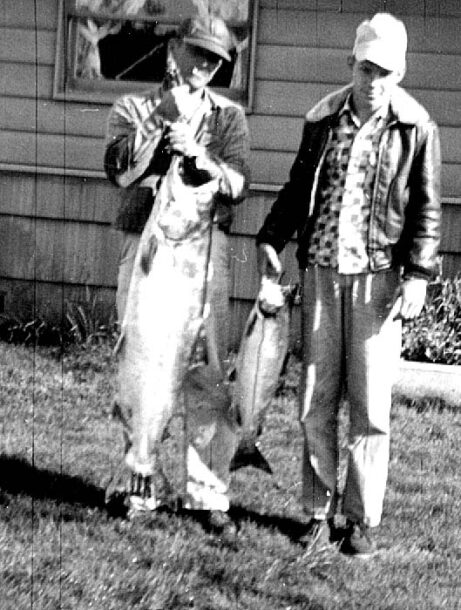
50s family fishing customs moved to Washington State in 1955 50s childhood backroad memories include catching salmon at the end of a dusty dirt road on the Skagit River finding solitude and beauty watching Mt Ramier emerge from the clouds, Washington Rivers are added to memories of forests creeks and ponds

best friend and Pearl Harbor survivor teaches salmon fishing 1950s to 1987 photo edit by rodger

Family traditions and history, the climate of my Illinois home location, the 50s recreation culture, and the rapid evolution of technology and media after all WWII transformed my 50s childhood life. The family move to Washington State in 1955 changed the scene. The fishing experience changed from rivers and creeks in Illinois to the Pacific Ocean in Washington State.  The San Juan Islands and Cascade Mountain wilderness in Washington State provided vast and diverse hunting possibilities. Hunting for bear in the Mt Baker wilderness and fishing for salmon in the Skagit River in Washington were a new dimension compared to Bluegill at the confluence of the Illinois River and Macoupin Creek in Illinois. The dusty dirt roads in Illinois morphed into the passes between Islands in a small boat.
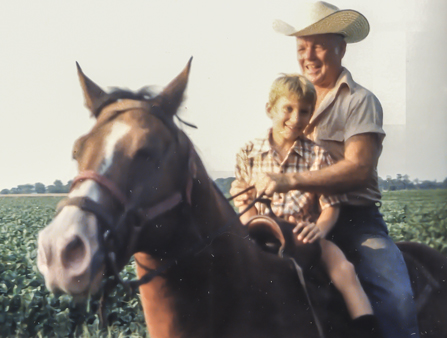
great grandfather's grandson and great grandson create 1980 backroad memories on a dusty dirt road at Deck's Prairie farm 50s childhood backroad memories strengthen extended family relationships in the 80s

uncle Fred and son Mark 1980 backroad memories at great grandfather’s farm settled in 1885 photo by rodger

My 50s childhood memories of the dusty dirt road at the family farm near Highland, Illinois connects many generations of my family with agriculture, family reunions, recreation, world history, and service to the country. Beginning in the 1880s, my great grandfather used horses for work, they were not pets or recreation. He hitched horses to tree stumps during rainstorms to clear land for crops. His grandchildren and great grandchildren were avid horseman and rode horses stabled at the farm daily 100 years later.
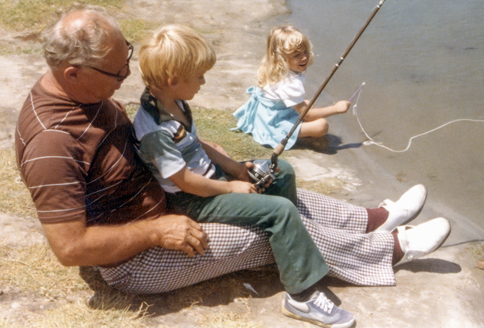
next generation childhood backroad memories grandchildren learn family traditions on California backroad 50 childhood backroad memories of family fishing customs strengthens family ties

grandfather teaches fishing traditions builds childhood backroad memories photo by Susan

My great grandfather fished in Silver Creek on the edge of his farm, beginning in 1885 when he completed his house. He hunted quail and rabbits from his front porch with a 20-gauge shot gun that I have in my closet 140 years later. For my family coal miners and dairy farmers, fishing and hunting were an enduring element of the recreation culture. For dairy farmers the recreation was often in the front yard adjacent to a hardwood forest or creek. The recreation element of the agricultural life could be integrated with the daily routines, in between morning and afternoon sessions of milking and animal care. The traditions were passed on from ancestors. I was not the dedicated full-time fisherman that my father and great great grandfather were. My son learned to fish in the Ocean at Seal Beach, California. He fished with my father in local lakes in Long Beach, California. In hunting trips in Washington State in the Cascade Mountains foothills I trekked awesome geology and salmon choked rivers, finding solitude and a sense of place forever memory.

Mobility and leisure time in the automobile generations added swimming to the recreation menu. There was a swimming pool in the neighboring town of Wood River, the largest swimming pool in the world at the time. I rode my bicycle there 3 or 4 times per week from age 7. I usually swam at the pool alone. My parents preferred lakes and rivers for family outings. These locations were a few miles from home or sometimes 20 to 30 miles. My earliest memories in the 50s are concentrated with trips on dusty dirt roads to lakes, rivers, and muddy swimming holes. We swam at nearby locations, Greenville Lake and canals that were part of the Mississippi River system, in the evenings after my father’s workday for recreation and picnic diners. On weekend and vacation trips we travelled to Macoupin Creek, a fishing destination, and Lake of the Ozarks. My father’s cousins farm, on Bryant Creek near Ava Missouri, had several spring fed lakes and rivers near their farm.

Dairy farmers and coal miner’s ancestor backroad memories
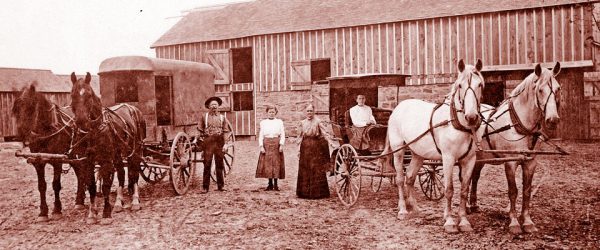
Ancestor agricultural life backroad memories at the end of a dusty dirt road. Location for ad hoc ice cream socials on a hot summer night 50s childhood backroad memories morphed memories of horseback rides for his great grand children

Great grandfather Fred Immer’s wife and daughters at Highland farm 1915, founder of Pet Milk Co, son in law of Civil War veteran, and grandfather of WWII veterans on a prairie settled by a Revolutionary War veteran

When the location of my ancestor’s dairy farm was settled in 1828 by Michael Deck, one of George Washington’s bodyguards, there were no villages and no roads, not even dusty dirt roads. Illinois achieved statehood ten years earlier in 1818. By 1885, when my great grandfather constructed his first house on this property, dusty dirt roads had become the standard for transportation. The road system, as it was in 1885, enabled economic development, travel to other villages and access to the booming economy of Saint Louis Missouri. The train stop at Highland, Illinois 2 miles from the farm, took passengers and farm produce 25 miles by train to rapidly growing markets in Missouri. Illinois was connected to Saint Louis, Missouri by the Eads Bridge, an engineering marvel that drew a 14-mile parade to celebrate opening day in 1873.
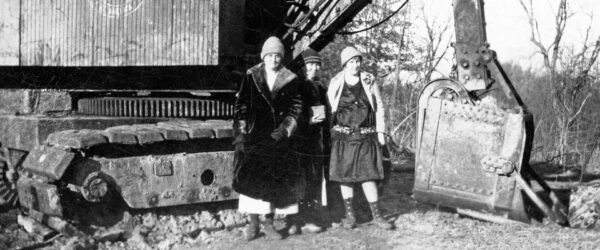
Coal miner ancestor backroad memories at the end of a dusty dirt road near Higbee Missouri tight knit extended families promoted relationship superglue

Coal miner ancestor backroad memories at the end of a dusty dirt road near Higbee Missouri 1925 photo edit by rodger
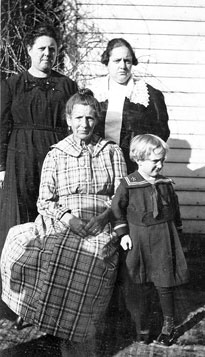
Four generations of coal miner's daughters cared for large families grieved for death in the mines and handed down love and support to 150 years of decedents 4 generations of dusty dirt roads lead to 50s childhood backroad memories

Grandmother Eliza back left photo edit by rodger

I am the son, grandson, and great grandson of Smith family coal miners’ daughters. My childhood was characterized by frequent interaction with extended family. When my grandparents were married in 1890 the population of Higbee Missouri was one thousand. The area of the town was less than one-half mile. Main street and roads connecting other towns were dusty dirt roads. The workplace was a coal mine a short walk from the house. Limited shopping for household supplies was a short walk on main street. Smith family childhood backroad memories reflected the strength of family ties that defined a coal miners’ life.  My aunt’s house, Myrtle Smith Warford, during the next generation in Wood River, Illinois, was a short walk from my house in Roxana, Illinois. Popcorn for snacks and fried chicken with cream peas for dinner were the scene for 50s childhood memories and relationship glue that endures for a lifetime.
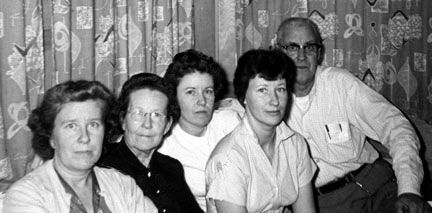
 

Harry Kelley and family A most loving extended family at the end of a dusty dirt road with amazing firefly display for after diner entertainment. the farm was near many Ozarks rivers the location enabled continuation of 50s family fishing customs and decades beyond, I watched the fireflies come up over the fields on his farm at a family reunion in 1949; he retired to fish on Lake Taneycomo family gatherings create 50s childhood backroad memories and celebrate 4 generations of dusty dirt roads

Harry Kelley and family at Ava farm family reunion with gooseberry pie and fireflies photo edit by rodger

Macoupin Creek at Hardin, Illinois, Bryant Creek at Ava, Missouri, and Duckhead Cove on Lake of the Ozarks are locations combining extended family relationships, fishing, swimming, and finding solitude travelling dusty dirt roads. Spring fed lakes, caves, fireflies, fall colors, and Mayfly blooms were on the itinerary or became ad hoc adventures. Ozark springs and watermills are down the road. My great uncle Harry’s farm at Ava combined many of the ad hoc adventures in one location. I had seen fireflies prior to my trip to Harry’s farm in 1949. The habitat in the fields next to his house created the best display of fireflies I have ever seen. I was in the right place at the right time with the dark background of the forest for contrast. Esther Dye, Harrys youngest daughter sitting next to him, hosted our family on weekends at her farm on Bryant Creek. Bryant Creek, now a state park, has trails, fall colors, a cave, fishing, firefly nights and kayaking. Ozark mills tell the stories of 19th century ancestors. The 50s childhood memories of extended family are forever nostalgia. 50s ch
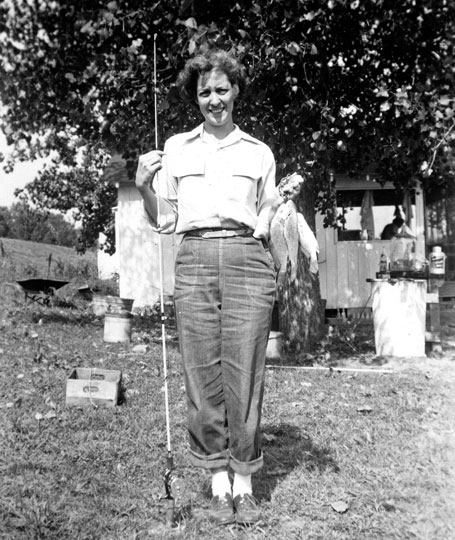
Fishing with family was the best of times. A river habitat child's playground creates forever 50s childhood backroad memories. 50s childhood memories of family fishing customs promoted generations of adult family relationships.

Cousin Tyke at the Illinois River fishing cabin 1948. Orphan, loving and dearest cousin, and best friend. Photo edit by rodger

My favorite cousin, an orphan taken in by my aunt was a coal miners’ granddaughter. She lived in a nearby neighborhood within walking distance of my house in Roxana.  She fished at my uncles rented cabin on the Illinois River. My uncle took me to fish at this location during WWII while my father was in the South Pacific on the Saratoga aircraft carrier. The abundance of biological diversity revealed my earliest childhood backroad memories. Macoupin Creek merged with the Illinois River to create diverse habitats for birds, fish, insects, and forest surrounded by Illinois agriculture. Fishing and hunting methods incorporated knowledge of the biology to use the right bait and the right fishing gear at the right location. I don’t remember ever fishing there without catching several species of fish. Cleaning the fish by my uncle and cooking them for dinner by my aunt, was part of the experience. 50s childhood memories of extended family fishing trips are nostalgia to cry for.

Burma Shave signs outline 50s childhood backroad memories
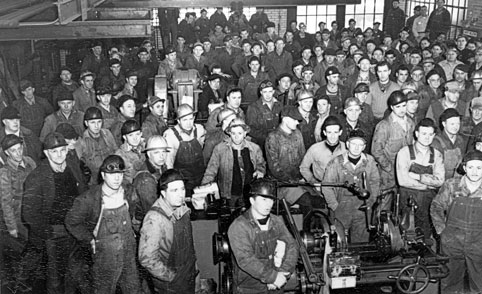
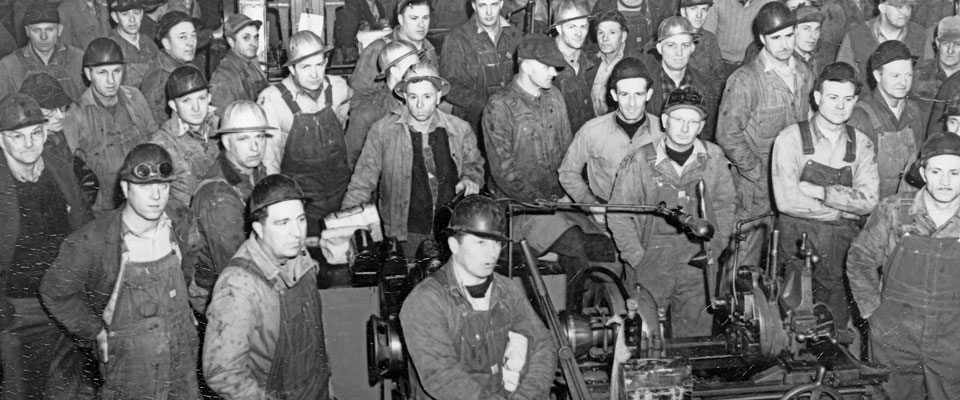
Shell Oil Refinery at Roxana Illinois pipe shop crew in 1950 surrounded by dusty dirt roads in 1918 when constructed supplying energy for a rapidly growing economy 50s backroad memories one block from my house

Shell Oil Refinery Roxana Illinois pipe shop crew 1950 photo edit by rodger

In 1950 my parents had been living in Roxana Illinois for 10 years since my father had received a job offer from the Shell Oil Co to work in the refinery there in 1940. He started as a pipe fitter helper and had been promoted to shift supervisor after completing classes for certification as first-class pipefitter.  The classes included the equivalents for algebra, trigonometry, and geometry involved in designs for piping systems for small projects. After an interruption to serve in the pacific war in WWII he contemplated a weekend retreat for family leisure time. He began researching property on Lake of the Ozarks, the location of his senior high school trip in 1935 when the lake was created.
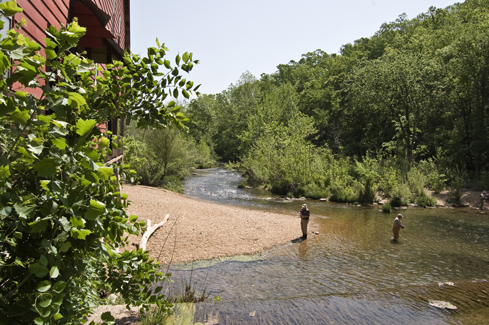
Ozark Rivers 50s childhood backroad memories viewed on trips to search for property 8-year-old visions of an adult home 50s childhood memories motivate adult recreation and leisure and professional life stiles

Ozark Rivers 50s childhood backroad memories photo by rodger 2007

The 180-mile trip through south central Missouri to reach sites on Lake of the Ozarks took several hours. Current events and 1950s culture provided some distractions and entertainment. Missouri Ozarks views of rivers and forests on the route foreshadowed our destination. We sometimes travelled on the Memorial Day weekend. I did not have great interest in the Indianapolis 500-mile car race; however, it was a major news event and iconic for the automobile industry, so I listened during our trip. I noticed and read all of the Burma Shave signs. I remember that there were several sets of signs on that route.

I noticed the family farms and dusty dirt roads in the hills next to the highway. The rural landscape provided many examples of the property that I hoped I would someday own. The hours long views of possibilities for a future home stimulated daydreams of the perfect farm in the perfect setting. My vision conformed to the experience of what a child considered to be the necessary features for adventure and playgrounds, a creek, a pond, and small canyons with stands of hardwood forest.

On one of our trips to the lake to research property in 1951 we stopped at a marina on the South Side of Bagnell Dam, the dam on the Osage River that created Lake of the Ozarks. I don’t remember why we stopped there except that there was a real estate office nearby that we went to later that day. We walked down to the boat docks on the lake. My mother and I both had our swimming suits on, possibly anticipating where we planned to swim later that day. There was no beach just the channels between the boats. We decided to jump in. The motivation was to cool off on a hot summer day. The first swim at the marina dock was a revelation and sealed the deal.  We knew that the lake was going to be our home away from home. Lake of the Ozarks became both home and family routine.  The routine was seasonal, spring and summer until my father was transferred to Washington State 4 years later.

County Road HH, led to a dusty dirt road named Duckhead Road, where our waterfront property on Lake of the Ozarks was located.  Down the road memories of campsites on Duckhead Cove and Ozark Rivers were the detailed backstory for my 8-year-old vision of an ideal future. There was no commercial or private real estate development on the cove when we purchased the property. The road was never paved during the 4 years we camped there.  Weather did not affect the usability of the road. It was dusty with a solid foundation.  

Genesis the origin and essence of 50s childhood backroad memories
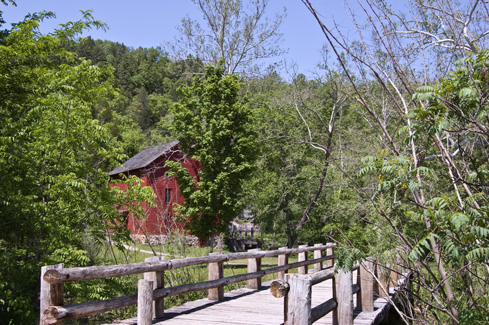
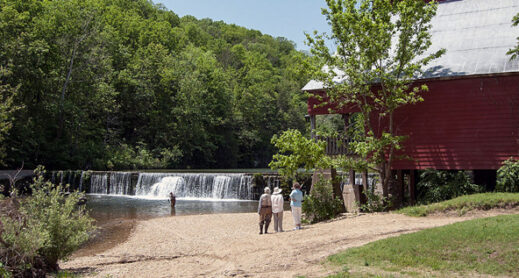
Alley Spring Ozark watermill on a dusty dirt road provided commerce social connections and 50s childhood backroad memories of ancestor solitude and beauty 19th century family traditions promoted 50s childhood backroad memories and family relationships

19th century watermill commerce and social connections photo by rodger

My idealized view of 19th century Missouri Ozarks culture is a loosely organized community defined by geography but without any definition as a city or political entity. The community was not a town, but families connected through common lifestyle and the challenges of a waterpower culture with no electricity. The mid 20th century definition of personal class or status I saw in my childhood view of urban industrialized America did not exist in the 19th century rural Ozark culture.  Identity and character were not related to economics, education, or a family name.  A reputation for hard work and charity defined identity and character. Infrequent but highly valued social interactions at a nearby watermill, while obtaining flour or household supplies, provided a network for local news updates. My retrospective view of the romanticized elements of the vision partially obscured the physical and emotional challenges and absence of medical services. The beauty, solitude, and connection to nature, framed the survival that required family harmony and intense cooperation.

The cultural land post for this era of American History is a novel written by Harold Bell Wright, the Sheppard of the Hills, published in 1907. The film starred John Wayne and was his first Technicolor film. The novel was the first American Fiction Novel to sell more than 1 million copies. The location for the story is Branson, Missouri, the locale for my childhood backroad memories. My grandmother Cuma Sibcy was born in the neighboring town of Brown Branch in 1900, 7 years before this novel was published. This novel was required reading for Missouri High school students when my father graduated in 1935.
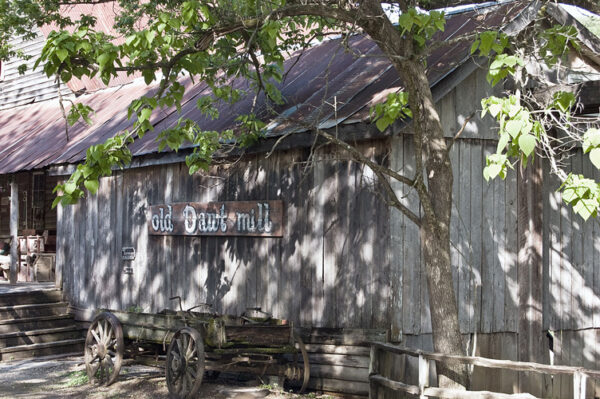
Dawt Mill and many other watermills served Ozark counties in the late 19th and early 20th centuries the dusty dirt roads that served them were the only roads now backroads to serve tourists and fishermen home to my ancestors and Laura Ingalls Wilder my 50s childhood backroad memories are never far away. 19th century family customs morph to 20th century family bonds. 19th century family traditions become 50s childhood memories and strengthen family relationships in the 21st century

Dawt Mill and other Mills on dusty dirt roads in the Missouri Ozarks served my 19th century ancestors photo by rodger 2007
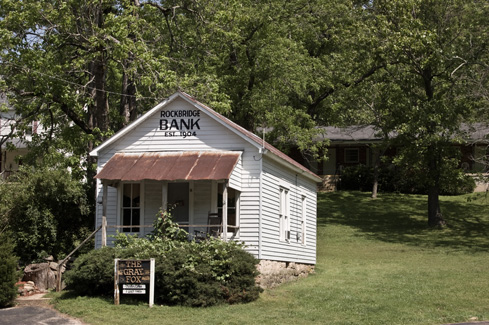
Rockbridge bank opened in 1904 served the Ozark County backroad communities in the early 20th century location for current generations of fishermen and tourists became 50s childhood backroad memories

Rockbridge Bank served Missouri Ozark County
opened in 1904 photo by rodger

My ancestor’s backroad experience in the early 20th century adds another dimension to the definition of a dusty dirt road. A backroad from a watermill in the Missouri Ozarks to a family home in 1900 might be passable only to a rider on horseback carrying a sack of flour, not wide enough for a wagon. The road, in reality a trail used primarily by travelers on foot, would be marked only by a specific hardwood tree or a rock outcropping. Travel after dark would be challenging to everyone except local residents. When I visited my Missouri ancestors in the mid 20th century they often recommended travelling before dark. The dusty dirt roads in the early 20th century Ozarks provided important connections to relatives, friends, a bank after the sale of cash crops, or a practitioner of home remedy medicine.

My childhood vision of these Ozark locations camping on the beaches and fishing and swimming in the rivers framed a sense of family and home. The nearby town of Mansfield, Missouri became the home of Laura Ingalls Wilder in 1894 when she moved there as a young adult. She did not start writing the story of her life on the Nebraska prairie until she was 32 years old, many years later. The story of the Shepard of the Hills novel set in late 19th century Missouri Ozarks is the geographic, historic, and cultural context of Laura Ingalls Wilder’s adult life.
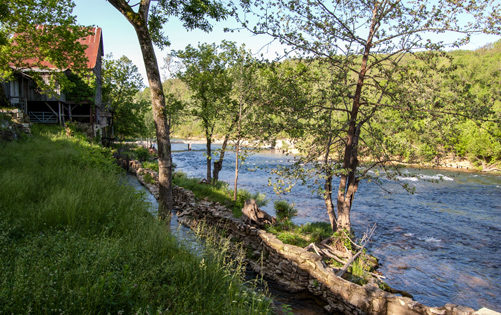
Dawt Mill 19th century Ozark commerce and social network hub 50s childhood backroad memories

Dawt Mill 50s childhood backroad memories photo by rodger 2007

The subsequent 75 years of experience of geology, biology, and neighborhood has not erased my 8-year-old visions. The Ozark rivers and lakes are still in some sense the most peaceful and the most beautiful. The element of shared experience with family and friends has changed, the people that influenced and shaped the 8-year-old visions are long gone. The 82-year-old vision is not defined by the old folks. It is now defined by current friends, children, and grandchildren. The childhood vision inherently lacks elements of practicality or a sense of adult responsibilities. How much of my adult time can be spent at the lake if I am working and being a parent. The 50s context of an agricultural economy and rapid industrialization transformation that provided a cultural framework is now gone.

Unfulfilled visions of 50s childhood backroad memories
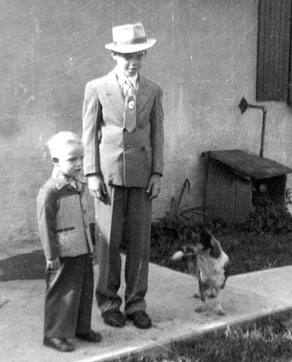
main street became a backroad when highway 111 was rerouted outside of town walking to town was never interrupted by auto traffic tiny house 1953 childhood memories small town culture was evident during street corner meetings in a walking town

1953 tiny house on a backroad family members including Tyke my dog photo by rodger

The shadow of WWII and the adjustments to a rapidly emerging peacetime economy created demand for recreation from a system that was partly unstructured and partly nonexistent. The access was less commercialized compared to future generations and less constrained by regulations. Without mass media information and near zero advertising the experience was ad hoc and subject to individual initiative and creativity. For my earliest memories of camping trips there was no designated location for a lunch break or place to sleep. A view of the river or lake and a level place to park the car was where we stopped.


Interstate highways were not yet a gleam in President Eisenhower’s eye. The Ozark rivers and lakes were not yet state or national parks. There were no services at our impromptu camp sites discovered on weekend trips or vacations. There were no rules limiting where we could camp. Our shopping at army and navy surplus stores for bargain equipment served our needs without the technology and material that would be available decades later at a Recreation Equipment Incorporated store. These factors made my 8-year-old vision of childhood backroad memories more real, more personal, and more plausible. The emotional and physical connections to my anticipation of a future ideal home were more real and more plausible.
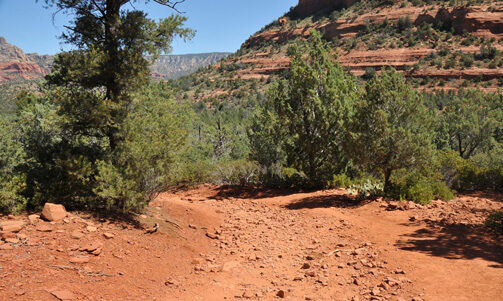
Family backroad adventure extends 50s childhood backroad memories on a dusty dirt road to Devils Bridge in Sedona Arizona

backroad to Devils Bridge Sedona Arizona photo by rodger 1996

An adult view some 30 years later, is Sedona, Arizona, a reasonable substitute for childhood visions of solitude and a sense of place around the next turn. Sedona became a destination and stop over on family vacations in the 80s and 90s. Camp sites on creeks and Redrock trails became my adult vision to substitute for childhood backroad memories.  The generational connection from Ozark rivers to Slide Rock, a natural version of the slides in water parks, bridged my childhood experience. I decided that Sedona could fulfill the dimensions of nostalgia and define the sense of place for a location that could be the forever home of future generations.

My father accompanied us on a family camping trip at the Sedona Bootlegger Campground in 1996 when my daughter came home from Oregon for a spring break. That trip was a 50-year 3 generation extended family continuation of backroad geology camping traditions. He was 76 but hiked with us on the trail until the trail became a rock climb. The multigeneration trip was a joy and an honor. My father treasured his grandchildren and watched them walk across Devils Bridge.
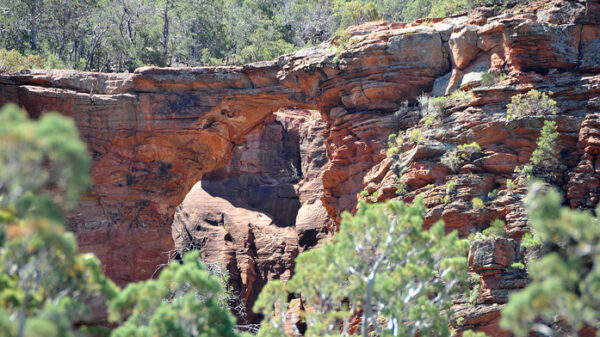
My children's backroad memories began with additions to my menu of adult backroad memories in the 80s Devils' Bridge in Sedona is on my short list for a unique sense of place

Devils Bridge in Sedona Arizona on my children’s list of childhood backroad memories photo by rodger 1996
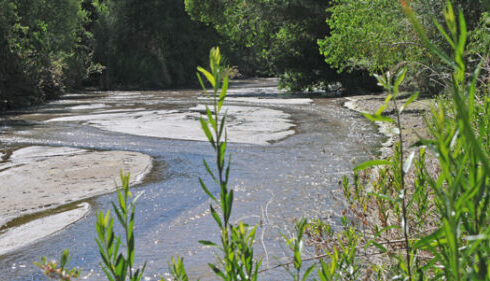
Hassayampa River at Wickenburg Arizona highway 60 was a main route from Arizona to California before the Interstates now a backroad the river and Wickenburg events make this a main attraction for biologists and country music fans 50s childhood backroad memories are revisited for park ranger adventures

Hassayampa River at Wickenburg Arizona alternate route to Prescott and Sedona photo by rodger

A search for real estate options during a trip to Sedona in 2003 identified several properties with great views and abundant open space. A consideration of practicality, my home and work life in Orange County California 400 miles from Sedona, indicated that it could not. A family get together in Sedona would involve hundreds of miles of travel for my family diaspora. My extended family socials in 50s Illinois childhood connected several families located within a radius of 30 miles. The Sedona location could not serve the same purpose. Arizona locations continued serving as destinations for backroad geology and biology field trips, which my park ranger wife and I referred to as vacations. Wickenburg, Prescott, and nearby geology and archeology sites were accessible via a long weekend 3- or 4-day trip.

Park ranger family recreation and work backroads geology and biology
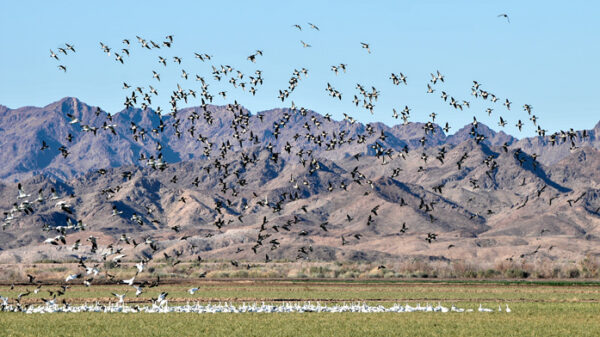
Backroad biology and geology family road trip memories celebrates 50s childhood backroad memories

Arizona backroad Colorado River Cibola Wildlife Refuge photo by rodger 2010
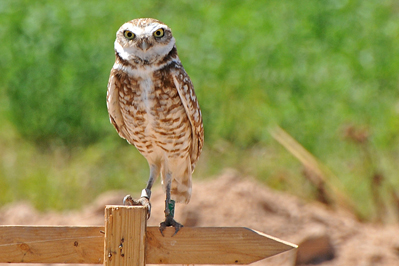
Biology and geology backroad memories on a dusty dirt road family vacation celebrates 50s childhood backroad memories

Cibola Wildlife Refuge burrowing owl photo by rodger 2010

Interest in biology and geology motivated my family camping trips. My wife’s experience on college geology field trips inspired our research and planning for family vacations, weekends, and holidays. The frequency of trips increased to accommodate her responsibilities as a park ranger, University teacher, and on the board of directors for the Southwest US region  for an international education conservancy, National Association for Interpretation. Beginning in 1983 our itinerary and destinations were dominated by National and State parks. Backroad geology and biology locations included iconic and lesser-known destinations: lava flows, buffalo herds, earthquake faults, and bird migrations were discovered on paved highways with miles long traffic jams and dusty dirt roads with no people or cars in sight. Park ranger enthusiasm provided organized and comprehensive commentary for every view and every subject.
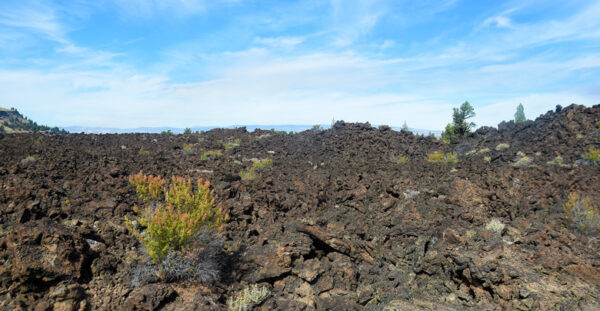
Backroad geology trips with children transmits family traditions and expands 50s childhood backroad memories

Lava Beds Northern California geology site 1987 family vacation photo by rodger

My wife’s favorite places to pitch a tent and put down her sleeping bag are cinder cones and lava flows. Our 56-year residence in the Western United States promoted and accelerated our exploration of backroad geology and biology. Iconic and well-known sites such as Crater Lake, Hawaii Volcanoes National Park, Mount Saint Helens, and Yellowstone got repeat visits. The well-known sites have heavy traffic and require more planning. The most exciting geology is sometimes not generally known. Craters of the Moon, Sunset Crater, Lassen, Lava Beds, and Burney Falls are examples of sites off the beaten track away from large cities and camper friendly with great facilities and awesome geology.

Lava tubes, caves formed by cooling lava flows sometimes more than a mile long, are exciting explorations for adults and children. Ape Cave at Mount Saint Helens is the longest lava tube in North America, more than 2 miles in length. Lava casts, the mold of tree root systems created by cooling lava after the tree and its root system have been burned out, provides a dramatic view of geology and biology in action.
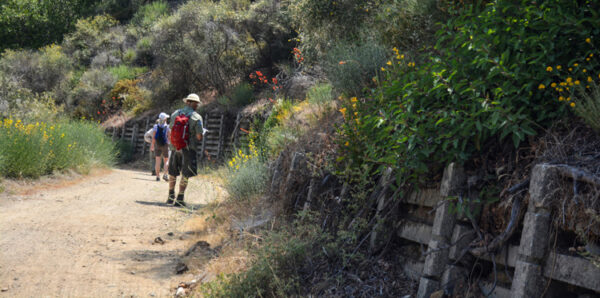
biology and geology backroad memories birds flowers and mountain views expand childhood visions of dusty dirt roads and connect with 50s childhood backroad memories

Sawpit Canyon dusty dirt road biology and geology backroad memories photo by rodger 2013
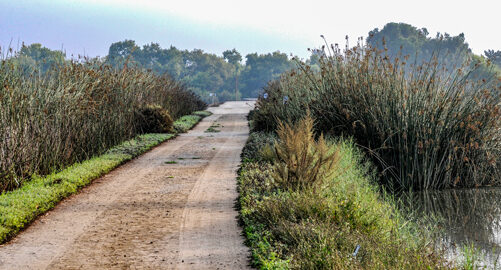
Geology and biology backroad ecosystems for bobcats great blue herons racoons and more in the backyard of University of California Irvine San Juaquin Marsh water reclamation for Orange County California next generation adventures enhance 50s childhood backroad memories

San Juaquin Marsh near UC Irvine habitat and water reclamation photo by rodger 2017

Diverse biology, and geology coexists and interacts on local dusty dirt roads in my Southern California locale. Multipurpose roads serve diverse purposes for varieties of our interests, recreation, forest maintenance, habitat studies for butterflies, birds, and plants, and having a quiet solitary lunch by a waterfall. Our friends feed their fitness addiction by climbing 4000 feet up the road on a mountain bike. Vast marshes accommodate large tourist populations and reclaim groundwater for Southern California Counties.

dusty dirt road biology is a classroom for a park ranger and adds adult backroad memories to my 50s childhood backroad memories

San Juaquin Marsh biology around every turn on a dusty dirt road photo by rodger 2017

The short trip radius, day trips and long weekends, from my Southern California home encompasses an abundance of backroad geology and biology adventures. Utah, Arizona, Central California, and Nevada provided many options. A short but representative list including Zion, Yosemite, Big Basin, Great Basin, Elkhorn Slough, and Canyon De Chelly are locations that were discovered on trips without children then revisited with them.  Family logistics, coordinating our work schedule with our children’s availability on holidays, often influenced our choice of destination and activities. Desert flower super blooms, butterfly migrations, and winter storm surges, became capture the moment events that prompted a response to be there right now or tomorrow morning.
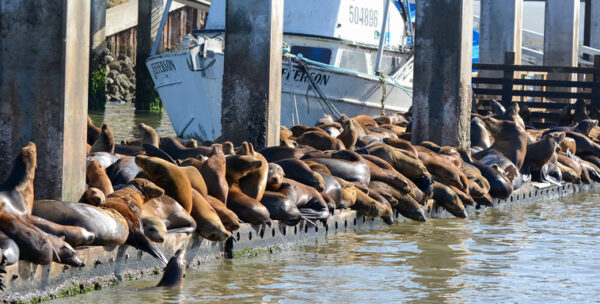
Park ranger teaches the next generation backroad geology and biology secures 50s childhood backroad memories

Park ranger teaches grandchildren biology sustains 50s childhood backroad memories photo by rodger

Butterflies, birds and flowers, and earthquake faults have been the subject of organized college field trips. Ad hoc personal day trips, published research for habitat studies, conservation group conferences, and published photography for wildlife conservancy and education journals provides focus for personal interests. Revisiting locations to reconnect with 50s childhood backroad memories glues the past to the future. Travel, local and nationwide, expanded our experience of small towns and backroads. Some locations, like South Padre Island, were part time backroads and part time busiest road in the US. Sierra Vista Arizona, Patagonia Arizona, Morro Bay California, Santa Cruz California, Mount Vernon Washington, Huntington Beach California, McAllen Texas, Anza Borrego California, and Tallahassee Florida are representative of locations with great habitats.
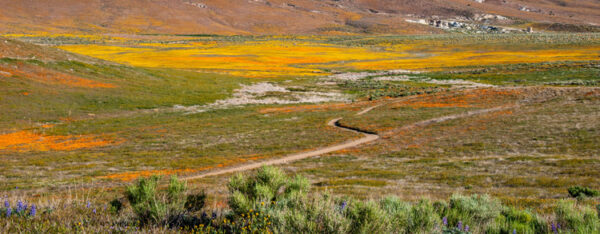
California Poppy Reserve backroad biology on a dusty dirt road day trip accessible in Southern California compliments and strengthens 50s childhood backroad memories

California Poppy Preserve near Lancaster photo by rodger 2008

Missouri has the most caves of any state. Well, that is what some of the brochures and advertising for Missouri Caves say. The state has some 7,500 recorded caves in the carbonate bedrock in southern Missouri. Some are commercialized and have daily tours. My childhood family went to the Onondaga and Meramec caves on day trips from our home in Illinois in the 50s. We took relatives on tours of these caves for family get togethers. In 1970 I took my wife to these caves on our trip to meet my Illinois relatives. This experience links to the college geology field trips my wife took in 1987. She changed professions from Information Technology to University Teacher and park ranger so she could teach geology to children on the trails in the San Gabirel Mountains. My daughter worked in Yellowstone NP for 3 summers so she could experience the wilderness with the buffaloes and grizzly bears. Caves, goldmines, and dinosaur fossils have been prominent in my family vacations to more than 100 national and state parks.
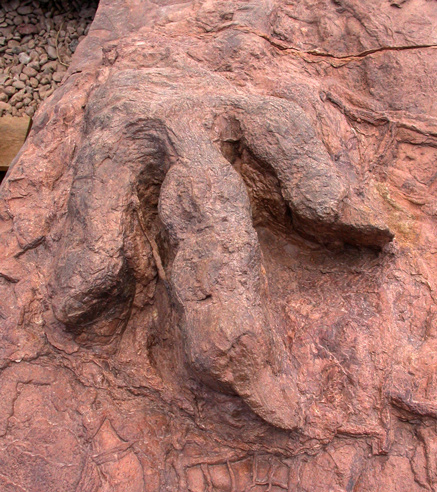
dinosaur tracks backroad geology near Zion Utah adds another dimension to the national parks experience exploration of unsinged Utah Roads expands and compliments 50s childhood backroad memories

dinosaur tracks near Zion NP Utah photo by rodger 2010

Utah has many geology national parks to choose from. In addition to the obvious choices, such as backroad views of Zion and wading the Virgin River through the canyons, the dinosaur fossils offer a museum view, a jeep off road adventure, or an up-close look hiking the trails of dinosaur tracks. Until state sponsored research and organized development of presentations and access to this fossil record began in the 1990s, word of mouth between motivated hikers and naturalists shared this information between a few people. The locations were not publicized. The directions were to turn off of highway so and so about 2 miles from so and so intersection. The tracks show the dinosaur highway 70 million years ago that became a hiker’s backroad memory in the middle 20th century that became my backroad memory in 1990 that became my children’s backroad memory.

Graduation trips commemorate childhood backroad memories
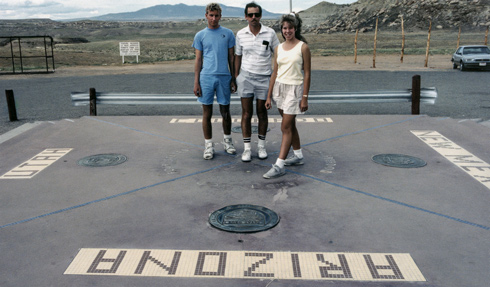
family backroad adventures graduation geology camping trip celebrates 50s childhood backroad memories

family backroad adventures graduation trip

Promotion of backroad travel family traditions was a multigenerational and multidimensional exercise. High school graduation for my children was celebrated with tent camping trips covering several states. The national and state park trip menu included reconnections with my childhood backroad memories and new locations. The venues explored sampled: history, Los Alamos New Mexico site of the atomic bomb project, archaeology, Bandelier National Park, and geology, Ozark Scenic National Riverways.

The element of adventure was emphasized for graduation celebration trips. A new location, a new activity, or a challenging dusty dirt road were researched and added to the agenda. I had recently purchased a 4-wheel-drive Toyota 4-Runner when I planned my son’s graduation trip. The location I choose was on the North rim of the Grand Canyon. The destination was 65 miles from any paved roads, the ranger station was staffed by one person who I never saw, there was no electricity, no water, no entrance fee, and no campground. The view was different from the south rim. Several miles of the Colorado River were in view. The location is named Toroweap. Watch the movie.
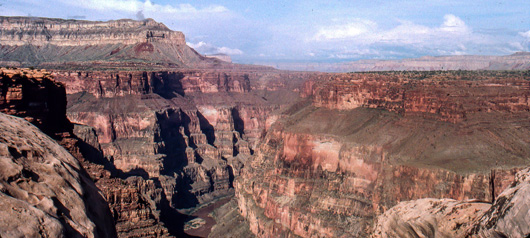
enhancing adult backroad memories and creating childhood backroad geology memories North rim of Grand Canyon via St George Utah 85 miles of dirt road, a long trek to strange days and awesome beauty Toroweap overlook dramatic storms and a majestic river

Toroweap overlook north rim of the Grand Canyon photo by rodger

When I researched the route, using my favorite reference, the “Arizona Travel Handbook”, the trip seemed to be challenging and foreboding. The book said: ” there are many intersections on hundreds of miles of unsigned roads leading to nowhere”. The area was Bureau of Land Management leased to cattle ranchers. There were cows but no cowboys or ranches to be seen. The book had a description of the intersections and turns to reach the north rim at Toroweap. I discovered that there was a Ranger Station in the town of Fredonia where I would turn off of the paved road and go south to the canyon. The ranger explained that the roads had been signed and that I could follow the signs to the Toroweap location. The roads were wide and graded so that I averaged more than 60 miles per hour on the route to the canyon.

On the return trip I decided to drive directly to Saint George Utah instead of back to Fredonia and then to Saint George. It was a shorter route but on a dirt road that crossed a mountain pass at 8000 feet. It was the rainy season and there had been recent rain in the mountains. The 4-Runner was mildly challenged on the steep mountain roads in deep mud. My goal with the 4-Runner was not to challenge the car, my more modest goal was to get to geology and biology sites that would be less densely populated.

Colorado prairie childhood backroad memories never never land
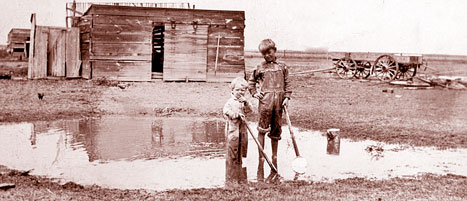
childhood backroad memories biology and geology become playgrounds generations of children invented routines unique to their space and time for a personal habitat the 1920s experience previews 50s childhood backroad memories

Father and uncle Eastern Colorado plains 1925
photo edit by rodger

My childhood bedtime routine included stories by my father. My mother read from classical children’s literature. My father’s stories were from his childhood experience growing up on the Colorado prairie in the 1920s. The scene from the front porch of a house on the prairie, 17 miles from the nearest town, is unique and difficult to describe. There are no neighbors, there are no trees, there are no hills or any other identifiable topography. The view is the same in any direction. The one road in the scene is barely identifiable and blends in with the color and texture of the prairie. At the limits of vision, the sky and the prairie blend and become one object that is not either sky or prairie.  The prairie is a never never land of uncharted backroad memories. The sensation of the dust, the sound of the wind, the bite of the cold, or the sting of the sun are a distraction or the props for an 8-year-old imagination that has never seen a film or heard a radio.

At first glance the prairie seems empty. It is not. As Lewis and Clark had discovered more than 100 years earlier on their Louisiana Purchase Expedition, there are prairie dogs and prairie chickens. The plains have light rainfall, which will result in crop failures in some years, but supports some sparse grasslands. Lewis and Clark were fascinated by the prairie dogs. I have not found a description of their method of capturing them for observation. My father either invented or was taught to flood the entrance to their burrow with water then be waiting at the exit with a hat that he would use to capture them.
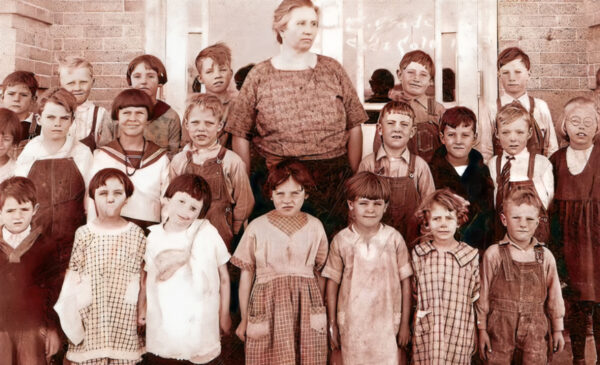
Colorado Plains 1923 childhood backroad memories Clifford Immer 1st grade education promotes imagination and previews the next generation 50s childhood backroad memories

Prairie Queen School 1st grade class 1923 Colorado Plains backroad memories photo edit by rodger

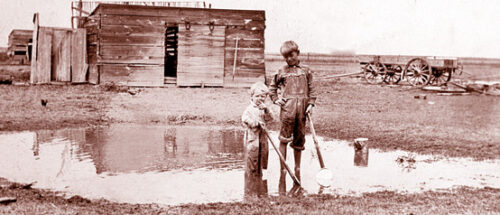
Plains weather is seasonal, hot and cold, and windy. Windy is the key word. The wind blows dust, rain, and snow. The wind is constant and intense. There was no electricity, no stores, and no toys for children living on the prairie. Sticks became pretend fishing poles when a rainstorm created puddles on the prairie. My father constructed a coaster wagon from scraps of wood and wheels from broken farm implements. A worn-out bed sheet worked well for a sail. In the plains wind the wagon could explore miles of prairie. A coaster wagon with a bedsheet sail transported him to many imaginary destinations.

Agriculture family life montage frames childhood backroad memories
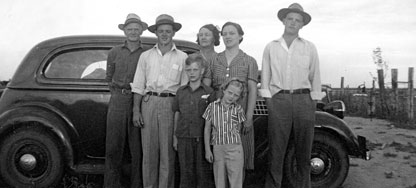
Immer family on the home front backroad on the family farm at Highland Illinois my father was already in service in the south pacific uncle Fred later served in the Air Force in Germany Eugene later served as a military policeman the dusty dirt road location on an Illinois prairie became the location of my 50s childhood backroad memories

Immer family 1944 one child serving in WWII 2 other children entered service that year photo edit by rodger

The Best Years of our Lives was the theme of an academy award winning 1946 film. The story describes the effect of WWII on 3 returning veterans. Urban life was the context for their challenges and adjustments to pick up the threads of their prewar life. From age 4 in 1947 I observed my father, uncles, and neighbors adjust to the postwar small-town agricultural matrix in rural Illinois. My grandmother had three male children who served in the war, my father and 2 younger brothers. The youngest, Eugene, died in service after the end of the war. Because of my age, the stoic nature of the German personality, and the routine of farming activities I did not observe the effects of the grief. A multigeneration post war family theme played out in 1949 at my great uncle’s house near Ava, Missouri. The family gathering included WWI and WWII survivors to share, fishing, swimming, cave exploring, and fireflies.

The combination of recreation, daily commerce, the working life, and family gatherings required the use of an assortment of distinctive back roads. Midnight freight train crossings, the alley behind our Roxana house, 17 miles across dusty dirt of the Colorado Prairie, and the bluff on the east side of the Mississippi River defined familiar and diverse backroads. The air space above the Colorado Plains marked by a city water tower, Route 66 through Edwardsville, and a 500-mile private plane flight to an uncle’s back yard on the Colorado Prairie connected family for routine visits or a once in a lifetime adventure.

My father lived within 2 blocks of work at the Shell Oil Refinery in Roxana, Illinois from 1940 to 1954. The short walk down the alley behind our house to the refinery gate was usually a routine day in the life event and sometimes full of apprehension. On freezing snowy nightshifts, he had to contemplate climbing the rungs of an icy ladder to fix a valve in the Shell Oil Co refinery. There were no ropes or safety harnesses, one misstep meant death. He sometimes turned and looked back at the house, he thought about my mother and I asleep in bed and paused before continuing down the alley.
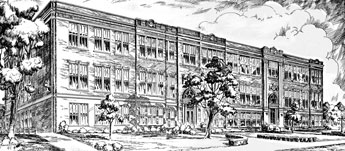
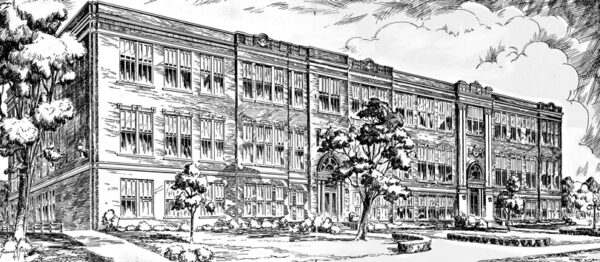
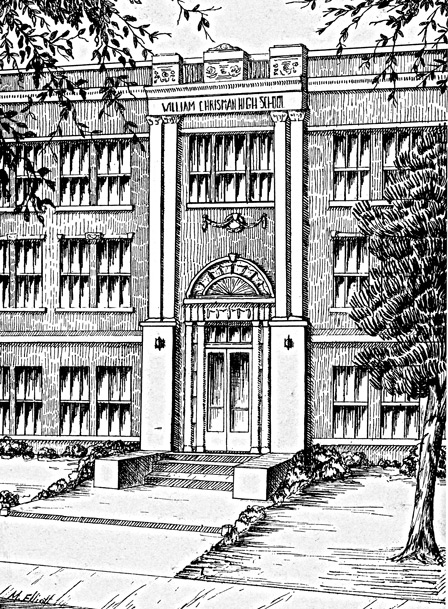
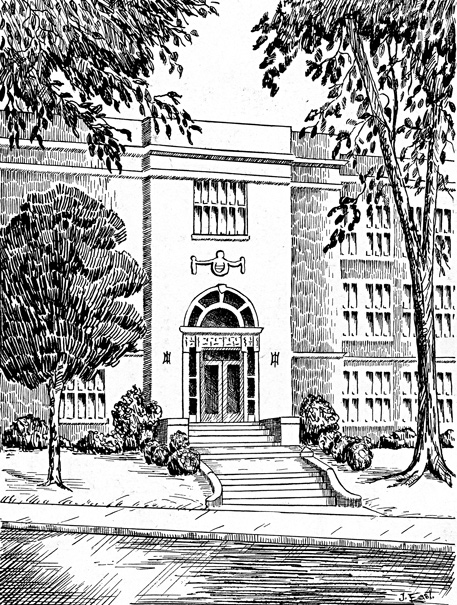
Now a backroad in a little known town in Independence Missouri was know as the mother of all trails in the 19th century, the Oregon, California, and Sante Fe trails all started in this town this high school was my father's and Harry Trumans alma mater the alumni notes in 1935 reference employees working in Walt Disney Studios and Sigmund Freud's clinic in Austria

My father and Harry Truman’s alma mater William Chrisman High School line art drawing by 35 graduate

My father found work after his Independence High School graduation in 1935. The depression was still on. His job at Montgomery Ward Mail Order seemed to be short term. The job at Montgomery Ward paid 26 cents per hour, which was enough for a boarding house residence in 1936. Between jobs he travelled from Independence, Missouri, and other locations to visit his grandmother in eastern Colorado. When income provided barely enough to eat paying for train tickets was not an option. Hopping freight trains going in the right direction required knowledge of the schedule and where the train stopped to change tracks or take on water. A successful trip depended on these common skills that were part of the depression era culture.

Freight trains were backroads to extended family and a job search in another part of the country. The challenge and risks of freight train hopping were well understood and were part of American culture during the depression. My mother’s older brother died on his first attempt to hop a train at age 22. My father’s motivation to visit his grandmother, a matriarch who had held the family together through war, the dust bowl, and the depressions was stronger than the apprehension of hopping a train in the middle of the night during a snowstorm. The train stop was 17 miles from the farm he would visit to see his grandmother. The cold weather during the long walk caused some permanent damage to exposed skin. My father had scar tissue on his nose and ears.

My father travelled many backroads in the South Pacific in WWII including the beach on Peleliu Island the Marine Battalions suffered 80% casualties the highest in the pacific war the Seabees followed behind the Marines to deploy equipment and get dead and injured Marines off of the beach

My father’s Seabees battalion fought on Peleliu highest casualties rates of the pacific war edit by rodger

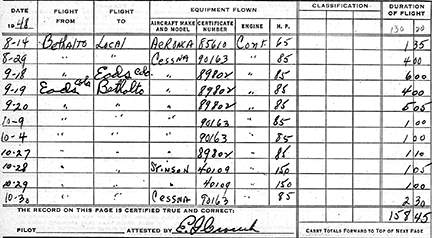
My father served in the Seabees during WWII. Part of his transportation in the South Pacific war was the Saratoga aircraft carrier. He decided not to apply for training as a pilot, his brother was flying on bomber missions over Germany. He decided that another high-risk war assignment for one of her children would be too much stress for his mother. After discharge from the navy in 1945 he used his GI benefits to complete a commercial pilots license at a local airport 3 miles from our house. He kept his job at Shell Oil Company, so he only flew for recreation and personal cross-country travel.

He flew 500 hundred miles to visit an uncle in Colorado in 1948. The destination was on a farm on the prairie. During his childhood and young adult life my father had walked this area of the prairie near Eads Colorado many times and knew the rivers, lakes and small towns that identified this location. There was no airport or runway, he landed in his uncle’s back yard. The backroad, airflight, was marked by rivers, cities, and other landmarks to find a house surrounded by miles of empty prairie.
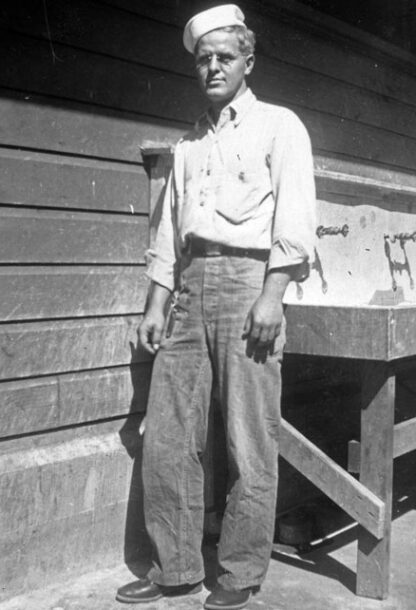
backroads of the pacific islands unknown soldier how did his war experience affect his civilian life did he have a job a wife children did he die in service on some remote pacific island beach

my father’s WWII friend civilian life unknown fate in service unknown photo edit by rodger

A reunion including my father’s brothers and an uncles’ families was arranged occur in Ava, Missouri in 1949. The family gathering of veterans, when I was six years old, seeded 50s childhood backroad memories of creeks, caves, fireflies, and nearby spring fed lakes. For my dairy farming cousins, the Ozark setting provided recreation in between the morning and afternoon chores to operate the dairy farm. Bryant Creek was at the doorstep. In the early 50s canoeing and kayaking was not yet a popular recreational activity. The creek did provide a supply of bait for one of the prime recreation activities, fishing in the nearby creeks. Fifteen minutes with a net in the evening provided bait for the next morning’s trip to a larger creek. The multigeneration gathering reflection on US and far-flung continents backroad memories honored comrades who did not survive or were recovering their prewar life.

Reunions were ad hoc special occasion and generation reconnections

1950s hot summer nights baseball and backroad ice cream socials were a family ad hoc agenda. I don’t remember any phone calls or discussions to plan the events that I would describe as impromptu ice cream socials. This scenario started the first year that I played Little League baseball, 1951 in Illinois. The standard summer weather, near Saint Louis Missouri, was a primary element. Before air conditioning mitigation or escape from the humid heat was a constant goal. My grandparents farm, the location for the social gathering, was a half hour drive from home. We left immediately after the baseball game. The recipe for the homemade ice cream required about one-half hour to prepare. We talked baseball and ate ice cream for an hour or so then back home. This summer routine is one of the primary threads of my childhood life and a forever memory. Family reunion ice cream socials are treasured childhood backroad memories.

Two generations of childhood backroad memories my mother's childhood in the 30s and my childhood in the 50s Trucks used the alley on the right side of the 1920s steam heated house to deliver the winters' coal supply through a basement window 9th street in Wood River Illinois became my 50s childhood backroad memories of extended family and my favorite chicken dinner

mother’s 9th St childhood backroad home with her sister my WWII home photo by rodger 1998

In 1955 my father was transferred to Washington State from Illinois. The extended family connections: grandparents, cousins, aunts, and uncles that were a few blocks or a short drive from our house in Roxana, Illinois were no longer part of our family life. The terminology for this is called diaspora, population that is scattered across regions separate from its geographic origin. After the diaspora our annual vacations became treks to reconnect family. We drove from Northwest Washington back to Illinois every year for several years. Our travel methodology was a common practice, we drove straight through meaning that once we started, we did not stop until we reached the destination.  My father’s technique for driving straight through was even more extreme. We only stopped for gas, not food or water or to use a restroom.
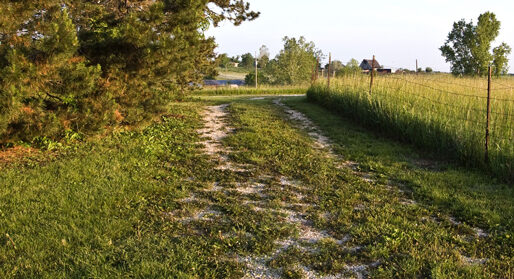
Backroads on the edge of a field were a feature of 50s agriculture besides access to plant and harvest crops they served for evening walks next to a forest or lake the location became my cousins 50s childhood backroad memories

Missouri farm backroad 2007 photo by rodger

Aunts, uncles, and cousins lived on dusty dirt roads in rural Missouri. They had moved from Illinois and decided to retire in Missouri. They were not operating farms but enjoyed the farm sized plots, open space, and solitude. The hospitality and updates for our families bridged the 40-year gap since I had lived on the family farm with them in Illinois as a child and experienced a relationship more like brother and sister than aunt and uncle. On my business trips in the 90s, I planned the backroad treks to relatives as part of my agenda.
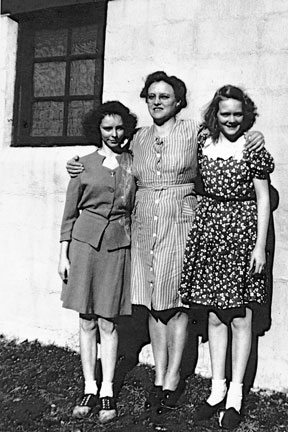
Roxana open house 1947 neighbor Dorthy grandmother aunt Barbara the location on 3rd street in Roxana Illinois was a backroad until Shell Oil co built an Oil Refinery there in 1918 when my father built a house there in 1947 the road was main street with connections to my 50s childhood backroad memories

1947 open house neighbor Dorothy grandmother aunt Barbara photo edit by rodger

My new house at age 4, constructed in 1947 by my father, was on the intersection of two alleys. I am not sure what the origin for this design of the town, that was plotted in 1922, was intended to accomplish.  The streets were narrow. I don’t remember any cars ever being parked on the street. We parked our car in the north south oriented alley or in back of the house. The east west alley had a concrete trash bin for our house. There was no regular trash pickup. The trash was incinerated. For the very small downtown, only 3 blocks, the alley was the shortest access from our house. The city offices and community services building next door, not constructed until 1938, had a library, theater, and gymnasium. There was an informal open house to celebrate our move from a rented house to new house. There was no rent payment or mortgage.


I lived in Roxana, Illinois from birth in 1943 until 1955. My father’s family and ancestors had lived in this part of Illinois since 1827 when my great great grandfather was born in Marine Township, a few miles east. The culture was small town agriculture except for the impact of the oil industry in the early 1900s. The nation’s rapid increase in demand for gasoline and oil products along with the use of the Mississippi River transportation corridor for distribution, resulted in the construction of 2 oil refineries within 1 mile of each other. A Standard Oil Co refinery in 1907 and a Shell Oil Refinery in 1918 transformed life to large scale industry surrounded by family farm agriculture. The refineries provided more than 5000 jobs.

My oil industry relatives, aunts, uncles, and cousins lived within a few blocks. The family interactions were weekly. Their living rooms were as familiar as my own. Playing cards, plans for fishing trips, the labor relations at Shell Oil Co where my relatives worked, and local sports were the threads of family life. My childhood memories of family relationships before Tv are the most vivid of my childhood life. I noted the differences in personalities and measured the interactions by who served popcorn and who served tapioca pudding. I have the sense that family relationships were more connected and intense when houses were smaller and relatives lived in the same neighborhood. In small towns where you could walk to your aunt’s house blindfolded all of the streets were backroads and every street was 50s childhood backroad memories.
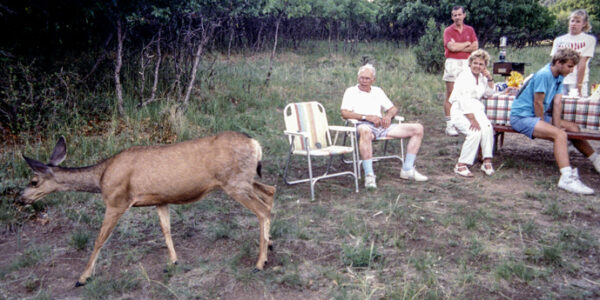
Family reunion trip national park backroad history memories continuation of multigeneration traditions

Mesa Verde NP campground 1990 family reunion photo by Susan
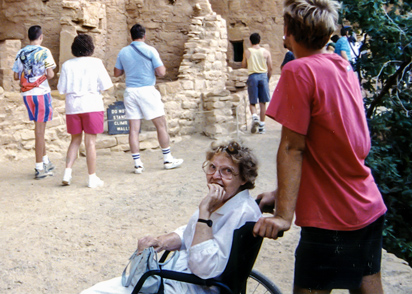
Extended family backroad reunion trips multigenerational forever backroad memories

Mesa Verde NP 1990 family reunion photo by rodger

My mother’s lifelong wish was to visit native American ruins in the southwest. I had been to Mesa Verde NP 3 years earlier and decided this would be a good choice for our trip from California to Illinois for an extended family reunion. The campground at 8000 feet elevation had cool summer days, secluded private campsites, and expansive views of the southwest. The restaurant, named FarView, had floor to ceiling windows with views of Monument Valley, Ship Rock, and lightning storms in the Arizona Mountains all at the same time. The ruins are forever memories for my son and mother. For the adventurous the ladders to climb the cliff face do not have any ropes or rails to hang on to.

20th century Americans shared generations of backroad memories

My home in Roxana, Illinois, about 20 miles northeast of Saint Louis, Missouri was less than one mile from the Mississippi River. If you listed all of the historical events and activity for the previous 1000 years and then put a pencil down on a map to mark the focal point the dot would be in my front yard. French explorers sailing up the Mississippi in the 17th century, the Lewis and Clark camp in 1804, Indian Culture trade routes, and river boat traffic from the 1830s would have all been visible from the location of that dot on the map.
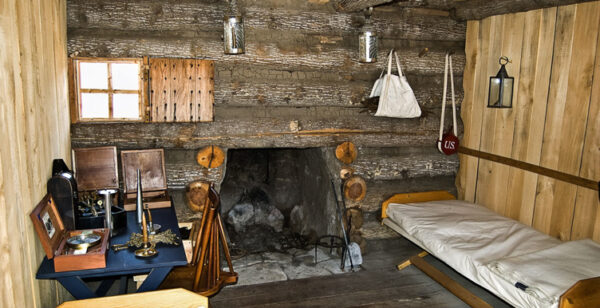
Lewis and Clark cabin at Hartford Illinois Museum United States backroad history on the Mississippi and Missouri Rivers the nearby roads to the Mississippi River and canals became my 50s childhood backroad memories

Cabin at Lewis and Clark Museum Harford Illinois
photo by rodger

The Mississippi River and its tributaries was an ancient superhighway connecting the Mississippi Indian culture city of Cahokia, population 20,000 in 1000 AD, with a far-flung network of villages. The river was an unknown backroad for exploration of the North American continent by French explorers in the 17th century.  Lewis and Clark set up their base camp for exploration on the Mississippi about one mile south of my Roxana house. Mark Twain passed within 1 mile of my front yard when he captained his first trip to New Orleans 1n 1859. Travellers on the Oregon Trail purchased their supplies in Saint Louis to join the first wagon train starting in Independence, Missouri in 1836. Saint Louis was a village then the gateway to the west.

Roxana was a walking town. Main street became a backroad when the intercity highway was routed around the city. The traffic for the tiny business district was by foot. It was a rare event to see a car driving on the main street. A two-block walk would get you to restaurants, groceries, the library, household items like cloth to make clothes, to work, and the theater.

Hunting trip childhood backroad memories sense of place montage

My childhood hunting experience was primarily as a tag along. I left Illinois in 1955 at age 11. The hunting opportunities in Madison County, Illinois where I lived were limited. The hardwood forests had been replaced by crops. The last wolf in the county had been killed by my uncle in 1940, 3 years before I was born. The deer and bear were gone decades before that. There were rabbits. I only remember a family member shooting a rabbit and preparing it for food once. There did not seem to be much interest in rabbits for food. The family raised chickens, ducks, and pigs. I ate rabbit once and did not like the taste. There were quail. My great grandfather shot quail from his front yard in the 1880s. My father had a shot gun and shot quail but did not engage in regular hunting. Hunting in Illinois was, from my childhood view, a backyard kind of thing.
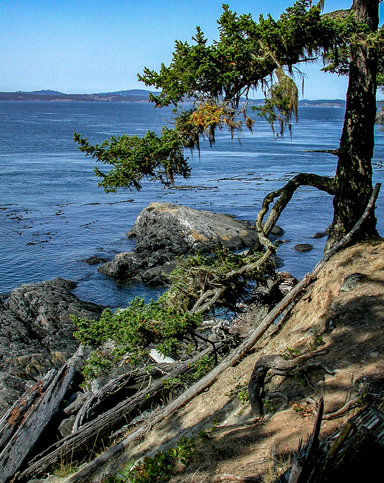
50s childhood memories revisited view from Shark Reef State Park on Lopez Island during a 2011 visit a frequently travelled channel by boat a facsimile back road route to Friday Harbor and Victoria BC the Islands exploration added a dimension to my childhood country road memories

Lopez Island Shark Reef State Park view of route for family boat trips photo by rodger 2011

When we moved to Washington State in 1955 the hunting opportunities multiplied. There were deer in Skagit County where we lived. My father bought a tag to hunt deer every year for several years. My father butchered the deer that he killed and then stored the meat at a cold storage facility in town. The strategy for hunting deer was to be on the trail where the deer lived before sunrise. When the deer came out of the brush to go to their grazing area the hunter would be around a bend in the trail or hiding in the brush waiting for them. I remember the cold damp mornings that we waited in the dark for hours to see a deer coming out of the fog. The deer that I remember being shot were killed from an open window of a car stopped at the side of a road. We saw the deer on a hillside stopped the car and my neighbor sitting in the back seat shot him. The San Juan Islands became a matrix of waterways 50s childhood backroad memories via our private boat. Hunting, fishing, exploring the forests and strolling the beaches became an expansive neighborhood routine adding dimensions to 50s backroad memories.
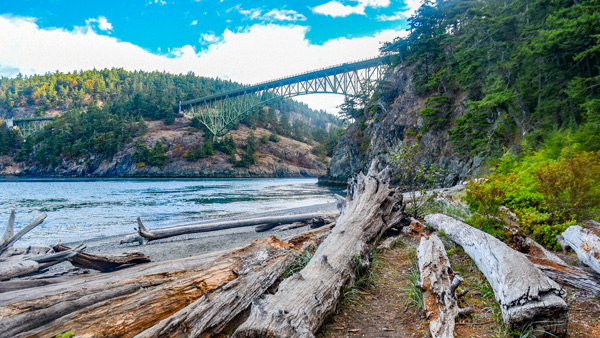
50s childhood backroad memories abound in the San Juan Islands fishing and hunting trips explored the country roads and trails the varieties of forests creeks lakes and beaches define a sense of place and family customs the relationships developed and flourished at locations that were not yet tourist spot and served as private family playground

Deception Pass State Park served as a hangout and private playground for adults and children photo by rodger 2011

The exploration adventure lifestyle that my parents had exhibited in Illinois to explore the Gulf Coast, the Eastern Seaboard, and the Great Lakes, continued after we moved to Washington State. My father and his neighbor from Texas wanted to hunt black bear. They had arranged for access to a wilderness area they called Morris Ranch on the slopes of Mount Baker. The trip from the paved highway was at least 10 miles up a very dusty dirt road. The dust was so thick that the 2 cars took turns leading so that the following car would get a break from the dust. The campsite, a level place to park the cars and set up the tents, did not have any services. We split into 2 groups of hunters and walked/ climbed the mountain slopes for 2 days but did not see any bear. We crossed the Nooksack River at a shallow spot. It was early fall, and the salmon spawn was at its height. We saw and felt many salmon swim between our legs. It turned out to be a hiking trip, not a hunting trip, but the mountain trails and the river were an awesome experience.

A new neighborhood at age twelve 50s childhood backroad memories

Skagit County, population 40,000 in 1955 was about 2000 square miles with hundreds of miles of backroads. I was familiar with many of those backroads. to travel to, the local college, dancehalls in the middle of the farm fields, girlfriends in neighboring towns, athletic events throughout the county, the church we attended in Bellingham 30 miles north, the Skagit River delta where we fished, the beaches where the college kids assembled for impromptu beer guzzling, and the canning factories and harvesting facilities.

Forty first street in Anacortes, Washington was not paved when we move there in 1955. The street, only one block from my house if I walked through my neighbors back yard, led to two of my favorite 12-year-old hangouts. One half mile east was a hill on the edge a forest that we called Cow Hill. One half mile west was Heart Lake. The summit of Cow Hill required a short scramble up the rocky face. The access, not on a trail or a sidewalk, made it a children’s hangout. Adults never went there even though the panoramic view of ocean and mountains was the best on the island. There were only a few of the neighborhood children who claimed this place. It was a private club. Cow Hill was an important element of my backroad childhood view of the world at age 12 and became part of the definition of home. One of my most important 50s childhood backroad memories has likely disappeared in the backyard of a housing tract developed on the top of the hill.

San Juan Islands boat trips are 50s childhood backroad memories
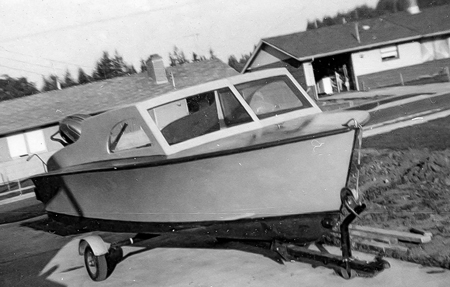
Transportation for San Juan Islands backroad waterways Thatcher Pass route to Orcas Island Victoria BC and dusty dirt roads on San Juan Island the routes to San Juan Island locations became my 50s childhood backroad memories to hikes to Eagle Peak on Cypress Island, the beach on Lopez, and hunting trips to San Juan Island

Transportation for Sam Juan Islands fishing secluded beaches and exploration photo by rodger

Thatcher Pass became a most memorable back road in 1955. Seventy years later I still dream of one more trip. My father purchased a boat soon after we moved from Illinois to Washington State. Because we had never been to the San Juan Islands in Washington State some research was needed to determine the kind of boat that was needed for recreational fishing and exploration of the nearby 177 island group. A boat building business in the small town where we lived, Anacortes Washington, provided advice. There was a standard for recreational fishing, a 16-foot, deep hulled boat powered by a 25 or 30 horsepower outboard engine. Two of our neighbors and an uncle, who had recently moved to Anacortes were fishermen and also purchased the standard boat.
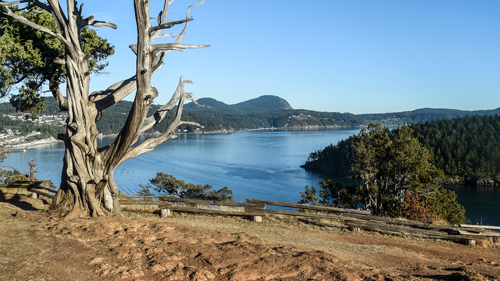
dusty dirt road backroad view in Washington Park Anacortes Washington Burrows Bay and Mount Erie photo by rodger

backroad view Washington Park Anacortes Washington San Juan Islands photo by rodger

Thatcher Pass, a narrow strait between Blakely and Decatur Islands, was the route we often took to reach destinations for fishing, hunting, or tourist locations in Canada. Orcas Island, one of the largest and most populated, had a marina, a high school, and services for a few thousand residents. On the first trip I remember we stopped at the marina for fuel. We hunted on San Juan Island. Victoria Canada was about 40 miles farther west. We travelled to Victoria for the botanical gardens, Butchart Gardens, and the shops in downtown Victoria. The Victoria boat trip, sometimes by state ferry and sometimes by private boat, was part of the genesis or reawakening of a long-term relationship. My future wife took this trip in 1968. My aunt Barbara took this trip on her first visit to Washington State in 1956. On my children’s first trip to Washington in 1978 we travelled by ferry to Victoria and returned in 1987. The trips to the San Juan Islands with my children were relationship milestones and forever memories.

There were many favorite family hangouts in nearby islands, a few miles from where we launched our boat at Sunset Beach in Anacortes. We fished for cod at Bird Rocks, hiked and climbed the crude trails to Eagle Peak on Cypress Island, and walked the dusty dirt roads on San Juan Island hunting rabbits. Spencer Spit, a long sandy beach on Lopez Island, was a short boat trip and perfect for a picnic. Mount Constitution on Orcas Island provided a view of city lights from Seattle Washington to Vancouver British Columbia. San Juan Island had thousands of acres of private land that was not farmed but populated by hybrid wild rabbits. Hunting there came with solitude, awesome beauty, and a childhood companion who became a lifelong friend.

Most of the salmon fishing we did was at a spot my father had researched on the Skagit River. The location was a favorite for fishermen who had identified a bend near the delta where salmon came into the river on low tide. We fished in the ocean at Strawberry Island. After sonar became available for sport fishing more fishing was in the ocean by using sonar to find them.

James Island was the right place to celebrate July 4th in 1957 when we were 2 thousand miles from traditional family locations. Finding solitude was a 1-mile boat trip to a secluded picturesque beach. Our friends from Illinois, who had moved to Washington State for work at the Shell Refinery and lived across the street, independently responded to an inspiration and joined us for a surprise reunion and holiday celebration. Our relationship from 2000 miles away in Illinois reconnected on James Island.

My childhood San Juan Islands experience was expressed in my adult life decades later. When I took my girlfriend, my future wife, to meet my parents in 1968 we took the ferry trip through the islands to Victoria. On our first family vacation with our children in 1978 we travelled to Orcas Island. I came close to buying property in the islands on that trip but changed my mind because it was not on the beach at the price I was anticipating. On trips for High School reunions in 1998, 2001, and 2011 I shopped for property in the islands.  We stayed at bed and breakfast inns on Lopez and Orcas islands. We quickly learned the traditions for Lopez Island. During our last visit the population of the 30 square mile island was 2000. Although the traffic is light on roads and trails, the tradition of greeting everyone you meet is consistently demonstrated. If you are driving the greeting is a wave with your fingers without taking your hands off of the steering wheel.

One of the most iconic adventures of my childhood was a family hike/climb to Eagle Peak on Cypress Island. There was no ferry service to that island. We took our private boat about 3 miles from Sunset Beach On Fidalgo Island where we lived to a beach on Cypress Island. We thought we saw a trail from where we beached the boat. In 1955, the date of this trip, I believe the population was 0, although there was a boy scout camp occasionally used. 50 years later the population had grown to 40 for an 8 square mile island. The trail was not maintained and did not reach the peak. My brother was 6 and I was 12. We all reached the peak with some climbing on the cliff face. There were deer on the island which almost ran over us as they came bounding down through the forest and jumped over the trail.

One room country school childhood backroad memories

4 generations of dairy farmers one room country school near Highland Illinois provided education through the 10th grade that was far superior to public schools' education a century later

4 generations of dairy farmer country school
photo edit by rodger

My ancestors walked backroads to a one room country school on the Illinois prairie from the 1890s until 1947 when my aunt finished the 8th grade. Southern Illinois weather was a combination of mild and severe. 90-degree days were common in the fall. Children caught in sudden bursts of freezing rain were coated in ice when they arrived at school and had to spend time recovering by the stove. There were no busses for transportation. The walk was less than 2 miles for most students.
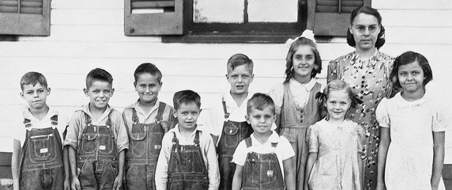
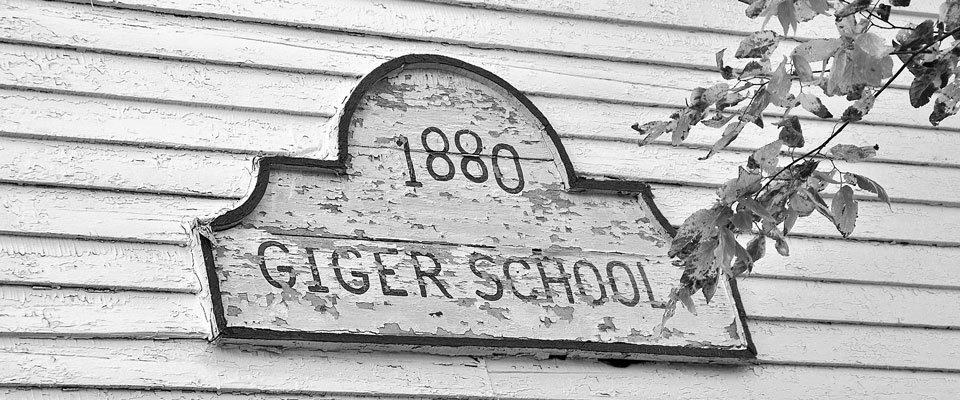
Geiger School class backroad on Illinois prairie 1947 walking backroads in rain and snow

Geiger School class backroad on Illinois prairie 1945 photo edit by rodger

During the 19th century there was an option for students to choose a continuation of 2 more years to take more advanced classes equivalent to high school. The orientation was for agriculture related subjects. The education supplemented the experience operating a dairy farm. Beginning botany, awareness of markets for farm products, seasons and climates, and raising animals was part of the curriculum.

Backroad memories thread American History and national culture
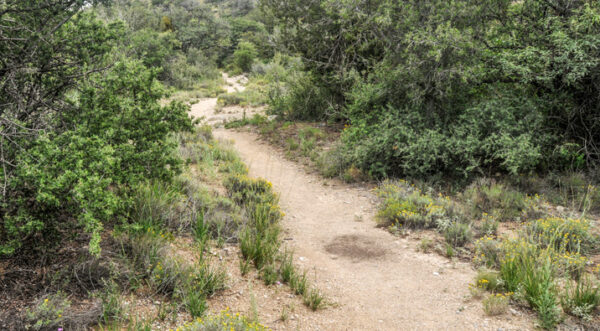
Backroad to American Southwest History trail to Fort Bodie Arizona 1861 Butterfield Stage route from Tennessee to California

trail to site of Fort Bowie Arizona photo by rodger
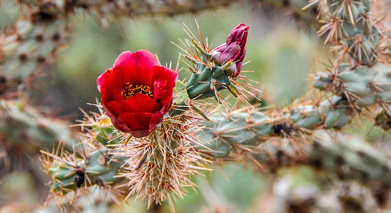
flowers on trail to Fort Bodie

flowers on Fort Bowie Arizona trail

Many Arizona backroads lead to iconic American Southwest History locations. Fort Bowie, Tombstone, Tuscon, Yuma, and many other locations attract tourists. The old west tourist interest persists but has faded and changed since the peak in the 1950s when there were more than 100 dude ranches, resorts that simulated cattle ranches in Tuscon. The ancient Indian ruins and 19th century mining towns like Bisbee and Jerome enhance the menu of American History. The backroads to historic sites are predominantly paved roads. There are many ghost towns and mining sites that require significant hikes to reach, some sites require water, topographic maps, and planning. The historic sites are often embedded in geology and biology that motivates a second trip. In my 40 years of travel to Arizona I certainly have not seen everything and am motivated to repeat many of the trips. My adult life added dimensions to my 50s childhood backroad memories. Driving through a mining town like Jerome Arizona melts the geology and history together.
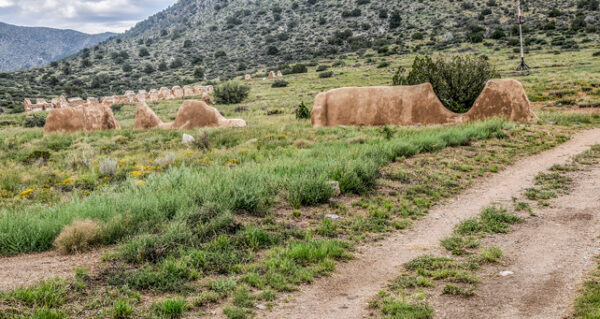
The trail to the Fort Bodie Arizona ruins state park site travels the backroad history of themes for 50s childhood memories of western movies and history of the Indian Wars and pre railroad transportation system, the Butterfield Stage

ruins at Fort Bowie Arizona photo by rodger
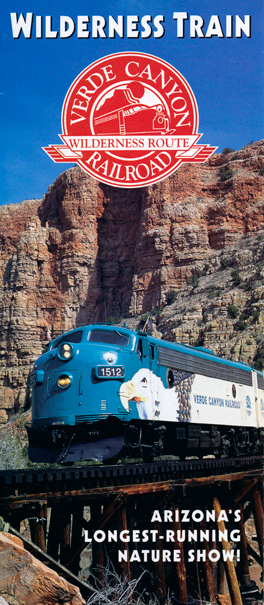
Arizona backroad history and geology on Verde Canyon train ride tour 50s childhood memories of western movie locations and closeup views of Arizona geology and biology for 21st century tourists

Arizona backroad history and geology photo edit by rodger 2003

The combinations of backroad geology, biology, and history have prompted many return trips to North Central Arizona. The logistics involve 3-to-4-day trips for the 350 miles from my home in Southern California. In addition to my nationwide favorite campgrounds in Sedona there are several archaeology sites, ghost towns, awesome Redrock hikes, off road vehicle trails, floating or swimming in rivers, herds of elk, aspen in color and more. Montezuma Castle, Walnut Canyon, Tuzigoot, Jerome, Wupatki, Sunset Crater and other attractions can keep you busy for weeks if you have the time. Although the town can be very crowded on holidays, Prescott has an old west flavor well worth the visit. The atmosphere and the food are great.  My first trip to Prescott in 1959 immediately created the feeling that this place is beautiful and different. Prescott was discovered by Californians in the 1980s and the rapid increase in population changed the town. My memories of the 1950s town are still vivid. The Verde Canyon train ride is an experience that I would enjoy repeating. The combination of geology and old west history is absorbing. There is a sing along component of the trip. A country music artist performs for most of the trip. I would like to sing Boxcar Blues with the passengers on that train again.
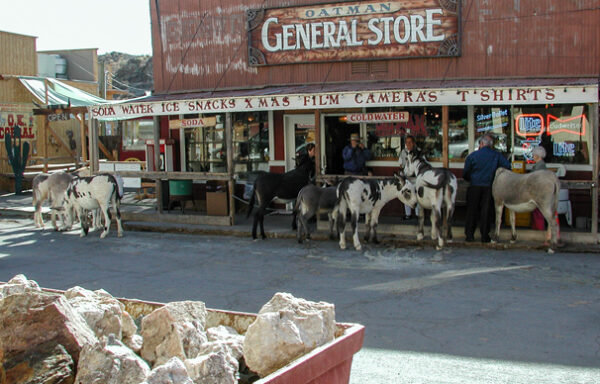
Route 66 backroad history at Oatman Arizona the feral donkeys still roam the streets in 2002 after being released from the mines decades earlier 1930s movie stars used Oatman for a hideout to avoid the Hollywood paparazzi 50s childhood backroad memories location becomes a wild west antique destination icon

1930s hideout for Hollywood stars becomes a tourist attraction in the 21st century photo by rodger 2002
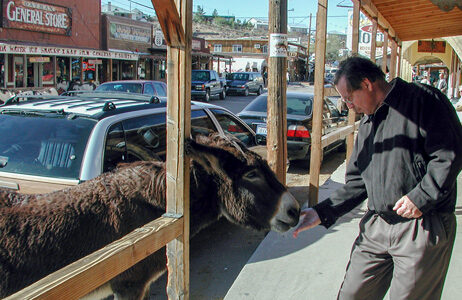
mining town backroad old west history becomes a tourist attraction surviving feral donkeys munch carrots sold by street vendors

feral donkeys munch carrots at old west backroad history Route 66 at Oatman Arizona 2002

Route 66 was like other roads across the US before 1935 except that there were no dead ends, and the signs told you where you were. The section from Chicago south through Illinois small towns to cross over the Mississippi River into Missouri provided travelers access to services but no picturesque locations. Most of the sites that have undergone some restoration are in New Mexico and Arizona.  During my childhood, until age 12, I rode a section of Route 66 in Edwardsville Illinois once or twice per week. My childhood travel on Route 66 in Illinois was memorable because of the routine but not dramatic locations. I have travelled Interstate 40 from Flagstaff west parallel to the Route 66 route many times. I have taken side trips to some of the sections of Route 66 that remain. Oatman Arizona is one of those places.
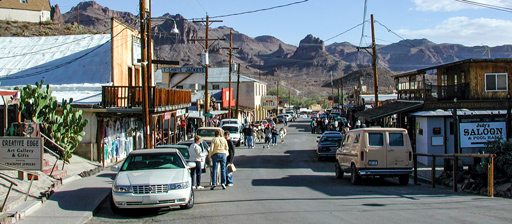
Oatman Arizona old west backroad history serves t-shirt's for tourists and carrots for feral donkeys Route 66 30s movie star hangout is 21st century destination for tourists to relive 50s childhood memories and becomes a backroad destination

Oatman Arizona main street preserves old west history on Route 66 photo by rodger 2002
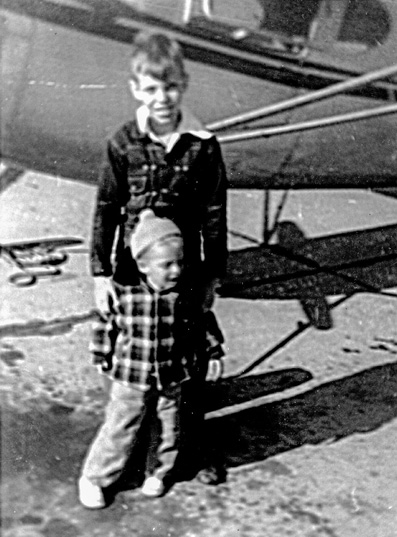
My father flew for fun and adventure 50s cross country flights were challenging without navigation aids Sunday afternoon plane rides were a 50s childhood memory and family routine we usually flew for an hour over the Mississippi River, nearby cities and my grandparents farm the cost was $10 to rent the plane backroads and other landmarks were navigation aids on cross country flights

Sunday afternoon plane rides were a frequent family routine
photo edit by rodger

Air shows which were very popular in the 1930s suddenly revived after the end of WWII. The local airport at Bethalto, Illinois about 3 miles from my house, had been created by an entrepreneur in the early 40s. The airport services were noncommercial, only people who could afford to buy or rent a plane used the airport. My father had obtained a commercial license with his GI bill benefits. One of our family routines was what I would call a Sunday fly, instead of a Sunday drive. The rent for a one-hour flight was $10. The local airshow did not have any military aircraft fly overs or demonstrations. The main event, if you could call it that, was ten-minute flights for sale at 25 cents. A takeoff, one loop around the airport, and a landing was the entertainment. The ten-minute flights were very popular with children who had never been on a plane. The airshows at nearby Saint Louis, Missouri did include military aircraft fly overs and displays of the latest generation of fighter and bomber aircraft including the X-15 which had recently broken the sound barrier in 1947.
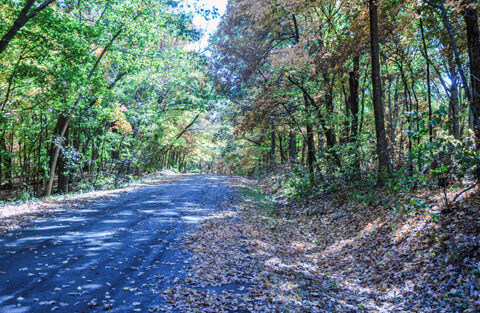
Hanibal Missouri childhood backroad memories for Mark Twain's characters Becky Thatcher and Tom Sawyer caves and riverboats at the end of the road

Backroad near Hanibal Missouri led to Tom Sawyer’s caves photo by rodger 2011

Becky Thatcher and Huckleberry Finn, characters in Mark Twain’s Tom Sawyer adventures, travelled Hanibal, Missouri backroads in the 1840s. They travelled to caves, the riverboat docks, the Mississippi River, and other childhood hangouts. Mark Twain’s childhood backroad memories became the setting for the heart, soul, and demons of 19th century American Culture expressed in the Adventures of Huckleberry Finn. These backroads near Hanibal became the 20th century Missouri Great River Road. The 20th century Great River Road tells the story of world scale commerce and an ecosystem that encompasses the biology and geology of the North American Continent.

WWII survivor creates family backroad memories

The return from WWII, revival of an interrupted family life, and the economic outlook previewing the end of the recession morphed a young couple’s lifestyle. For some combination of reasons that I never completely understood, my parents had travelled to 9 states from the time I was 3 years old, when my father had returned from the war, until I was 5. I have always had vivid memories of the locations which varied from south, north, and east. We had travelled to Texas Gulf Coast, Minnesota Lakes, Savannah Georgia and places in between.

In 1949 we travelled to Georgia for our vacation. The Savannah Georgia seawall made music in the night. Our hotel was on a street next to the seawall. The sound was not distracting or disturbing to my 6-year-old senses.  There was a rhythm to the sound of the waves breaking that added to the sensation of that place. I had seen the Gulf of Mexico the year before, but from a distance. I had never walked on an ocean beach or heard the waves.

The matrix of ocean, beach, sunburn, and reading my first comic books made childhood memories that are among the most detailed and vivid of my 6-year-old experience. I remember being on the beach without a shirt for several hours and that I was impressed by how big the beach was and how beautiful the ocean was. Whether sunscreen had not yet been invented or mostly ignored, the general approach was to get exposure gradually early in the season and develop a tan for protection. This event was early in the season. I developed a very painful sunburn. I remember the pain was keeping me awake, and that I did not sleep much that night.

My parents had brought a few of my favorite comic books along for the trip. I don’t remember reading them during the car trip. Maybe the purpose was to entertain me during the hotel stay. Tv as an entertainment option was years in the future and radios were not available in the hotel or in most cars. Favorite cartoon characters came with my early reading experience. The cartoon film genre began in the early 30s and some of the characters had become well established by the time I was able to read. I had seen cartoon presentations at the theater and followed the character’s adventures. Mighty Mouse stories were in comic books by 1942 and became my favorite. The cartoon characters lived on in various Tv and film incarnations until the 1980s.
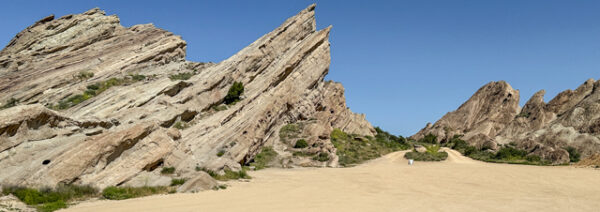
Vasquez Rocks on a dusty dirt backroad north of Los Angeles site for film and Tv from the early 20th century western movies Star Trek movies and Tv episodes 21st century childhood backroad memories for rock climbers of all ages

Vasquez Rocks site for hundreds of films from the early 1900s 21st century childhood memories for rock climbers photo 2024 by rodger

The date for the family trip to Tennessee is not certain. I believe it was 1950 or 1951. There was an event during the trip that linked to the Ozzie and Harriett Tv program, but that show was not on Tv until 1952.  The children I met at a church we attended during the trip were named David and Ricky, since we were in Tennessee this was obviously not the Hollywood Nelsons. There was an element of travel through small town highways in the late 40s or early 50s that represents the culture of the post war years. We always stopped to pick up men in service uniform that were hitch hiking.

When I saw the rock hills at Iron Mountain Tennessee they shouted, climb me. The only thing I could climb near my house in Illinois was trees. Children’s urge to climb was evident. Several trees in my neighborhood had crude ladders and other assisted climbing. Most of the years in elementary school one or more of my classmates had a broken arm in a cast. I am not sure which gene is the one for climbing but I know there is one. Illinois is a flat state; there are no hills to climb. The trail at Iron Mountain was not very challenging. I was soon on top. Climbing the rocks at Iron Mountain Tennessee is a vivid childhood backroad memory.

The childhood thrill of climbing the nearest hill transferred to other places and other states. In Washington State Mount Erie on Fidalgo Island was about one mile from my house. I climbed Mount Erie frequently for several years beginning at age 12. It might occur to you that climbing hills has obvious risks. I did not do high tech rope assisted climbing. The farthest that I ever fell was about 15 feet. The fall caused a very severe concussion that resulted in a hospital stay to recover.

Sometimes backroad locations lie dormant and unknown for long periods of time and are then discovered. Such is the case with Vasquez Rocks about 50 miles north of Los Angeles on highway 14. I began travelling to this part of Southern California to investigate earthquake geology in the 1980s. The California Poppy Preserve, where mind blowing super blooms occur every 4 or 5 years, is in the same area. The property at Vasquez Rocks was initially purchased for agriculture but was unproductive. The geology was discovered by silent film producers and then used extensively for Western films in the 1930s. The location will look very familiar to visitors who are Star Trek fans. Many episodes of the TV series and Films were shot there. The attraction for a large number of current visitors is the trail system and varieties of climbing challenges ranging from an easy ascent of 30 or 40 feet to more than 300 feet. The views of awesome geology go with the death-defying climbs. Most of the climbs near the parking lot were suitable for children. This location is now part of my backroad’s memories.

At another place and another time my first fishing trip with my father in 1949 was to Bull Shoals Lake in the Arkansas Ozarks. It was not quite a lake yet. The dam was recently completed, and the lake was being filled. The lake crossed the border between Arkansas and Missouri and covered parts of both states. This part of the US was agricultural and very sparsely populated. The nearby county of Douglas, Missouri where my cousins lived was 850 square miles with a population of 13,000. This does not quite meet Daniel Boone’s criteria for not being able to see the smoke from your neighbor’s chimney. This population density does mean that every road is a backroad. The hardwood forest fall colors on a lake with more than 1000 miles of shoreline would meet many people’s definition of paradise. Backroad travels by foot or by car would be in a private paradise. I chose an urban life. Sometimes I wonder why.

Epilogue: backroad memories are never far away wherever they are

My initial motivation for this post was to catalogue places and related experience from travelling backroads in childhood that had made a lasting impression. I soon discovered that the backroad experience was paths through family traditions, personal relationships, the choices for recreation and professions, and a detailed view of personal and national history. The backstory to connect generations provided explanations for the who, what, when, and where of the story. The backroads and places they led to have a presence and personality that underlines and enhances the reason I still remember them. My focus on 5os childhood backroad memories has revealed dimensions of where I came from, where I am now, and where I want to be.
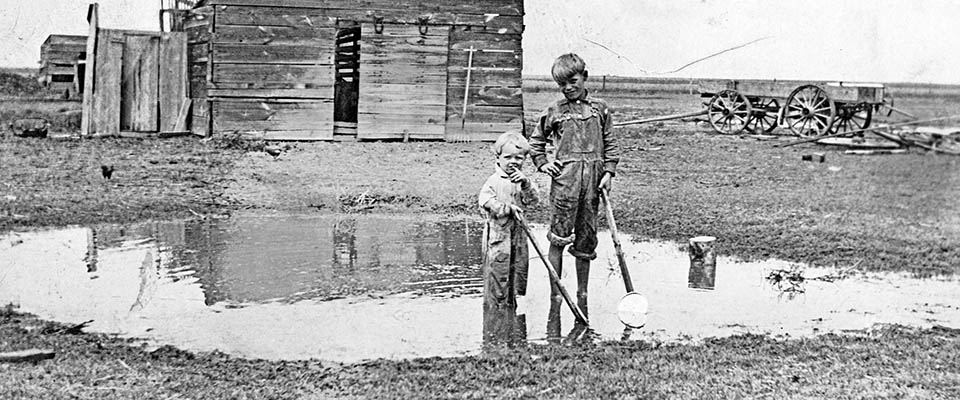
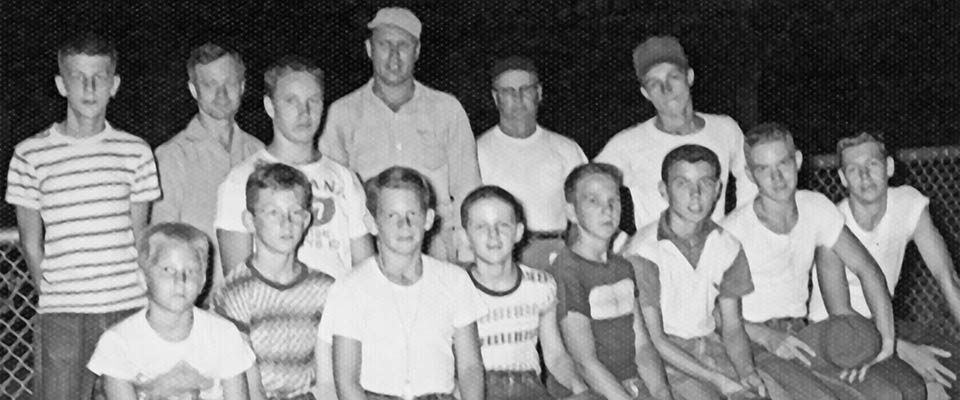
 

Posted in Family Customs | Tagged , , , , , , | Leave a comment

1935 high school graduates Greatest Generation American Dreams

If you were alive in the 1950s and were old enough to remember it your parents were part of what journalist Tom Brokaw named the Greatest Generation. That generation survived the Dust Bowl, the Great Depression, and fought in the epic battles of WWII. The theme of the 1935 yearbook of William Chrisman High School in Independence, Missouri was the Gleam. The yearbook theme frames the American Dreams and optimism for the Greatest Generation graduating class. The reference is to an Alfred Lord Tennyson poem, Follow the Gleam. The poem, written in 1889, uses metaphors of the sailing era to describe the experience of a young mariner embarking on his first voyage, symbolic of the voyage of life. This high school was Harry Truman and my father’s alma mater.
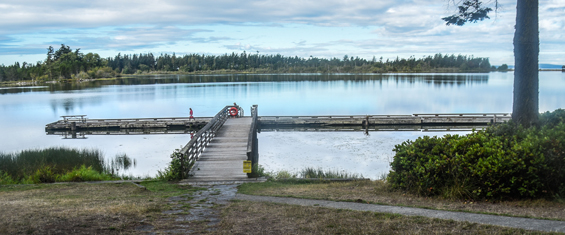
William Chrisman Greatest Generation High School from a line art drawing in the Gleam, the 1935 Yearbook

Line art drawing from the Gleam, the yearbook for the 1935 class of William Chrisman High School

A 1935 yearbook title expresses Greatest Generation American Dreams

The ending verses for the Alfred Lord Tennyson poem are listed here in sentence format not in the original one verse per line format: Not of the sunlight, Not of the moonlight, Not of the starlight!, O young Mariner, Down to the haven, Call your companions, Launch your vessel, And crowd your canvas, And ere it vanishes, Over the margin, After it, follow it, Follow The Gleam. The person or team that selected this theme chose a most powerful metaphor for connecting the past and present to the future of the class of 1935. I often think of this profound expression of optimism from this High School class in 1935, the depths of the depression.

The North Door of William Chrisman High School opens to visions of the Gleam for 1935 graduates. The Greatest Generation prepares for the challenges of the depression and continues the tradition of service on the cusp of American History. Outside this door were the 1930s small town traditions of Independence Missouri. The students would become parents who would shape the 50s childhood memories of small town traditions of the next generation. The teachers and staff inside this door would transmit the 19th and early 20th century family customs of a nation that was changing from agriculture to industry in the midst of a depression and in the shadow of a developing world war. The character and strength of William Chrisman students would be felt in the 50s childhood small town memories of the next generation.

North Door Line art drawing from the Gleam, the yearbook for the 1935 class of William Chrisman High School Greatest Generation graduates

Whaling voyages in the 19th century were lengthy, often more than one year, and perilous with fatalities for crew members or the loss of the whole ship. The ship captain’s house sometimes had a view of the harbor where the ship would return. The Widows Walk, a porch on the roof, was where the captain’s wife would look for the return of the ship. The Whaling Vessel metaphor expresses the reality of whaling voyage dangers. The William Chrisman 1935 graduation class had survived troubled times. They had faced starvation during the dust bowl, war was brewing in Europe, and Japan had invaded and enslaved Korea in 1910 and was invading China as the graduation ceremonies commenced.

No form of expression except poetry could communicate this confluence of culture and history on the cusp of 1935 America. The absence of poetry in education and communication in contemporary American culture is a great loss. Poetry defines an emotional and existential glue that defines a state of mind and a path from somewhere to somewhere else. For this generation reading books was a primary source of information and education for the events in the culture. TV and mass media did not yet exist. In this context poetry and novels had great influence. Radio news was not yet the popular medium that it became decades later.

The West Door of William Chrisman High School opens to visions of the Gleam for 1935 graduates. The Greatest Generation prepares for the challenges of the depression and continues the tradition of service on the cusp of American History. The small town traditions communicated by the teachers inside this door had powered the alumni to make their impression as employees in Walt Disney Studios, teachers in many states and countries, a United States Senator, and the medical profession.

West Door Line art drawing from the Gleam, the yearbook for the 1935 class of William Chrisman High School Greatest Generation graduates

The Tennyson poem and its use as a graduating class theme in 1935 creates a multilayered American culture theme. The whaling era that the poem draws from peaked in the 1840s and whaling was being replaced by the oil industry when the poem was written. The Tennyson poem view is retrospective by about 2 generations. The 1935 Independence High School theme contemplates a poem that is 2 generations old. The Follow the Gleam theme encompasses more than 100 years of American History. Sensing your place in history requires knowing the events, in this case a theme based on several generations of American history. I wonder how many High School students graduating in the 21st century have a keen sense of 100 years of American History.

The mother of all trails high school Greatest Generation alumni notes

The mother of all trails, Independence Missouri, also known as the Queen City of the Trails, founded in 1827, fosters an adventurous spirit. It was the starting point for the Oregon, California, and Santa Fe trails. In 1935 the city was no longer the transportation hub for the westward expansion. The adventure spirit of the city was evident in the Yearbook. Alumni notes, excerpts from the yearbook, portray the impact of this small Midwest town on the world. William Chrisman Alumni were working in Walt Disney Studios, and Sigmund Freud’s clinic in Austria, Harry Truman was a US Senator, and alumni were teaching in the Panama Canal zone, and several states and foreign countries. This small Midwest town, population 15,000, had an international impact. William Chrisman high school graduates followed the gleam across the continent and around the world

That optimism, character, dedication, and attitude of service provided the foundation for the next generation. The children of the 50s and many generations beyond were imbedded with this character. The class motto was the gleaners, a term used since biblical times for poor people who scavenged the leftovers from harvests. The theme of the graduation class exhibits a timeless character. They had experienced the greatest challenges in the Nation’s history. They celebrated the present and were optimistic about the future.

Greatest Generation friends at Buckner Missouri farm in 1934, my father moved to Independence to graduate from William Chrisman High School in in 1935

Clifford Immer and friends at Buckner Missouri farm in 1934 his move to Independence took the first step to Follow the Gleam

The coming-of-age story is both iconic and timeless. The story of the next generation, graduating from High School in the 1960s, is represented by a film directed by George Lucas, American Graffiti. The George Lucas biography is set in an agricultural California town, Modesto, in 1962. The America in 1962 was in many ways different from America in 1935. Many elements of the quest for adulthood were the same. The questions about what I going to be, am I going to leave home and find a life somewhere else, and what happens to my relationships with friends, are the same. The soul of the Greatest Generation exhibits a timeless character. The exploration of this character leaves me with a profound thirst to understand its depth.

The character of this class, expressed by sayings like, “an honest day’s pay for an honest day’s work “, underlines their status as the Greatest Generation of parents. There was no love greater than family and no sacrifice they would not make for the welfare of their family. It has been my pleasure and privilege to be a child of the Greatest Generation.

A 1935 senior trip embodies Greatest Generation American Dreams

A Greatest Generation child creates toys from a puddle after a Colorado plains rainstorm in 1925. Revelations from an Alfred Lord Tennyson poem, The Gleam, are ten years in the future.

Greatest Generation children play after Colorado plains rainstorm 1925

Clifford Monroe Immer was a graduate of the class of 1935. His family had moved from the plains of Eastern Colorado to Independence. The family was struggling but surviving. High School graduation was a cause for celebration. Clifford and a few friends planned a senior trip. They would borrow a car and pool their resources for a few gallons of gas to drive about 100 miles to the newly formed Lake of the Ozarks for a weekend camping trip. 1935 Willian Chrisman graduates envisioned a celebration of the yearbook theme to follow the gleam. The 18-year-old graduating senior’s vision of paradise is realized by a senior trip to the newly created Lake. A creative and inexpensive senior trip symbolizes hope.

The summary and some details of the senior trip were told to me by my father, Clifford Monroe Immer. I would like to know more about their conversations that weekend. Was it a joyful time swimming and exploring the lake? Did they talk about the war in Europe that some of them would fight and die in? Did they talk about the job that they hoped to find? What I do know is that their character, dedication, and attitude of service was passed on to the nation and their children.

1935 graduate’s hope and optimism Follow the Gleam to Lake of the Ozarks

When completed in 1931, it was the largest manmade lake in the US. The primary purpose was hydroelectric. The lake is located in the Missouri Ozark mountains. Recreational use developed very slowly in the rural area around the lake until a decade or more after the end of the depression. The only roads into the lake from surrounding small towns were unpaved roads to access farms. There were no facilities or services on the 1150 miles of waterfront in 1935 when the senior trip was planned.

Clifford Immer Best Generation high school graduate 1935 Follows the Gleam for a senior trip

Clifford Immer Best Generation high school graduate 1935 Follows the Gleam for a senior trip

Route 66, the first interstate HWY, was not completed until 3 years later in 1938. Before Route 66 there were no services, no gas stations, and the unmaintained roads could destroy your tires. The best roads commonly used for travel between cities were gravel or graded dirt. The roads to the shore of Lake of the Ozarks were ungraded rocky roads that had once led to villages that had become underwater ghost towns. The unpopulated hardwood forested shoreline did not have any services or accommodations. The exploration of the lake was not constrained by any rules. The boys could camp wherever they wanted and swim wherever they wanted. The lake with more than one thousand miles of shoreline was their private domain until they ran out of food and decided to go home.


Automobile travel over long distances involved unsigned, unmaintained and unpredictably impassable roads. The senior trip group was aware of road hazards and were prepared. The sharp rocks from the geology of the Ozarks were piercing the tires and innertubes so that they could only drive a mile or two before they got another flat tire. They had brought a repair kit so that they could patch the tire and reinflate it with a hand pump.

A 1935 Greatest Generation graduate and brother-in-law Follow the Gleam

Across the state, on the other side of the Mississippi River in Illinois, Mary Helen Smith was contemplating her 1935 high school graduation. She had been orphaned by her coal miner father’s death 10 years earlier. Her brother-in-law, Louis Warford, had taken in two orphans, her and her cousin Tyke Kelso. Louis fished locally in the Illinois River.

Mary Helen Smith celebrates Roxana, Illinois Greatest Generation graduation follows the gleam on her brother-in-law's fishing trips

Mary Helen Smith 1935 High School graduate new dress celebrates Greatest Generation graduation

He occasionally travelled to Lake of the Ozarks for fishing and took Mary Helen with him. The weekend fishing trips during the depression were an expression of a working-class vision of Greatest Generation American Dreams. The brother-in-law fishing trips reveal the working-class family’s vision of American Dreams and the economics for weekend trips during the depression.  The accommodations were likely an unheated shack with one bed and no running water. Several family members or my uncles fishing buddies could sleep on the floor for one dollar per night.


A family retreat realizes Greatest Generation American Dreams

Greatest Generation graduates meet in Alton, Illinois in 1937 and marry in 1940

Greatest Generation graduates wedding photo 1940

In 1937 the Immer family moved from Independence Missouri to their ancestral home, a farm settled in 1885 by his grandfather Fred Immer, near Highland Illinois. Clifford Monroe Immer met Mary Helen Smith at a church in Alton Illinois. They were married In December 1940. Clifford Monroe Immer was working as a refinery maintenance supervisor for Shell Oil Co in 1951 when he decided to buy property on Lake of the Ozarks.

The lake was 180 miles south of their residence. The property would serve the family interest in swimming and fishing on weekends and vacations. He bought 7 acres with 800 feet of waterfront for $1000 on Duckhead point. The area was undeveloped. The undeveloped status of the lake created a working-class paradise. The area around the property was essentially a private lake surrounded by hundreds of acres of forest. There was no housing, electricity, or running water at the property.

Posted in American History Connections | Tagged , , | Leave a comment

50s childhood memories forests creeks and ponds

Henry David Thoreau experienced his model of simple living in natural surroundings living in a small shack at Walden Pond. The location is about 2 miles from the town of Concord. Because of isolation from community activities, he was able to devote this time, 2 years 2 months and 2 days, to meditation.  His conclusion was, ” the beauty within us makes it possible for us to recognize the beauty around us”. Steven Hawking’s personal world view, that “genius is the process of being humbled by reality”, motivated his discoveries in physics. Thoreau and Hawking’s themes provide examples for the humble childhood experience creating memories of forests, creeks, and ponds to reveal the beauty in them.

Generations of forest creeks and ponds childhood memories

Location for Mark Twain's childhood memories of forests creeks and ponds

Mark Twain’s house Hanibal Missouri photo 2011 by rodger

Mark Twain wrote about his childhood memories of forests creeks and ponds at Hanibal Missouri. The adventures of Tom Sawyer, written in 1876, immortalized his experience.  As a result, his childhood view of life on the Mississippi River at Hanibal foreshadowed the lucrative and adventurous profession of a river boat captain. Subsequently he had signed on as a pilot’s apprentice in 1857 while on his way to Mississippi. Accordingly, on April 9, 1859, a 23-year-old Samuel Langhorne Clemens, also known as Mark Twain, received his steamboat pilot’s license.  Subsequently on trips to New Orleans and other ports on the Mississippi River he passed within one half mile of my view of forests creeks and ponds at Alton, Illinois. He saw the same fall colors and bayous that I saw as an 8-year-old in 1951. Consequently, this shared experience expands my childhood memories.

Madison County, Illinois dairy farmer and Civil War veteran with daughters' family in 1903 his daughters two older girls had died in childhood, Victorian house portrays prosperity in the gilded age, 4 generations of childhood memories

Oswald Kile, my great, great grandfather and daughters’ family Deck’s Prairie house 1903
photo edited and colorized by rodger

Four generations of my family experienced the Silver Creek Census Area defined in 1820 for Madison County Illinois. As a result, the effects of the multigenerational experience expand my personal dimensions of this sense of place. After Illinois became a US territory in 1809, the county was defined in 1813. My great-great grandfather Oswald Kile was born in what had become the township of Marine in 1827. This town is about 2 miles from the forested Silver creek. My great grandfather Fred Immer was born in 1862 in the Marine township. He bought 270 acres on Silver Creek in 1885.

Fred Immer operated a dairy farm and fished in Silver Creek until his death in 1935. His son, my grandfather Fred Immer was born in 1890 at the farm on Silver Creek.  After living in Colorado and Missouri, he came back to the farm on Silver Creek in 1937. He operated the farm until 1956. I lived on the farm on Silver Creek during WWII and occasionally spent weekends there during my childhood from 1945 until 1955.

More generations of forest creeks and ponds childhood memories

Childhood memories of campsites at forests creeks and ponds

Woods Canyon Lake Arizona campsite 1993 photo by rodger

My wife’s profession as a park ranger and college teacher of education methodologies for docents in the 1990s revived and intensified my childhood memories of forests creeks and ponds. Consequently, our family tent camping trips to more than 100 national and state parks included careful planning to find the most secluded and picturesque campsites in redwood forests, rivers, lakes and coasts. As a result, our children and grandchildren extend the tradition to 2 more generations.

Childhood memories of forests creeks and ponds began at this 1947 campsite on the White River, WWII survivors celebrate family and natural beauty

White River in Missouri Ozarks photo by rodger 2007

My earliest childhood memories of forests and creeks began on the White River in the Missouri Ozarks in 1947. Several decades later the montage of memories has evolved from the experience shared with my wife, children and grandchildren. The White River memories of sleeping on the beach, crayfish in the pools at the edge of the river, and the traffic of river rafting on air mattresses, are still vivid. As a result, the 1947 memories frame and enhance the lifelong experience of humility, natural beauty and the beauty in people.

Deer Park Cabin lodge, built by Ben Overturff in 1907 in the San Gabriel mountains near Pasadena, California, accommodated interest in this wilderness area. The location at approximately 3000 feet elevation in the forest also provided relief from the summer heat. Because there were no roads, access was by a difficult trail with a 1600-foot elevation gain. My wife managed the wilderness park where the trailhead to Deer Park is located. Because of her interest in history, her master’s thesis was a biography, she documented the area history with trail signs including photographs and newspaper clippings.

Although the lodge ceased operating in the 1930s, the trails continue to be heavily used. They originated in Monrovia Canyon and are referred to as the Ben Overturff trail. Hikers, mountain bikers, and joggers use Sawpit Canyon Road, which provides lots of views of the Los Angeles basin, several creek crossings, and leads to remnants of the original stone lodge. Several hundred people use Sawpit Canyon Road on summer weekends.

History and landmarks underline childhood memories

Chain of Rocks bridge Route 66 crossroads for childhood memories, the ebb and flow of childhood life from 1945 to 1955, trips to the Saint Louis Zoo and Cardinal baseball games

Chain of Rocks Bridge Route 66 Mississippi River crossing photo 2007 by rodger

The Chain of Rocks bridge on the Mississippi River was my earliest sensation of a crossroads. It was the way from my house to Saint Louis, Missouri on Route 66. The zoo, baseball games at Sportsmans Park, and the circus at the Kiel Auditorium were destinations for childhood memories. As a result, the ebb and flow of childhood life was on Route 66 crossing the Chain of Rocks bridge. Because of my childhood emotional connections, I revisited the bridge, in 2007, on a trip from California to Midwest destinations. Because of improvements in the highway system, the bridge had closed in 1967. Subsequently the conversion to a state historic park provided foot traffic across the river from Illinois to Missouri with views of the Saint Louis skyline to the south.

Waldon Pond, near Boston Massachusetts, served Henry David Thoreau’s quest for meditation in a setting of natural beauty. To clarify Thoreau’s experience, I travelled to this location on a summer weekend in 2009 to revisit his childhood memories of forests creeks and ponds. The sensation I experienced was a crush of people and cars. Parking lots overflowing with cars sandwiched the reconstruction of his cabin.  Layers of people covered the beach from the road up to the edge of the pond. Because this location was no longer an island of solitude, meditation on the natural beauty required tuning out the screaming children and chatty adults. Consequently, I was not able to experience this location the way Thoreau did.

Forests creeks and ponds provided perfect children’s habitats

The topography of my grandfather’s farm, 20 miles from my house in Roxana, Illinois, was not ideally suited for agriculture. Only about half of the land he purchased in 1885, 270 acres, could be planted in crops. However, due to the forest, creek, and ponds the topography of the farm was ideally suited for the exploration 8-year-old style perfect childhood habitats. The property was located about 2 miles from the small town of Highland, Illinois on a section of land called Deck’s Prairie. Because of my frequent visits, the farm rapidly became imbedded in my childhood memories of forests creeks and ponds.

Deck's Prairie Illinois farm view from South end in 2007. Childrens toys for my solo baseball practice. 50s childhood memories of forests creeks and ponds were founded on Decks Prairie at the 19th century family farm

Deck’s Prairie Illinois farm view from South end in 2007.
My solo baseball practice was one half mile North West.
Photo by Rodger.

A forest of Oak and other hardwood trees covered several sections of the 270 acres of the farm. Silver creek ran through a hardwood forest the length of the farm on the east side. My great grandfather cleared some of the hardwood forest during the 1880s to create more land for cultivation. Patches of hardwood forest, a few acres in size, on the creek and north and south border remained when I first began to explore the farm as a 6-year-old child in 1949. Some areas of the farm, that were not level, were eroded from seasonal creeks and the water runoff from slopes. The mini hills and valleys from the erosion, my cousin and I called them piggybacks, were the right size for childhood adventures and scrambling.

The western section of the northern border, about 30 acres, was level and had been used for an orchard in the 19th century. Since this space was unused for crops it briefly served as an archery range. My father decided to show me how to string and shoot his father’s double recurve bow. The bow was 54 pound’s strength and very difficult for a 10-year-old to string. My father could pull the full strength of the bow. We tested the range and measured the distance. The arrows travelled more than 300 yards.

A blend of urban and wilderness locations created children’s habitats

In 1955, just before my 12th birthday, my family moved from Roxana, Illinois to Anacortes, Washington. We left behind extended family, friends, and the ancestral farm that had been my private playground from my earliest childhood memories. As a result of the move my father was getting a better job by accepting an assignment at a new Shell Oil Co refinery in Washington State. Since his supervisory position was on the day shift, he no longer had to work night shifts.

Childhood memories of forests, creeks, and ponds a long walk from my urban home, a perfect children's habitat for fishing, boating, and exploration

Fidalgo Island view from Washington Park photo by rodger 2011

Our house was in a new subdivision developed for the demand created by the construction and operation of the new refinery. Consequently, location on the northern edge of the town of Anacortes, on Fidalgo Island, provided easy access to urban and wilderness playgrounds. There are 9 lakes on the island. All of the lakes were within a 3 mile walk of my house. During my stay at the motel, while waiting for the completion of our house, I dabbled in a creek that came from Heart Lake. My love of baseball, I started playing little league at age 8, quickly adjusted to the local organization and venues. The lighted field on main street about 1 mile from my house hosted the little league games and accommodated ad hoc games at all hours of the day.

Heart Lake, one half mile south, was the most frequent destination for my childhood hangouts. The 64-acre lake was multipurpose. Part of the lake was silted but some areas had sandy beaches perfect for swimming. The fishing was excellent and opening day attracted hundreds of fishermen who set up camp the night before. There were no designated camp sites. The evening before opening day included campfires, lots of comradery among fishermen and newfound friends, and lots of beer. Mt Erie and Erie Lake were another half mile south. The one-thousand-foot climb, and trails on Mt Erie provided a perfect domain for a child to explore. Heart Lake added dimensions to my childhood memories of forests creeks and ponds.

generations of children invented routines unique to their space and time for a personal habitat

Father and uncle Eastern Colorado plains 1925
photo edit by rodger

Any body of water will capture the interest of a child, including a puddle on the prairie after a rain. My next-door neighbor and other close friends accompanied me to Heart Hake. Since there were no trails there in 1955, exploring the lake meant bushwacking your way around the lake. Some of the friendships that developed at Heart Lake were lost when I moved to Arizona several years later. The friendship with my neighbor revived, because he had moved back to his Long Beach, California hometown in 1964, when I moved to Long Beach California in 1966. Many vivid childhood memories of my Heart Lake habitat have persisted and define an emotional anchor to a very special sense of this place in my life.

Childhood Memories finding solitude at forests creeks

Forty years after leaving Illinois in 1955 I was still having dreams about a location on my grandparents’ farm. Most of my visits to the farm in the spring and summer months included a one-half mile walk to Silver Creek on the Western boundary of the property. A field road of unknown origin and not in current use was the most direct path. The road was sunken several feet below fields on both sides and canopied by the varieties of hardwood trees. Since it was shaded the walk was cool on warm days.

The location called the ford, where the field road crossed Silver Creek, was my personal sense of place and a favorite hangout.  Since neither air travel nor automobile traffic was audible, the ford was quiet. The only sounds were leaves in the wind and the murmur of the shallow creek. The creek was heavily shaded by trees 15 feet above on the banks. The water table in that area was 60 degrees so the creek was always cool. Consequently, the air in the creek bottoms was cool even on hot summer days.  The ford created an emotional massage that soothed the senses of an eight-year-old life that was not without stress.

Generations of solitude discovered and lost to history

Generations of forests creeks and ponds childhood memories

Great grandfather Fred Immer and daughters at Deck’s Prairie farm about 1920 photo edit by rodger

Silver Creek served a similar purpose for my great-grandfather. He fished at the creek most Sunday afternoons from the 1880s until he died in 1935. The advances of national transportation and Highland, Illinois development had radically transformed Silver Creek by 1967. Interstate 70 Hwy replaced the farmhouse and field road with concrete roadways and off ramps. Silver Lake was created for a city water supply and covered 550 acres of the creek and surrounding forest. As a result of the interstate highway development, the location no longer exists. However, the childhood memories of forests creeks and ponds for 4 generations of solitude remain.

My treks to solitude personal theme reemerged in 1987 when my wife decided to embark on a profession as a park ranger and geology and biology teacher. During the next two decades we travelled to more than 100 national and state parks as part of my wife’s employment and our personal interests. From my location in Southern California, I explored many trails in the San Gabriel, San Jacinto, Santa Rosa, and San Bernadino mountains.

The experience during my wife’s 1987 geology class field trip resulted in my wife cooking Chateau Briand in a light snow fall on the slopes of Crater Lake National Park. Unplanned events such as a super bloom in Glacier National Park, and a landslide on Sawpit Canyon Road near Pasadena, California added dimensions of solitude. My personal treks to solitude and casual observations of the Mississippi River, about 1 mile from my house in Roxana, Illinois, are from a very different perspective compared to exploration of the Mississippi River by Jacques Marquette in the 17th century.

Tabula rasa childhood memories forest creeks and ponds solitude

If you are not familiar with this phrase you may wonder what exactly tabula rasa means. The dictionary definition reads something like: “absence of preconceived ideas or predetermined goals, a clean slate”. My treks to Silver Creek on my grandparent’s farm or other locations were for the most part ad hoc. The specific route or expectations for what I would see or do was not predetermined. The season and the route, e.g. through the south 40 which was an indirect path to the creek, would take me through a corn field that was tasseling at 10 feet in height and felt like a tropical forest. The east side of the creek, should I decide to cross it from the west where the farmhouse was, contained a hardwood forest instead of the plowed fields on the west side.

A walnut tree on the edge of a pond about 200 yards west of the barn and farmhouse was a frequent destination. The small pond, dug by my grandfather and father when they moved from Independence, Missouri back to the ancestral home in 1937, provided a source of water for the cows. The source of water for the pond was rain from the natural slope on the area around the pond. It was large enough, about 50 yards in length, to support a variety of life for the curiosity of an 8-year-old child. Small fish, frogs, and a variety of insect life including dragon fly nymphs inhabited the pond. I was fascinated by the dragon fly nymph’s ability to attack and eat minnows.

From age 6, when I first ventured out on my own, until I moved out of the state in 1955, I spent many hours at that walnut tree just enjoying the shade and listening to the frogs. I have often contemplated the solitude and missed being able to just sit in the shade of that walnut tree and listen to the frogs for a few minutes. Because that walnut tree was a long-term routine the image connects my most vivid childhood memories of forests creeks and ponds.

Childhood memories of forest creeks defined a personal sense of place

It was my personal sense of place that no one else could experience because there were not there at that time in those circumstances. The location at a pond, that was behind a barn, near a creek, on the edge of an oak forest, on a warm fall day, surrounded by orange and red colors created a unique scene. The emotional dimensions of a sense of place, how it was perceived and felt, are defined by the configuration of physical, biological, and psychological context with a meaning beyond the parts. The sensual and emotional bond defines a gestalt montage, a technique used by filmmakers to compress all of the elements of a scene.

Location for Mark Twain's childhood memories of forests creeks and ponds at Hanibal Missouri. About 100 miles north of my childhood home near Alton Illinois where I saw fall colors 100 years later in 1951.

Great River Road at Hanibal Missouri photo by rodger 2011

The 7 miles of the Illinois Great River Road, designated State Highway 96, from my house in Roxana to Alton, Illinois defined a sense of place for historic locations. The Lewis and Clark 1804 base camp, the exploration of the Mississippi River by Marquette and Jolliet in the 17 the century, the River Boat captain Mark Twain trips down the Mississippi River in the 1850s, and the 1100 AD Mississippian Indian Culture city Cahokia were all located on this route. The confluence of the Mississippi River with 1000 years of culture defines a universe of childhood memories of forests creeks and ponds.

Many scenes in my personal history occurred on the Great River Road in Alton. I was born at Alton Memorial Hospital on the bluff overlooking the river. I learned to ride a bicycle at Lincoln Douglas Park in downtown Alton. My first stereo sound wide screen movie was at the downtown theater. My mother attended the Cosmetology School downtown, and I noticed the Piasa Bird Indian painting on the cliff during my frequent trips. The Great River Road and Alton montage of scenes and activities is connected to so much of my life that I can’t imagine being the same person without them.

Biology and locations define and enhance childhood memories

The biology and weather at my grandparent’s farm, near Highland Illinois, created a unique matrix of auditory and visual sensations. The hardwood forest on the northern and western edge of the farm contained a mixture of Black Walnut, Red Maple, Cherry, Box Elder, Elm. and Oak trees that canopied the field road. The combination produced a kaleidoscope of colors during the fall. I frequently walked the field road on the northern edge of the farm to get to Silver Creek. I thought this was my private road since it had not been used for decades. The unusual and unexpected fall weather pattern and the unique biology of the forest defined a once in a lifetime sense of place.

Childhood memories of forests creeks and ponds my first camp site prompted development of lifelong interests in geography and history of forests creeks and ponds

White River site of my first campsite in 1947 photo by rodger 2007

My first awareness of a very special place that would never disappear from memory was at the White River in the Missouri Ozarks at age 4. It was my first camping trip and a family reunion of sorts. My father and younger brother had been discharged from WWII less than 2 years earlier in late 1945. State parks and formal camp sites did not yet exist, the Ozark National Scenic Riverways national park was not created until 1964. The roads were unpaved and traversing between rivers required driving across creeks. My father had just purchased a 4-wheel drive jeep, so he took great satisfaction in exploring the country roads and finding the perfect sandy beach to put down our sleeping bags.

The Ozark Rivers have always felt like home even though I have lived near Huntington Beach California for 50 years. My grandmother and great grandmother lived in Hartville, Missouri until 1914 when they moved to Colorado. Hartville is a few miles from Mansfield, Missouri, Laura Ingalls Wilder’s, the Little House on the Prairie author, home. Because my childhood view of the world was shaped by experience in the Missouri Ozarks, it was always my dream to own property on a spring fed lake. Work and family have taken me to other locations that I call home. However, I have never forgotten that dream.

Forest creeks geology and biology vitalized childhood memories

At age 6 I visited my great uncle’s farm near Bryant Creek in the Missouri Ozarks. The occasion was an unofficial but important family reunion. Three years earlier my father and his younger brother had returned from service in WWII. My great uncle had served in WWI. Ten people from 3 generations of the family were there. After a dinner including gooseberry pie, which I thought were peas and asked that they be removed from my pie, I watched the fireflies come up over the fields next to the house. There are a large number of caves in Missouri. As a result, there was a cave on my great uncle’s farm. The group, including myself and my 3-year-old cousin, explored the cave. My memories of what I saw in the light from flashlights was undiscernible shapes, and a lot of mud and water.

A family trip in 1993 was multipurpose. My daughter graduated from High School that year. She had enjoyed a decade of family tent camping trips to National Parks and was looking forward to the trip. We planned to travel across the Southwest from Albuquerque, New Mexico, to visit National Parks we had not yet seen and then north to Illinois to meet with extended family. We flew to Alburquerque, to reduce the travel time, and rented a car for the rest of the trip. Airport security did not like my tent stakes in the carryon baggage, so I checked them with other baggage.

At Bandelier National Park we arrived after the nature center had closed but still had time before sundown to climb the cliff face on ladders and do a walking tour of the site. My time at the planned destination in the Ozark rivers was shortened by a side trip to visit one of my daughters’ friends in Arkansas. Although we did not reserve campsites in advance, we found a space at Round Springs on the Current River when we arrived after dark at 9 pm. The next morning, we travelled 9 miles in a canoe on the Current River and toured the cave.

Family travels in the 80s and 90s were coast to coast

Grandchildren childhood memories of forests creeks and ponds emanate from family traditions

Rustic cabin on the Saco River near Conway New Hampshire photo by rodger 2017

Family travels to experience biology and geology spanned decades and coast to coast destinations. After my daughter moved to Massachusetts the focus of family adventures became New Hampshire.  A cabin, without water or bathroom, on the Saco River became a traditional fall destination. My daughter managed to reserve the same cabin, #2, my grandson’s favorite location, for more than ten years. The grandchildren came prepared for wading in the shallow areas of the river with boots. The trails on the banks of the river and on the mountain slopes unveiled magnificent vistas of fall colors.

Family camping trips during the summer in the 80s and 90s almost always included gold and silver mines that had been converted to tourist attractions. The best example is the silver mine at Wallace, Idaho. The tours included demonstrations of mining operations. The machines used to drill for the dynamite placement were turned on and the holes for explosives created.

More forest creeks geology and biology childhood memories

I discovered my favorite state park on the homeward leg of a family vacation in 1989. Big Basin Redwoods State Park, near Santa Cruz, California, has a unique combination of geology and biology with camp sites nestled in the trees on the banks of a creek with a view of the ocean. The city of Santa Cruz is a few miles away with a beach, boardwalk, and a roller coaster. Banna Slugs, deer and racoons compliment the scene. The accommodations included individual camp sites and tent cabins with beds and electric lights. Two years earlier I had stayed in a campground outside the redwood grove. We experienced a geologic event up close and personal. A moderate earthquake awakened us. Neither roads nor infrastructure were damaged, so we proceeded north to destinations on our vacation trip.

Illinois River family fishing hangout. Finding solitude, connecting with nature, and supplementing the menu. Uncle mentors childhood memories of forests creeks and ponds

Uncle Louis cleaning fish at Illinois River cabin near Hardin 1949.
Substitute father during WWII, best friend, and dedicated fisherman.
Photo edit by Rodger 2007.

At age 3 my uncle introduced me to geology and biology that it has taken a lifetime for me to comprehend. My father was in the south Pacific. My mother and I were living with my aunt and uncle in Wood River, Illinois. My uncle Louis was a fisherman. In the 1950s in the midwestern United States this title carried a lot of information about the person it was applied to. A fisherman’s reading list started and ended with Field and Stream magazine. Fisherman preferred fresh fish for dinner and lots of it. They had a personal technique and style for the lures they created, called flies. Fishermen were experts in local biology, geology and weather as it related to the species that they intended to catch. They were patient, kind, and loved to educate children in the knowledge and skill they needed to become fishermen.

Geology and biology down the road childhood memories

My uncle found a location about 20 miles from his home in Wood River, Illinois that provided a diverse habitat for fishing and hunting.   Macoupin Creek, after a 100-mile-long course through southwestern Illinois, merged with the Illinois River near Hardin, Illinois. The biology of the creek was different from the Illinois River less than 100 yards downstream. The creek was much shallower and slower moving that the river. The creek was less than 50 feet wide and completely shaded. We caught bluegill in the creek. They were small and you had to catch several to make a meal. The river had blue catfish and carp that were much larger. Bait for fish in the creek was available under foot. Worms were the best bait, and the river bottoms was a perfect place to find them in the mud.

Cave exploring was an infrequent but important family routine. There were several caves operating commercial tours that we could see on a day trip from our house in Roxana, Illinois. Onondaga Cave was our favorite. If relatives from out of state visited, we took them on a tour. When my wife and I travelled from California to Illinois to meet my relatives one year after our marriage, we went to Onondaga Cave. By age 10 I felt confident to wander off from the group and explore the cave on my own. This caused some anxiety for the tour guide. The lights were turned off after a section of the cave had been explored so I was wandering around in the dark part of the time. The small lake outside the cave had a large number or rainbow trout. Feeding them crumbs was not encouraged but fun.

The Dawt watermill on the White River in the Missouri Ozarks is family history and the era of waterpower, in the 19th century it served as a general store, social network, and agricultural produce. Great grandmother mentors childhood memories of forests creeks and ponds.

Dawt mill on the White River historic site plus fishing and canoeing photo by rodger 2007

The geography of Ozark rivers and lakes is the context for generations of adult and childhood memories. My grandmother Cuma lived in Hartville Missouri from her birth in 1900 until she moved to Colorado in 1914. I visited father’s niece’s farm on Bryant Creek, near Ava Missouri, in 1951. My great uncle Harry farmed near Ava and retired to live on Lake Taneycomo  Lake near Branson Missouri. Dawt mill on the White River defines period history.

Geography expands forest creeks childhood memories

Yosemite Valley was on the agenda for our first family camping trip in 1978. My daughter was 3 and my son was 5. The experience was the inspiration for 2 decades of trips and the formation of a family traditions. A decade later my wife decided to change professions from Information Technology to a park ranger and university teacher. The campsite, geology, and donkey rides were a perfect menu for grandparents, parents, and children’s activities. The lower Yosemite Falls trail and Indian Caves provided an accessible spectacular geology experience and made for children playground.

Sprague Creek campground at West Glacier National Park is a candidate for the best campsite I have experienced. The location has geology, biology, ambience and convenience. A short walk from the camp site to the convenience store provides for food, ice or other camping needs. Lake McDonald and Sprague Creek are nearby. We watched beavers maintain their house and my son and daughter paddled a boat to explore the creek. White water rafting options can be adventurous in the spring when the rivers are high or a gentler scenic tip in the late summer. Horseback rides were available and elicited some horsemanship when my daughter’s horse slipped and fell down in the creek.

Childhood memories of forests creeks and ponds morphed into adult interests, travel to diverse geographies and connections to my wife's park ranger and college teacher profession

Sawpit Canyon Road in the San Gabriel Mountains near Pasadena California photo by rodger 2013

The Sawpit Canyon Road, in the San Gabriel Mountains near Pasadena, California, has hundreds of thousands of visitors per year. The location is well known by local residents and attracts hikers from across the country. As a result, the forested Creekside Road fulfills a variety of interests for outdoors enthusiasts. For instance, joggers have unlimited miles for their work out with connections to other trails and mountain roads with varying challenges of grades to choose from. Mountain bikers can accept the challenge of elevation gains of 4000 feet and 40 miles or more of round-trip routes. Leisurely walks with dogs can consume the whole day to cover several miles of trail. My park ranger wife and I walked 3 miles of this road 19 times to do habitat studies for butterflies.

Childhood memories of movie sets inspired adult exploration

Wakulla Springs inspired childhood memories and motivated adult interests in travel to geography and biology of forests creeks and ponds

Wakulla Springs Florida location for Tarzan and Creature from the Black Lagoon childhood memories of movie sets photo by rodger 2007

My childhood memories of favorite movies and characters did not include awareness of sets and locations. Four-year-old perceptions of the plots and actions assumed that these stories took place in a country on a continent far away. As I researched destinations for family trips decades later, I discovered that favorite characters, particularly Tarzan, and the Creature from the Black lagoon, swung through the trees and swam at locations that I could book a plane flight to. The resort at Wakulla Springs presents a unique combination of 30s architecture, period style accommodations sans telephones and TVs, and ambience.

Childhood memories motivated adult adventures to geology and biology of forests creeks and ponds park ranger mentors' childhood memories of forests creeks and ponds

Canopied road near Tallassee Florida photo by rodger 2007

In 2007, when my children were not available for a family gathering on Christmas, I travelled to Wakulla Springs near Tallahassee, Florida. The tour for exploration of the motion picture sets provides a close-up view of the geology and biology of the springs.  Alligators, manatees, tropical birds, and fossils at the bottom of the springs are a unique experience different from any site I have seen. The Tallahassee subtropical climate supports forests and wildlife that I had never experienced.  Huge moss-draped live oaks, sweet gums, hickory trees and pines canopied many miles of roads. The scenes and colors contrasted the hard wood forests of my Midwest childhood.

Parent travel adventures explored forest creeks childhood memories

My parents’ childhood in the 1920s and 1930s did not include travel to far off places.  Because of the depression and their working-class circumstances, a nearby lake was the extent of their recreational travel. My father travelled, from his home in Independence Missouri, to the newly created Lake of the Ozarks for his High School senior trip. My mother travelled from her home near Alton Illinois to the Lake of the Ozarks for fishing trips with her uncle.

After their marriage in 1940, their lifestyle changed. I never heard an explanation for their expanded interest in travel. My father’s job at Shell Oil Co, a steady job with good benefits while the country weas still in recession, was likely a factor, During the first few years of their marriage they made cross country trips to: Atlanta Georgia, Minnesota, the Gulf of Mexico, Tennessee, and Colorado.  The childhood memories from these trips are vivid and forever. Matagorda Island, Atlanta Beach Georgia, and Iron Mountain Tennessee were major reveals to my 5-year-old senses.

Matagorda Island was in my first view of an ocean in 1948. The beach on the coast of Texas with the island in the background, and the distinctive smell of the ocean are a vision that keeps calling me to come back. Atlanta Beach Georgia was my first experience of a severe sunburn at age 6. The beautiful day meandering the beach and the sound of the ocean waves against the seawall contrast the pain of the sunburn. As a result, the forever childhood memory created a sense that that place was unique. Iron Mountain Tennessee presented a natural climbing adventure. I remember the 5-year-old rush to feel the rocks under my feet and climb to the top of the bolder pile.

Travel adventures favorite camp sites and small town memories

The motivation for exploration, driven by my wife’s interest in geology and my childhood-based search for adventure, resulted in the discovery of more than one favorite camp site. The Smuggler’s campground on highway 89A in Sedona Arizona was discovered partly by accident. Sedona is a very busy place during the summer, even in the 1980s when I started camping there. The campgrounds on the creek filled up regularly.

When we arrived in Sedona in 1988 on a camping trip all of the sites on Oak Creek were taken. We continued on 89A north of Sedona and found a camp site on a smaller branch of the creek. The site did not have water or electricity, no showers, and only portable toilets. It was on the creek, wooded and beautiful. The site was near Slide Rock, a main attraction in Sedona. I returned to this site on subsequent trips to Arizona and camped there the last time in 1995. The site has since been closed.

In our travels before the Interstate Highway System, 40s and 50s, cross country travel was an up close and personal experience. The cafes and cabins were mom and pop enterprises, not chains. We sometimes stayed in a town long enough to go to a local church service before resuming our journey to a destination or toward home. Hitchhiking was common. We never passed a hitchhiker who was in uniform. There was an instant sense of respect between veterans and service men.

Grandchildren traditions favorite creeks and ponds childhood memories

Grandchildren favorite camp site defines a new generation of forest creeks and ponds childhood memories

Saco River New Hampshire camp site photo by rodger 2016

The traditions imprinted on my children have been transferred to my grandchildren. The creeks and forests near Conway New Hampshire and Cape Cod Massachusetts became frequent destinations for camping, hiking, and viewing fall colors. Beginning in 2010, after my daughter had moved to Massachusetts in 2008, a camp site on the Saco River in New Hampshire became a standard fall destination. Since I started participating in these trips the site has become one of my favorites. The trip route from Massachusetts provides lakes and geology, Diana’s baths in New Hampshire, in the best fall colors in the country. Forever childhood memories of these locations now reside in my grandchildren.

Diverse biology creates childhood memories for grandchildren and wildlife adventures for adults', birds , bobcats, racoons

San Juaquin Marsh Irvine California photo by rodger 2018

There are several forest creeks and ponds a short drive from my Southern California neighborhood.  The coy pond at the Long Beach State Japanese gardens became a favorite hangout for my granddaughter. Feeding the fish, watching the bird’s fish, and wandering the trails became a standard Sunday afternoon excursion. Bolsa Chica Wetlands in Huntington Beach, and San Joaquin Marsh in Irvine offer diverse wildlife viewing and education opportunities. The many miles of back roads provide adventure hiking and views of cityscapes surrounded by flowers lakes and trees. A field scope and binoculars are standard equipment for these local excursions.

Grandchildren favorite forests creeks and ponds the 4th generation of childhood memories of forests creeks and ponds takes shape

Walnut Creek Diamond Bar California photo by rodger 2022

The nearby San Gabriel Mountains have 970 square miles of forest, lakes, waterfalls, rivers and creeks. Monrovia Canyon, where my wife managed a wilderness park is a 1/2-hour drive from my home in Orange County.  In addition to our professional and volunteer activities for habitat studies, trail development, and education programs my grandchildren have enjoyed exploring this wilderness. Walnut Creek near the city of Diamon Bar has been a family favorite. The Monrovia Creek trail has a waterfall and occasional glimpses of a variety of wildlife: black bear, deer, foxes, and bobcat.

Grandfather’s farm forest creeks kindled childhood memories

Roaming creeks and forests near my 50s Illinois home created rich childhood memories. My grandparent’s farm and uncles fishing cabin opened a universe for exploration. Silver Creek on the border of the farm was very slow moving except during spring rains. As a result, it was an ideal natural environment for an 8-year-old to explore. The Illinois River, hardwood forests, creeks, and field roads expanded a child’s senses.

Because my parents played cards or talked sports and politics during visits or weekend stays, I roamed creeks and forests alone. Sometimes I carried a gun for sporadic target shooting or took the dog along to scare up rabbits or groundhogs. Usually, I just walked to various points of interest for my exploration of the farm and surrounding territory. My explorations were usually alone.


Posted in American History Connections | Tagged , , , , , | Leave a comment

Grandmothers egg money 50s childhood memories

Family farms in the 1950s were complex economic entities with many products and sources of revenue generated by small family units. One of the common businesses was production of eggs. The chickens and egg production were usually the responsibility of the wife. I can remember the canning jar on my grandmother’s dresser that filled up with nickels and dimes. Grandmothers egg money was part of the daily routine and supplemented income from other farm operations. When I was 4 or 5 years old, I took my afternoon nap at my grandparent’s farm on my grandmother’s bed. As I walked past her dresser, I often noticed the nickels and dimes in the canning jar. Grandmother’s egg money would fill the jar over a period of a few weeks. The sight of the sheer curtains billowing in the summer breeze and the canning jar on her dresser personalize the scene. The forever childhood memories define the intense sensation of tranquility in that extended family setting.

Dairy farmers came from Switzerland, Kentucky, and Virginia

These highways connected generations of extended families from Alton Illinois to Highland Illinois the sign at this intersection frames many 50s childhood memories the store where I bought a box of 22 rifle shorts for my days target practice my grandmother's fan to mitigate the heat of summer days and the winding road through the corn fields to the dairy farm the routines for grandmothers egg money were apparent at the end of a dusty dirt road

Edwardsville Illinois intersection to grandmother’s house photo by rodger 2007

Illinois Highway 143 travels south through Madison County from Alton, Illinois, where I was born in 1943. At Roxana, Illinois, the highway then turns Northeast through the cities of Edwardsville and Marine to Deck’s Prairie, a location named for a Virginia immigrant in 1828.  This highway connected extended family, daily commerce, and recreation in my childhood universe. This was Route 66 through part of the town of Edwardsville. I travelled this highway once or twice per week from 1947 to 1955, approximately 300 times. This route, including all the twists and turns through the fields of corn and wheat and small-town intersections is a forever childhood memory. Route 66 led to baseball games in Saint Louis, Missouri over the Mississippi River on the Chain of Rocks Bridge.


Madison County, Illinois dairy farmer and Civil War veteran with daughters' family in 1903 his daughters two older girls had died in childhood, Victorian house portrays prosperity in the gilded age

Oswald Kile, my great, great grandfather and daughters’ family at Deck’s Prairie house 1903 photo edited and colorized by rodger

Madison County, Illinois was created in 1812 after the Illinois Territory was created in 1809. The state of Illinois, created in 1818 is a small part of the Territory.

Villages or towns had not yet been defined within the county when it was created. As of 1820 12 locations were defined to aggregate data for the census. The first settler, in a location designated by the name Silver Creek in the 1820 census, is identified by Marine, Illinois historical society documents as 1813. The 1820 United States census identifies 12,000 residents in the county with an area of more than 700 square miles.

The earliest ancestor I have been able to trace is Oswald Kile, born in the Marine Township in 1827. The 1820 census lists only one Kile household in the county. The relationship to Oswald Kile is unknown. The agricultural traditions of these early settlers persisted for many generations. I lived on his daughter’s farm during WWII, 1943. His granddaughter, Ida Immer, lived on her mother’s farm until 1979.

Michael Deck and George Rogers Clark, William Clark’s brother, the leader of the 1804 Louisian Purchase expedition, travelled to the Madison County location in 1778 during the Revolutionary War. Michael Deck returned from Virginia with a wagon train of relatives and friends in 1828. My families’ farm, settled in 1885, is at a location named Deck’s Prairie. My great uncle Ed, the eldest child, was born there in 1887.The Immers family were dairy farmers who had immigrated from Switzerland in 1he 1840s.

Family economics includes grandmothers egg money

50s childhood backroad memories of grandmother's egg money that helped pay the bills were at the at the end of a dusty road on Decks Prairie, named after a George Washington bodyguard who came from Virginia in 1828. 50s childhood memories of Sunday dinners at grandmother's house promote adult family customs the chicken house and the ever present meandering chickens in the front yard were constant reminders of grandmother's egg money the scene was part of the matrix of 50s childhood memories

North side of original house in 1950. The log
walls have been covered in siding.
Photo edit by Rodger 2007.

In retrospect, during the following decades, I sometimes wondered how many canning jars there were in Illinois that were filling up with the egg money. How many total in all of the Midwest states? A rough approximation of grandmother’s egg money in 1950 is 3 to 4 dollars per week. This does not seem like much but the average family income in 1950 was only about $3000 per year. The websites that I researched report that there were about 200,000 family farms in Illinois in 1950. So, there were a lot of canning jars filling up with nickels and dimes from grandmother’s egg money.

Many dairy farms grew cash crops such as corn, wheat, or barley. Madison County, where the Immer farm was located, averaged 150 bushels of corn per acre, with the highest recorded yield of 250 bushels per acre. Corn prices in 1950 were about $1.35 per bushel. One hundred acres of corn would produce a significant cash income, several times the average family income in the US at that time. Although many family farms were mechanized, a horse could cultivate 100 acres. A farmer without a tractor could achieve the yields referenced here.

Prosperity in the 19th century included family farm agriculture

The average income for a farm family, in the late 19th and early 20th centuries, was about the same as the income for an urban family working in manufacturing. Some farms did much better than average. The level of success for some family farms is manifested by a phenomenon that was occurring in Long Beach, California beginning in the 1880s.

My great grandfathers farm where I lived during WWII and developed many childhood memories during the 1950s his hard work and entrepreneurship helped found the Pet Milk Co

Great grandfathers farm photo in 1915 my part time home and playground 50s childhood memories

Successful farmers from the Midwest who had been able to afford winter vacations to Long Beach, California were retiring there in significant numbers. A large percentage was from Iowa. The first wave of retiree’s was in the 1880s, the first picknick to celebrate this retirement community was in 1887 with 400 participants. This phenomenon represents a very significant move up the economic ladder for successful farmers. There was no Social Security or retirement plans, which required self-reliance, and there was no Income Tax until 1913 so farmers could save more money. My great grandfather was an investor in the founding of the Helvetia Dairy Co, which became the Pet Milk Co, in 1885.

Farmers and non-farmers understood the linkage between farming and hard work. Some cultures took the dedication to an extreme form. I can remember being in bed ready to go to sleep, in May 1955, and listening to the tractor on a neighboring farm plowing after dark. Tractors did not come with headlights. This farmer had rigged his tractor with lights so that he could plow after dark.

Farm life in the 50s was an extended family affair

Children began helping with farm routines like collecting eggs and milking cows by age 10. Adult children who had jobs and families away from the farm came back at harvest time to bring in crops. My father and his younger brother Fred worked on harvests for their dad long after they were married and had jobs and families of their own to take care of.

When my father worked from midnight until 8 in the morning for Shell Oil Co, he went out to his dad’s farm and worked on a harvest until dark. Uncle Fred had really severe allergies but he worked on the harvests in the dirt and dust just the same. I can remember him wearing a red bandana around his nose and mouth to filter some of the dust out while he was picking up 70lb bales of hay. There weren’t any allergy medications in those days.

My aunt Pearl walked the fields behind a horse drawn plow with her father when she was 8 years old. The daily routines on farms created a family relationship superglue. The absence of the family relationships created in agriculture is a great loss. I don’t think there is anything in 21st century world that can fill that gap.

As a guest and part time resident I was not assigned daily chores

Barn at original Deck's Prairie house built in 1885. The barn, oak forest, and Silver Creek in the background are fertile domains for children's habitats the routines involved in generating grandmother's egg money, raising the chickens preparing them for dinner, collecting eggs and serving them as a family custom breakfast collecting the money from daily pickups provided a matrix of 50s childhood memories

Barn at original Deck’s Prairie house built in 1885. The oak forest and Silver Creek are 200 yards west in background.
1951 photo edit by rodger 2007.

The farm, with hardwood forests, creeks, and ponds was an ideal children’s habitat that involved some risks for an unaccompanied child.  Dairy cows are not  dangerous, unless you are slow enough and clumsy enough to get stepped on. The chickens, sometimes free roaming, were part of the ambience and grandmothers egg money was part of the financial picture.   There are farm animals that are dangerous and there were hazards in the natural environment. My parents declared the pig pen off limits when pigs were being raised. The instructions were that I should not even touch the enclosure for the pigs. Pigs can weigh several hundred pounds and have long tusks. My parents told me that small children who had fallen into pig pens had been eaten alive.

I usually took a short cut across the barnyard to the creek, unless the bull was out. While climbing on an abandoned combine machine I discovered that yellow jackets had nested in one of the grain compartments. Actually, they discovered me before I discovered them. I started running toward the house while 15 to 20 followed me and stung me. Some got inside the shirt I was wearing so it took several minutes to get all of them off. I did not have an allergic reaction, so I just had to endure the pain of several stings. My parents and grandparents decided a doctor visit was not needed. The treatment was some chewing gum to distract me from the pain.

I watched my uncle milk cows and clean the barn, and carried the egg basket sometimes for my aunt but that was as close as I got to any work. The farm was essentially my playground. Even watching farm work has risks. While watching a harvest of hay I fell from the top of a wagon loaded with hay bales onto the wagon tongue and was lucky to survive the incident with no permanent injuries.

Home manufacturing in the 1950s was more common and included a larger percentage of household consumption for farm families than for urban families but there was home manufacturing in urban households as well. My mother occasionally made clothes for herself at our house in Roxana, Illinois. She purchased the clothes for my father and myself at the Sears store in Alton, Illinois. My grandmother made some of the clothes for her and her daughter Barbara. The term “store bought” was a common element of vocabulary in the 40s and 50s. My mother bought clothes and other household items in stores that she could not easily make at home. “Store bought” did not imply lower quality. Some items were higher quality, if bought in a store, so the term “store bought” did not imply lower quality.

Epilogue and perspective 70 years after grandmother’s egg money

Coal miner's wives with mining machinery in Missouri 1925

Coal miner wives in Missouri 1925.

I did not continue the legacy of my family’s dairy farming heritage. When I graduated from high school in 1961, I was influenced by the stratus of the US economy, post-World War II, and my relatives to become an engineer. The specific engineering profession was not defined. Their emphasis on the prospective for my wellbeing was to step up from the blue-collar working life to an upper middle-class status. My knowledge of dairy farming ancestors begins in the early 1800s in Illinois and the 1880s in Missouri. I have photographs to trace my coal mining ancestors to Missouri mines in the 1850s. After completing university degrees, I worked as a scientist and engineer for 47 years.

Four generations of coal miner's daughters cared for large families grieved for death in the mines and handed down love and support to 150 years of decedents 19th century extended family customs promoted the relationship superglue that framed 50s childhood memories

Coal miners’ daughters 1925, Grandmother Eliza back left daughter Elsie, mother, and granddaughter photo edit by rodger

Job satisfaction and financial wellbeing weigh in on the comparison of my lifestyle with my ancestors. My dairy farming ancestors were able to survive hard times during the depression and the dust bowl. There was no government assistance. Hunger and the weather on the Colorado plains were a persistent threat. After moving to Missouri and then to Illinois in 1937 they achieved profitable farming from cash crops and dairy products. Their success was always at risk and dependent on the variables of competent agriculture, the weather, and the economic demand for wheat and corn. They were able to save money and enjoyed a secure retirement when my grandfather was no longer able to work. My coal miner ancestors were paid only for the number of tons of coal that they produced. The work was part time. They did not work and did not receive pay during the summer. The work resulted in a shortened life span. If they survived, they were dependent on their children for support.


4 generations of dairy farmers one room country school near Highland Illinois provided education through the 10th grade that was far superior to public schools' education a century later

4 generations of dairy farmer country school
photo edit by rodger

The opportunity for my dairy farming ancestors to achieve financial independence and security involved risks. Crops failed from the impact of droughts or storms. Harvests and the care of animals were on schedule no matter the weather or how sick family members were with the flu or other medical conditions. An accident disabling a family member affected the welfare of the family. If the right decisions were made for crops and the animals properly cared for, a small family farm could have 5 times the income of a family from a manufacturing job in 1950. Raising chickens provided food for breakfast and dinner as well as a steady income from grandmother’s egg money.

Samuel and Eliza smith wedding photo 1890 my grandmother was a coal miners daughter and wife

my grandmother was a coal miner’s wife and a coal miner’s daughter, Eliza and Samuel Smith 1890
photo edit by rodger

Federal and state government assistance programs bolster the wellbeing of a family in the third decade of the 21st century. The intrusion into private life by the government agencies results in loss of freedom. No one eavesdropped on the education of my ancestors in the one room country school. The government did not review their bank deposits to investigate how they were spending their money. The newspapers they read were not constrained. Personal identities were not reviewed by bureaucrats. Small town and country life was crime free. Children were free to walk to school without being escorted by their parents. I sometimes imagine having the choice to live free or live with government control of the minutiae of my private life.


Posted in Agricultural Roots | Tagged , , | Leave a comment

50s childhood neighborhood routines small town memories

Child development psychology emphasizes the importance of routine. 50s childhood neighborhood routines adapted children’s habitats to a specific place and time. The childhood memories are life anchors that point to a sense of well-being and security. The smell of burning leaves and the sight of coal trucks are part of the montage that defines the essential qualities of a forever home. Small town Illinois routines from life in the 40s and early 50s were transported and modified to a new environment in Anacortes, Washington when I moved there at age 12 in 1955. Before television personal interactions on streets and roads defined daily life.

50s childhood neighborhood routines next door

vacant lots on both sides of the house were often improvised baseball fields and the site for city home coming events

Roxana Illinois 3rd St front yard down the alley to the grocery store

Housing development in Roxana was not organized by tracts. In the 20s and 30s development was one house at a time. When my father built our house on 3rd street in 1947 there were vacant lots on 3rd and 4th streets. There were a variety of fruit trees on both developed and vacant lots. Some of the vacant lots were routinely planted with corn or a garden with a variety of vegetables. The fruit trees on vacant lots were of unknown origin, no one seemed to claim them. Children were aware of the season for the fruit and helped themselves when it was ripe.

The two vacant lots west on Central Ave in Roxana, Illinois was a large enough space for children’s baseball games and community events. I was never aware of ownership for this space. The baseball games were frequent and ad hoc, nobody ever objected. The community annual festival, commonly called the fish fry event, and the travelling carnival that visited once per year, used this space. The space accommodated attendance for city events from the population of the town, about 2000 in 1951. The vacant lots, bordering the yard for my house, provided for the small town character of the neighborhood. The unique availability open space of this children’s habitat fashioned a sense of place where routines became forever childhood memories.

Anacortes Washington neighborhood where children played kick the can and hid in nearby pine forest children from many parts of the US met in the summer of 1955 and developed lifelong relationships kick the can was an essential 50s childhood neighborhood routine

Anacortes Washington house became home in 1955 photo by rodger 2011

In Anacortes, Washington in 1955 the venue for a universal children’s game, Kick the Can, was a street and adjacent hide and seek location. Ideal locations include an adjacent residential area with buildings to hide behind or a wooded area accessible by trails. We played the game on an ad hoc schedule after dinner during the week. Children did not initiate the game on an organized or planned schedule. Two or more neighborhood children being outside at the same time could trigger a request to solicit participants. In my neighborhood in Anacortes, Washington, 4 to 6 children usually participated, although the game can be played with 20. A game started the first year that the neighborhood was created, when the Shell Oil Refinery started operation, initiated friendships among children.

Both children and adults spent leisure time in the 50s playing cards. By age 8 I was playing a variety of rummy and other card games. My favorite for several years was Canasta. I played on my neighbor’s front porch, which was shaded and mitigated the hot summer weather. Pinochle was the most popular card game among my friends and relatives at that time. I played Pinochle later as a young adult.

50s childhood neighborhood hangouts

A nearby pond, creek, trail into a forest, or a favorite recreation site creates a children’s habitat. A hangout location perfectly suits a child’s motivation to temporarily escape the adult world. Creative play at a place across the street or down the road provides a place for adventure to initiate the scene.

Cow Hill, Heart Lake, and Mt Erie, on Fidalgo Island in Washington State, were about one-half mile from my house on 39th Street in Anacortes, Washington. There were small patches of Pine Forest and open fields within 2 blocks. My neighbors were families transferred to Anacortes by Shell Oil Co. in 1955. Some of the families were neighbors in Illinois and some were from other states. There were 12 children within one block with an age range of 11 to 14.

Heart Lake a frequent hangout for several years one half mile from my house in Anacortes Washington, trails, sandy beaches for swimming, fishing, and frequent hangouts with friends were 50s childhood neighborhood routines

Heart Lake Anacortes Washington childhood hangout in the 50s
photo by rodger 2011

Cow Hill, so named by the neighborhood children, was a real place that is symbolic for locations described by family and friends as their childhood favorite hangout, with the family dog, a sibling, or a friend. Cow Hill was about one-half mile east on 41st street. The summit was about 100-foot elevation scrambling over rocks with no trail. I climbed this hill with my friends many times during the next few years. Heart Lake and Mt Erie were less than one mile from my house. Trails, fishing, and swimming at the small sand beaches define more vivid memories than details of conversations.

The 29th street baseball field in Anacortes provided a linkage and continuity for my years of baseball passion in Illinois. Within a few days of my move from Illinois to Washington in the summer of 1955 I had morphed my life to a new set of baseball friends and new locations. The 29th street baseball field enabled 50s childhood neighborhood routines that included adult and Little League games under the lights at night and continuous impromptu games with children during the day. I felt the sudden detachment from my Illinois life but quickly moved on to the new venue. A teenager named Larry guided me through the youth baseball organizations.

50s childhood neighborhood routines on streets and roads

The Wood River, Illinois pool was swimming Mecca from age 8, when I first started riding my bicycle on the one-mile trip there. The largest swimming pool in the US was built by the Standard Oil Co for their employees in 1929. Standard donated the pool to the city because of low usage by employees. The pool was larger than a football field and had some features of the water parks that became popular in the 1980s.

My family all swam at the pool but after age 8 I went by myself most of the time. The fee to swim for the day was $.25. I never had a season pass, which cost $5, but I don’t remember ever being denied the $.25 to go swimming. I don’t remember the precise schedule but probably swam there 2 or 3 days per week during the summer. The routine for children to walk or ride their bicycles a mile to a recreation site in another city, unattended by adults, does not exist, even in the dim memories of current 21st century culture.

Bus rides to the nearby city of Alton, Illinois for shopping were an essential and memorable family routine. The city of Roxana had only a mom-and-pop grocery store, so clothes and household items required a trip to Alton, population 7000 but it had a Sears, dime store, and other retail.  My mother never learned to drive. The bus stop was on our street.

From my earliest memory, age 5 or 6, I was fascinated by the dime store in Alton. It was the only source of toys, which for me was only window shopping since my parents never purchased toys for me. There were many large bins with reading glasses. Most people never saw an optometrist, they tried glasses from the bins until they found a pair that they could read with. A wide variety of merchandise including candy and household items were available. The scale of this retail model was mind boggling for a 6-year-old. It seemed that anything you could imagine was down the aisle somewhere. Dime stores were a large segment of the economy in the 50s, there were thousands of stores nationwide.

Memories of neighborhood sights and sounds define home

Roxana Illinois neighborhood 1935 Shell Oil Co tank farm center left refinery sounds always audible Mary Helen Smith and friends

refinery sounds are in the background of this Roxana neighborhood scene photo edit by rodger

The matrix of sounds in my 50s small town neighborhood created many unique patterns. Childhood memories of those sounds trigger intense nostalgia. The absence of automobile traffic is a distinct memory. The small retail district and proximity of the city hall, theater. and high school reduced the need for travel by car. The sight and sound of cars was so infrequent that I don’t have any memories of cars on the streets in my neighborhood.

The airport at Bethalto, Illinois was 3 miles from my house in Roxana. The airport was not commercial at that time. Traffic was light but the drone of small planes was a noticeable feature of the neighborhood. The steam turbines at the Shell Oil Co refinery were less than one block from my house. The sound was similar to a jet engine turbine. The steam turbine sound was low key, not disturbing, but evident 7 by 24 for the 12 years that I lived there.

Sights of people raking leaves, the smoke from burning leaves, and the smell of burning leaves were elements of the phenomenon we called Indian summer. Indian summer days were periods of warm weather, sometimes in the 90-degree range, in late October or early November.  The practice of burning piles of leaves in the front yard, the weather, and the smell of burning leaves, are 50s childhood neighborhood routines that define a unique sense of place. This scene from the 50s can no longer be repeated and will never be forgotten.

Childhood memories of places and seasons define a forever home

Children trick or treating in 1950s Roxana did not carry bags to collect the treats. They carried plates. Small town traditions defined a more personal relationship with neighborhood children. Children went to homes within a block or two of their houses. If the homeowner could guess who the child in costume was, they were not obligated, according to tradition, to provide a treat. In practice, the children were always given a treat whether they were successfully identified or not.

The treats were usually homemade popcorn balls, cake, or pie. Since the season was harvest time for fruit trees, fresh apples were a common treat. The tradition for Halloween was for trick or treating to occur on three days, 2 days before and the day of. This element of small town culture nurtured 50s childhood neighborhood routines that are forever memories and an emotional placeholder for the way things were and never will be again.

Trucks used the alley on the right side of the 1920s steam heated house to deliver the winters' coal supply through a basement window sights of coal trucks were a 50s childhood neighborhood routine

My mother’s childhood home with her sister and brother in law photo by rodger 1998

A coal truck parked at a neighbor’s house was a sign of the season. People started heating houses by early November. The winter’s supply of coal must be in the basement storage room by then. The price of coal in 1950 was about $15 per ton, which would heat a house for the season. I do not remember the cost for heating a house as being a significant budget item in 1950. The translation for comparison to current dollars, as of 2020, would equal approximately $200 for a year. The Cost for homeowners, in a similar winter climate, to heat houses in 2020 typically costs $1000 per month. The contrast is startling. The good old days were not all good, but some things were much better.

Steam heat was the standard for public and private buildings. Radiators were always nearby. The heat was not evenly distributed to the room, it was too warn near the radiator and too cold several feet away. The heating systems of the 50s, coal furnaces and radiators, are rarely seen except in old buildings where the remnants have been disconnected but not removed.

Mon and pop grocery store one block from our house on 3d street a weekly routine and social network hub

A short walk to Groceries and news
photo by rodger 1998

My 50s hometown was a place where people walked: to work. to shop, to get a haircut, to pick up the mail, to pay bills, and to go to the theater. City offices were across the street and schools were on the next block. My neighborhood memories are framed by daily routines intertwined with familiar names and faces. The personality of the town and the sense of place were shaped by the small-town logistics and the longevity of the social networks created by an industry that had been stable for decades.

Favorite location childhood routines define habitats and memories

50s children's routine hangout for Skagit County Washington State

Cranberry Lake Whidbey Island Washington State
photo by rodger 2016

Cranberry lake on the north end of Whidbey Island in Washington State, about 9 miles from my house, was my favorite location to hangout when I moved to Anacortes, Washington in 1955. The 134-acre lake had two beaches for swimming. One beach included a building to shower, change clothes, and buy snacks. The other beach provided access to the lake and the adjacent ocean. The mothers in the neighborhood cooperated with the carpooling to take groups of children to the lake. The routine for Cranberry Lake was at least once a week during the summer. The lake functioned as a children’s habitat for Skagit County, with a population of about 40,000, and other adjacent counties. There were always neighborhood and school friends there.

Greenville Lake was a favorite family hangout from the time that I was old enough to swim, 1950, until we moved to Washington State in 1955. A hardwood forest bordered the 40-acre lake on 3 sides. A sand beach, two diving platforms, and a slide provided varieties of swimming experiences. The routine was ad hoc trips for swimming, sometimes including a picnic lunch or dinner, on days that my father was not working or in the evening after work. The ambience was much different, fewer people and a natural setting, from the swimming pool near home. My childhood memories of these outings are a family mood that was lower key and focused on enjoyment of the recreation experience.

Family routines included a logbook for Sunday afternoon flights

Sunday afternoon plane rides were a 50s family routine we usually flew for an hour over the Mississippi River, nearby cities and my grandparents farm the cost was $10 to rent the plane

Sunday afternoon plane rides were a frequent family routine
photo edit by rodger

My father’s use of his GI bill money to get flight training created a unique family routine. He completed a commercial pilot certification. He never mentioned a goal of becoming a commercial pilot, he just liked to fly. The school duration was 132 weeks of training, including recertification in 1949. The cost was $2,500, approximately $35,000 in 2023 inflation adjusted dollars. I sometimes went to the airport where the training was given during his school and of course flew with him after he got his license.

An airport had been built by a local entrepreneur at Bethalto, only a few miles from Roxana. The airport was quite small but the interest in private aviation was growing after the war. The planes that we flew in were Pipers and Cessnas. The model information is in my dad’s flight logbooks.

My father's flight logs for 1948 he flew 800 miles from Illinois to Colorado with a compass and air speed to navigate and landed in his uncle's yard on the prairie

1948 flight logs cross country and Sunday afternoons
photo by rodger

Flight logbooks are the official information for a pilot’s certification and document flying skill and experience. They are maintained in meticulous detail. The flight logs are among the family memorabilia that was passed to me by my parents. They will be kept by my children for future generations of Immers.  The planes were 3 or 4 passenger. The trips that we took as a family, myself and my brother, were short flights over the local area. The Sunday afternoon flights were probably not more than 20 to 30 miles. The planes that we flew had a top speed of something like 100 miles per hour, so they were not very much faster than cars.

In 1948 there were no electronic navigation aids, and of course no satellites or gps and not even a radio. The weather info was extremely crude compared to what is available now so there was always the risk of flying into some bad weather. The accident rate and mortality rate for flying in those small planes was quite high. The flight path and the current location were determined by landmarks on the ground that you could see and by using airspeed and wind speed to calculate position.

My dad flew from Bethalto, Illinois to Eads Colorado, about 800 miles, and to Kansas City Missouri, about 300 miles. When he flew to Colorado, he landed in the field right beside his Uncle Earl Kelley’s house. This was quite exciting for him and his uncle. In the early days of aviation pilots would sometimes land on a country road or a farmer’s field to find out where they were. Amelia Earhart did this, so even the best of pilots sometimes got lost.  The short Sunday afternoon trips included my brother and I several times. My mother always got airsick immediately and only flew once that I remember. My dad liked to occasionally fly over my grandparent’s farm at Highland about 20 miles away and drop things tied to small balloons to land in the yard.

50s childhood neighborhood routines at the theatre and on radio

50s radio afternoons cowboys are nostalgia to cry for 50s childhood memories keep the distant past close I miss Straight Arrow and Bobby Benson programs, 50s movies framed childhood memories and saturated 50s small town culture

50s radio afternoons box tops and action heroes framed childhood memories

Many elements of small-town theater attendance were unique to the 50s. The emergence of tv and the movie industry development during the next two decades changed attendance patterns, economics, and the content of presentations. Many of my favorite childhood movies were released in 1951. Big screens, stereo sound, big budgets, and expensive sets emerged from the lull in production during WWII. Science Fiction and History themes changed the storylines from the Cowboy Western dominance of the 40s. The average ticket price in 1951 was $0.47, adjusted for inflation this would be equivalent to $4.53 in 2020. The top-grossing movie of the year, Quo Vadis, was so successful that it saved the MGM Studios from bankruptcy.

Roxana Illinois movie theater frames 50s childhood memories. Fantasies play out and friendships grow in the social network the dynamics of theater attendance were a 50s childhood neighborhood routine

Roxana Illinois movie theater frames childhood
fantasies and friendships in the 40s and 50s
Photo by Rodger 1998

The Saturday theater programs in the 50s included double features and cartoon marathons. The theater was 3 blocks from my house. I began walking there to see movies by myself by age 7. The owners of the theater in Roxana, Illinois were very strict managers and maintained an orderly and clean environment. They allowed children to stay in the theater and watch double features twice without paying for the second show. I often watched movies for 5 hours. The price of a child’s ticket, $.25, did not restrict my ability to go anytime there was a movie of interest. For some families, theater attendance was a special occasion. It was common for children’s birthday parties to include a trip to the theater.

Wakulla Springs in Florida was the location of Tarzan movies and cult classics such a The Creature from the Black Lagoon, 50s neighborhood routines childhood memories played at the theater in double feature Saturday afternoons memories define nostalgia to cry for

Wakulla Springs Florida scene for Tarzan movies

The menu of movies produced in 1951 included a large percentage of Westerns, Comedy, and animated shorts (cartoons). All of this appealed to children. Most of the theater programs, the combination of movies being presented, ran for a week. The audience was a mix of children and adults. The weekly presentations alternated classic movies, such as the 1938 version of Robin Hood, with current releases. Attendance with friends was common and ad hoc, I sometimes noticed a friend walking to the theater or in the audience as I entered the auditorium. The emergence of action heroes such as Tarzan was rapidly evolving.

The science fiction genre produced several classics in 1951, including The Thing from Another World, Them, and When Worlds Collide, still favorites 70 years later. Batman and Superman, comic book heroes, were serialized in weekly film episodes. These films were short length and preceded the main feature. The production style was modelled after the cliff hanger silent films. I enjoyed the Batman and Superman serials but was not able to attend often enough to see an entire series.

Basketball sports fan childhood memories

Watching high school basketball games took on new meaning after I started playing practice games at the Community Center at age 9. The high school players were the sports heroes for the elementary and Junior High children. We knew the player’s shots and moves. When we played on the school grounds and indoor gyms, we tried to clone our favorite players. We imitated the playing styles and techniques. Some of our attempts to take this player style imitation to another level resulted in some very strange looking basketball.

I kept a very accurate and complete box score for High School games, including the performance of each player. The game score was updated without looking at the score board. Ralph Freeman, one of my favorite players, took up a lot of my time keeping the box scores. My family kept a lot of memorabilia. I have not been able to find any of the box scores that I kept. Family memorabilia are of great value to me. They provide a tangible link that refreshes and strengthens memories.

Roxana Illinois High School watching high school basketball games and Sunday afternoon practice 3 blocks away favorite 50s childhood neighborhood routines

Roxana Illinois High School watching high school basketball games and Sunday afternoon practice photo by rodger

My study of the game, and my newfound insider knowledge, often resulted in conflicts with my father’s view of the game. My father’s comments about how well a guy was playing clashed with my observation that the forward I was watching had already scored 30 points and had very good technique on his jump shots. These disagreements were allowed although I rarely if ever convinced my father that his analysis of the game was not correct. In everyday life I was not allowed to disagree with my father about anything. Sports were one subject where I could express myself without fear of retribution.

50s small town basketball culture

Because of the location of the High School in a very small town, most people walked to the game. The experience was as much a neighborhood phenomenon as it was a city experience. The sensations in the foyer at the gym for basketball games are very vivid childhood memories. The smell was a unique combination of cigarette smoke, popcorn, and the cleaning oil used for the floors. The crowd building up in the gym was getting warmed up with some pregame cheerleading and the foyer was filled with the people waiting to get their tickets while discussing the prospects for the game.

I will never forget this combination of sights, sounds, and smells. This 50s childhood neighborhood routine was family, friends, community, home, and sports all wrapped up in a way that was common for the era before TV. The game was not about the commercialism of athletic gear or college scholarships. Radio and television broadcasts were not yet available.  High School basketball was experienced, remembered, and discussed at the barbershop the next morning.

I was in that foyer while passing through Roxana and Highland on a business trip in 1996. The school had put all of the pictures of everyone who had graduated on the wall of the foyer. I was struck by how great that tradition was. I browsed the pictures and recognized many of my friends from elementary school even though the last year I had lived in Roxana was the 6th grade in 1955.

50s childhood sports fan neighborhood venues

In Roxana, Illinois in the 50s everyone was a Monday-morning quarterback. Although this term was defined for analysis of football by fans it also applied to analysis of basketball games. The primary meeting place for Monday-morning quarterbacks was the barbershop. Before TV, personal interactions such as analyzing the basketball game were comradery, recreation, friendship, and identity in the community. The discussion of the games could range from the strategy, such as why did they try to fast break on such small floor, to the performance of a particular player.  Heroes, the high school football and basketball stars, walked the streets. They were at the theater and businesses in the very small town, so you walked past them on the street every day.

The SnakeDdance down main street after the game displayed the enthusiasm for a victory. The term describes a student parade, a line of students linked hand in hand dancing down the street and weaving around trees and parked cars.  This 50s childhood neighborhood routine is a tradition that I have not heard about since I left Roxana in 1955.

50s childhood neighborhood routines toys and games

Impromptu and planned games with neighborhood children were a feature of my childhood in Roxana, Illinois beginning at age 6 or 7 years old and in Anacortes, Washington when I moved there in 1955 at age 12. The number of participants was typically from 4 to 6 with an age range of from 1 to 2 years from oldest to youngest. The neighborhood participation, not unanimous, averaged about 50%. An older age group in Roxana involved a more diverse set of games such as marbles, digging tunnels, Cowboys vs Indians and a larger group of participants.

Homemade games with minimal or imaginary props were a distinctive feature of small-town childhood culture.  Peashooters, building kites, model airplanes. digging tunnels, games of marbles in the driveway, snow sledding, and Christmas tree bonfires substituted for manufactured toys. The features and landscaping of public buildings served as sets for various games involving the currently popular movie characters.  Hedges against the outside of the building were a natural play forest for a 4- or 5-year-old. The steps and porches were natural mountains and fortresses. Construction sites for houses were very good playgrounds with piles of dirt and holes for the foundation that served as make believe geography.

There were several occasions when I suddenly discovered a sport or game that generated immediate excitement and became my favorite.  I discovered badminton at the recreation center during the summer at age 8. For the next several weeks I was absorbed by the game and wanted to play all day every day. The fundamentals of the game matched the natural urge to run and swing the racket at the shuttlecock. I discovered croquet at a church social at age 5.  I did not have a set at home. Whenever I was at a friend or relatives house that had a set, I always asked to set up the game.

Gym rats and comic book collectors childhood neighborhood routines

The Sunday afternoon basketball routine in 1954 was the most anticipated and enjoyable event of my young life. The janitor at the high school, Vince, was a church member and family friend. His son played basketball. He let a small group of friends into the gym every Sunday. The gym was well known to me by then, I had been attending high school games from age 4. Playing on the same floor as my high school heroes was a thrill. I played 2 or 3 person games with my father and friends and used the space to practice ball handling and shooting. Children who were always in the gym, even when it was locked and supposedly closed, were called gym rats. You did not know how they got in or how to get them out.

The trading comic books routine was pervasive in 50s culture. Exchanging comic books with friends enabled the reading habit without having to constantly buy new books. My parents did not provide money for toys except sports equipment. They did allow the purchase of a small quantity of comic books. I read comic books almost every day for several years from age 7. If I did not have a ball game going on at school, I would run home at lunch time and read during lunch break. My favorite characters were Batman, Aquaman, Green Arrow, and Superman. I started reading science fiction novels in Junior High School. My homework and study habits were not great, but my reading habits resulted in a very high verbal SAT score.

Climbing and running were simple universal 50s childhood routines

Climbing trees was a universal play activity. Children built tree houses in private and publicly owned trees. I remember a treehouse on a vacant lot on the North side of 4th street that had wooden ladder rungs nailed into the tree trunk. The primal urge to climb and run shaped an 8-year old’s world view. Children scoped the trees that they planned to climb and the method of getting to the lowest limb on routine walking trips.  Broken arms were more common than legs. I don’t remember any fatalities or hospital stays. Casts were a common sight for boys and girls.

Red Rover was one of my favorite chasing games. Impromptu rules for chasing games were made up at the location. Before children were old enough to have an interest in basketball, they would organize chasing games outside during the game.

The 50s childhood neighborhood routines for climbing and frequent broken bones reflects a different approach toward children and physical risk. An attitude shift that began about 1980, created a much more safety conscious and protective philosophy for children. In the days of agriculture and work in industry that was physically intensive, my family accepted scrapes, cuts, broken bones, etc. as part of growing up and daily routines. Medical care was less sophisticated but also much less expensive and nobody got sued for children falling out of trees or off of fences. Drs took several x-rays and manipulated the arm in between x-rays to get the bones lined up. The procedure was a time consuming and painful process that I did not experience but was recounted to me by friends.

50s childhood routines with extended family

Routines for extended family gatherings were frequent, scheduled, and ad hoc. Aunts’ uncles and cousins from my mother’s family lived within a few blocks. My father’s family, grandparents, aunts, uncles, and cousins were in Highland, Illinois about 25 miles from Roxana. Sundays were for dinners and social, meaning work or sports related news updates. Ad hoc gatherings were often for playing card games or board games, or for my grandparents’ house for homemade ice cream.

Four generations of coal miner's daughters cared for large families grieved for death in the mines and handed down love and support to 150 years of decedents

Coal miners’ daughters 1925, Grandmother Eliza back left daughter Elsie, mother, and granddaughter photo edit by rodger

The family relationships were much more than, sons, daughters, parents or cousins. Working class roots, family history from Illinois statehood in 1818 through WWII, and the challenges of droughts, depressions, and pandemics created threads of character and a unique cultural identity.

I am the son, grandson, and great grandson of coal miners’ daughters. Oswald Kile, my great grandfather fought for General Grant in the Civil War. Uncle Harry Kelley fought in the trenches in France n WWI. Uncle Fred Immer flew B24 missions over Germany in WWII, when the casualty rates for some battalions was 50%. My father fought at the battles of Peleliu and the Philippine Sea. Peleliu had the highest casualty rate of any battle for the Pacific war. My uncle Louis Warford had taken in two orphans, my mother’s parents died when she was 10 and my cousin’s mother died when she was 11 and raised them from childhood through high school.

Working together on a farm or coal mines and surviving wars and depressions as a family, not government assistance, created strong multigenerational family ties. Throughout my childhood and adult life, I have always felt the presence and support of the extended family. My personal mission has been to live up to that character expressed over generations.

Grandmothers' house at the end of a dusty country road 1951 garden fresh vegetables and dairy products plus cooking skills and extended family made the best meals and childhood memories family gatherings

Grandmother’s cooking and family gatherings childhood memories
1951 photo edit by rodger

Home cooked meals and desserts were indispensable elements of extended family routines. Aunt Myrtle, a substitute grandmother, cooked one of my lifetime favorite dinners, creamed peas and fried chicken. Grandmother Cuma presented surprise desserts that stand out over generations of home cooked and restaurant meals. Her advantage was fresh strawberries from the garden that day, fresh cream from the cow that day, and fresh baked shortcake. My cousin Tyke knew my favorite dessert, tapioca, and often prepared it for my visits. The home cooked meals were a routine that enhanced the experience of home. There is no place like home especially at the end of a dirt road on the edge of a hardwood forest at the peak of fall colors.

50s childhood routines downtown

The Sweet Shop, the name given to the small restaurant down the street, had Lemon Phosphates and Cherry Cokes, all the candy you could ever want, and drugstore cowboys. Soda fountains achieved icon status for popularity as hangouts for both adults and children. They are an essential part of my 50s memory.

I only had one Cherry Coke that I remember. My father grew up on a farm on the Colorado plains. He viewed Cherry Cokes as wasteful and unhealthy. We never had soft drinks in the house and never ordered them at restaurants. I often saw soda fountains at stores and would have been a consumer except for the parental prohibition.

dusty dirt backroad north of Los Angeles site for film and Tv from the early 20th century western movies Star Trek movies and Tv episodes 21st century childhood backroad memories for rock climbers of all ages

Vasquez Rocks site for hundreds of films from the early 1900s 21st century childhood memories for rock climbers photo 2024 by rodger

Cowboys and Indians films portrayed, not necessarily accurately, the conflict of the early 19th century United States westward expansion with the native American Culture this theme dominated Film and then Tv in the 50s childhood neighborhood memories these films were represented by Saturday double features the ran for 5 hours

Cowboys and Indians themes dominated Film and Tv in the 50s

The western movie cowboy culture morphed many elements of 50s life, including the soda fountains. Many children and young adults wore cowboy hats and boots when they hung out at soda fountains. The image distinguished them as being cool, hip, or in some other way connected to the cowboy image. For them, the cowboy clothes were a style that suited the pop culture of the 50s. The local agriculture was dairy farming. My relatives who lived on dairy farms did not wear cowboy hats or boots. They interpreted the drugstore cowboys as singing cowboy wannabes whose clothes never looked worn or dirty. My Colorado plains relatives wore hats and boots. The got dirt on their boots. Western Movies were a dominant theme in 50s small town traditions. Ad hoc movie attendance and Saturday morning children’s Tv routines were pervasive American culture as well as Europe where bored employees would tie each other up with ropes to test a friend’s ability to escape.


Eating dinner at a restaurant was a rare event for my extended family. The two restaurants in Roxana had very limited menus and seating for less than 20 people. During my infrequent restaurant visits I quickly identified my favorite meal. I liked hot roast beef with potatoes and gravy, served open faced with gravy on the bread and potatoes. The price was $.75 in 1950, equivalent to about $12 2020 dollars.  This is still one of my favorite meal’s decades later. I don’t see this item on menus anymore.

Drug stores were much smaller and had fewer items in comparison to the Rite Aid and other chains that covered the country in the 1980s. The drug store in Roxana was not much larger than a small basement. It did have popsicles. You could break them in half and buy half for 2 cents. I did not have an allowance or spend money on candy but could often find 2 cents for a popsicle.

The barber shop and post office have local news updates

My father, a supervisor for pipe maintenance, two uncles and a cousin all worked for Shell Oil Co discussion at family gatherings and the barber shop were often about work, employee fatalities occurred from work accidents and during strikes

Roxan Illinois Shell Oil Co pipe shop employees 1950 photo by rodger

The town social network hub was Radcliffe’s barber shop. The translation and application from news sources to local interests took place while waiting for your turn to get a haircut or a shave. Before TV the sources for news were the local newspaper, the Alton Evening Telegraph, the newsreels produced weekly to run with the theatrical presentation, and conversations at work or union meetings. Local sports were a frequent topic during season.  The shop had two chairs for barbers and waiting for 6 customers. My father objected to my long curly hair when returned home from WWII and I received my first haircut at age 3.

Roxana, Illinois was only 2 blocks wide in the downtown area. Holiday activities and 50s Barber shop brick building on left drug store on the right childhood memories take shape in the neighborhood.

Main street Roxana, Illinois a sparse shopping district for out daily commerce barber shop brick building on left drug store on the right Photo by Rodger 1998.

Roxana did not have mail delivery. Everyone had an individual mailbox at the post office. A postcard, with the recipient address on the front and the message on the back cost one penny. The first mail that I composed and sent was penny postcards to my friends in Roxana after I had moved to Washington State. The walk to the post office and conversations at the mailboxes while picking up mail were part of the local news network. During WWII the conversations focused on the battles and location of husbands and children.

50s childhood routines at school and church

The church where my grandfather preached and my aunt played the piano was a weekly routine that included softball, volleyball, and picnics for social events

Church near our Roxana home hosted weekly services and socials photo by rodger 1998

The Church, in Wood River, Illinois about 1 mile from my home, hosted services and extended family routines from my birth in 1943 until my father was transferred from Illinois to Washington in 1955. My grandfather, the pastor, and uncle preached, and my aunt played the piano. We rarely missed Sunday service and often attended Wednesday evenings.  Lunch often extended the Sunday family gathering at my grandmother’s house on the family farm about 25 miles from the church at Highland, Illinois. The church was less than a mile from my house and felt like part of the neighborhood, even though we usually drove a car.

The church location provided opportunities for expression of the family ice cream theme. Dairy farmers, including my father’s family, and the hot summers were a combination that enhanced our awareness of ice cream opportunities. We sometimes went to the Carnation plant one block south of the church on Wednesday evenings. The plant was not a retail outlet, but they served ice cream cones. There was an ice cream retail store 2 blocks west of the church.

The small congregation, Sunday attendance was never more than 100, organized a variety of social events. Events occurred before and after services, on holidays at church, and at the homes of members. Box lunch fundraiser raffles, Easter egg hunts, picnics, and barbeques provided recreation and enhanced relationships. Volleyball and softball were standard activities for outdoor events. Many of these events are vivid forever memories. The extensive matrix of relationships formed an emotional development and support system for children and adults. The experience compensated for my imperfect nuclear family. My appreciation and thankfulness continue to grow.

My earliest recollection of Oreo cookies is the morning snack for elementary school. Two cookies and a pint of milk were provided by the school. The teacher selected a student to pass out the cookies. If there was an odd number of cookies the selected student got the extra cookie. Some students brought a snack from home at the request of the parent to ensure a more nutritious snack. Children eagerly anticipated this routine. I still like Oreo cookies decades later.

50s childhood neighborhood routines at the community center

Rosana Illinois Community Center the location for my most memorable childhood routines the city library and gymnasium were less than one block from home and available for daily basketball and reading activities a favorite hangout for elementary and junior high school children

Community Center 50s favorite hangout basketball skills trampoline acrobatics and books Rodger and father photo by rodger 1998

The Community Center was on Central Ave one half block from my house. The building housed, the library, city offices, including the fire department, a gymnasium, which functioned as a theater, a basketball court, and a preschool. A kitchen and stage provided for city meetings, clubs, and theatrical presentations. Because it was next door, I began to use the facilities unattended by age 5. The variety of routines included daily and ad hoc schedules. This facility enabled multiple simultaneous children’s habitats for several age groups. The facility, and location, created a one-of-a-kind small-town experience.

My father completed a commercial pilots license when I was 4. The family airplane flights and the movies about the WWII air war created an intense interest in the fighter aircraft. The first book I remember reading was specifications for fighter aircraft. I reread them until I memorized the weapons systems and performance characteristics for all of the planes by age 8.

My father had seen these planes fly when he was in Hawaii during the war and described them in our routines for bedtime stories. My father brought home his service records and other memorabilia, including the engine plate for a Pratt & Whitney R-2800-10 engine. This engine produced 2800 horsepower compared to 1000 horsepower for the Japanese Zero. The Zero was the best performing fighter at the beginning of the war. At end of the war, it was the was the worst. During the battle of the Philippine Sea the American Hellcat, powered by this engine, had a kill ratio of 10 to 1 over the Zero. I have this engine plate in my desk drawer 80 years later.

For elementary and Junior High School Children the basketball court and trampoline routines were the star attractions. Trampoline were a very popular TV attraction in the early 50s. The children keyed on the stunts they saw on TV and enhanced them. Stunts often involved coordination between two children. The children could duplicate the impressive moves of advanced gymnasts. I was more interested in basketball and did not spend much time on the trampoline. Basketball became my favorite sport. The hours and years of practice in the Community Center gym prepared me for participation on school teams. Because of my early work on basketball skills, I played on the Junior High team while in the 6th grade.

Creative children invent routines across space and time

My aunt Erma moved, with her husband Virgil, from Colorado to San Francisco during WWII to find work. Because the country was still in recession, and everyone was adjusting to shortages, including housing, she lived with friends and slept on the kitchen floor until they found housing some months later.

Her two daughters adjusted to the absence of recreation opportunities in their very hilly and densely populated neighborhood. Roller skates were expensive and unavailable.  In order to fill the recreation void, the girls created an opportunity for play. They waxed squares of cardboard large enough to sit on and slid down the steep sidewalks. When Erma found out that the slippery sidewalks were causing accidents for pedestrians, she terminated the cardboard sliding routine.

generations of children invented routines unique to their space and time for a personal habitat

Father and uncle Eastern Colorado plains 1925
photo edit by rodger

My father’s childhood during the 1920s on the Eastern Colorado plains was several miles from the nearest town. There was no electricity, no neighbors, and no siblings until he was 5.

Children reinterpreted the prairie habitat for playful routines. The plains winds were persistent and forceful. The prairie was flat, featureless with no trees and minimal vegetation, and essentially infinite from a 4-foot tall 7-year-old child’s perspective. A worn-out bed sheet and some leftover lumber became a sail. As a result, a coaster wagon became a vehicle for exploring this never-ending highway. Because of this element of childhood creativity, sailing the coaster wagon was faster than walking and created the sensation of navigating a ship. My father never described details for these tips to imaginary destinations. He had never been to a movie, television and radio did not yet exist, and there was no library of books for bedtime stories that would have provided a reference for sailing adventures.


Posted in Small Town Traditions | Tagged , , | Leave a comment

50s neighborhood tiny house memories

Vivid memories of my 50s neighborhood included physical and emotional factors. My tiny house with its proximity to locations in a walking town defined a sense of place. Bare necessities like small rooms and an unfinished concrete floor left us far behind the keep up with your neighbor’s culture.  Frequent extended family interactions and devoted parents created a forever home. The situation never dimmed my neighborhood tiny house memories.

History and geography shaped 50s family culture

mother Mary Helen Smith in a tiny house Roxana Illinois neighborhood Shell Oil Co in background

Mary Helen Smith 1935 High School graduate mother in a tiny house in 1947

My parents’ childhood, both born in 1917 in different parts of the country, created a unique blend of two distinct but iconic cultures, dairy farming and coal mining. My mother’s parents died when she was 10. In 1927 she moved to Illinois to live with her older sister Myrtle. Her family was from Higbee, Missouri. She was a coal miner’s daughter.

My father’s family was from Highland, Illinois but he had lived most of his life in Colorado and Independence, Missouri. His family moved from Independence back to Highland in 1937. At that time my grandfather was 47 and was returning to a farm where he was born in 1890. The two diverse cultures were melded together with the marriage of my parents in 1940.


Clifford Immer 1935 graduate built tiny house in Roxana Illinois 1947

Clifford Immer Best generation high school graduate married Mary Helen Smith 1940

My parents were attending the same church in Alton, Illinois when they met in 1938.  My mother, Mary Helen Smith, had graduated from Wood River High School, about 2 miles from the house, in Roxana, Illinois where we later lived, on 3rd street in 1935. She lived in Roxana, Illinois but Roxana did not yet have a high school. My father served two stints in the public works program, the CCC. He worked some short-term jobs but was unemployed most of the time from his graduation in 1935. He started a job at Shell Oil Company in Roxana in 1940. My parents married in December 1940. They rented a house in Roxana until my father entered service in WWII in November 1943. My father returned from the war in 1945 and began construction on a house in 1946.


50s neighborhood tiny house memories 

During the 8 years that I lived in the tiny house I never thought about my childhood home being smaller than our neighbors. Neighborhoods constructed near my house, in the 20s and 30s, averaged about 900 square feet. My uncle, Louis Warford, gave the lot for our house as a wedding gift. Materials to build the house cost $1200. The house did not meet the standards of subsequent generations. The concrete block house was 30×15 feet. It had water and electricity but no central heating system. My father painted the floor and put down a couple of small rugs. Otherwise, it was just finished concrete.

I am not sure why my parents decided to build and live in such a small house. Economically we were not worse off than our neighbors but we had a much smaller house. My dad had been living in barracks for much of the previous several years in the CCC camps and the navy which influenced his attitude toward housing standards.

The attitude was very conservative about housing expense. The depression was still ongoing. The attitude toward debt was simple, you should not have any debt. Anyone contemplating debt for any reason would get a lot of advice from family and friends to avoid it. The interest rate at that time was 3%. This rate was considered to be crushing and would cause financial hardship for anyone who had to pay it.  Several years later, after my dad had been promoted to supervisor and was making more money, my parents did buy a new and more modern house in a new suburb in East Alton. The house on 3rd street, my first house, will always be my neighborhood tiny house memories.

Furniture and affluent neighborhoods don’t make memories

tiny house 1953 childhood memories small town culture was evident during street corner meetings in a walking town

1953 tiny house family members including Tyke my dog

Roxana was about 2200 residents when I lived there. The two oil refineries, Shell on the East 1 block from my house and Standard on the west 1 block from my house sandwiched Roxan in between them. As of my last visit, in 2011, the population was 1600.  The Standard Oil Refinery had closed, and the economy of the area had shrunk in the decades since I lived there. The area had been very heavily industrialized until then. Shell Oil employed about 3000 people and Standard Oil more than that. When I was born, we lived on 4th street in a rented house. Beyond the oil refineries, agriculture started about 2 miles away and extended for hundreds of miles in all directions.

My neighborhood tiny house memories included a small oil stove in a corner of the living room, at the other end of the house from my bedroom, that was the only source of heat. My bedroom was quite cold at night during the winter after the heat was turned off.

Although St Louis weather is fairly mild it can be 0 degrees for a week or two. My bedroom was below freezing at night. The solution to the cold was long underwear, which almost everyone used, and a very thick homemade quilt. I don’t remember ever feeling cold except in the morning when we got up to get dressed. We always went to the stove in the living room to get dressed in the winter. The experience of cold winters, a thick quilt, and the oil stove combined to form a warm blanket memory. From an 8-year-old and a retro adult perspective 70 years later my home was perfect.

Waking up to a very cold room is a distinct sensation that lives in my neighborhood tiny house memories. My mother was my alarm clock. When she came to wake me up in the morning for school, she always greeted me with the expression, “it is a beautiful day outside”. Whether by this childhood experience or my particular biology, I have become accustomed to sleeping in a cold room and usually adjust the heat and bedding in the room that I sleep in to be comfortable for me but uncomfortable for most other people. I often think of my mom waking me up to a cold room when I feel the cold blankets as I am getting into bed a night.

Surviving Saint Louis weather in a tiny house

There was no air conditioning, and the house was not insulated. Only commercial buildings were air conditioned. I was born in the hot humid climate, which provided some unique memories. During hot spells we sometimes slept in the front yard on blankets. I can remember noticing that the thermometer in the house read 98 on a particularly hot day. My parents claimed that there were some days when the low temperature was 100. The temperature records I reviewed don’t confirm that.

My father changed to a lighter diet with less meat and less high calorie food during the summer. Steam pipes surrounded the areas where he worked in the refinery. The temperature in the refinery under the steam pipes where he worked was well over 100 degrees.  My mother used plastic coverings for the bed pillows. Maybe it was because the cloth covers would become so wet with sweat. The routine with the plastic pillows was to turn them every half hour. That way you got the cool side next to your face for a few minutes until body temperature heated it up. The hot summer nights characterize my neighborhood tiny house memories.

Our 50s tiny house lagged behind the Joneses

The only door inside the house on 3rd street was for the bathroom. There was a curtain in the doorway to my parent’s bedroom. The very small living space and the absence of doors was a problem for my father’s work schedule. When he worked the midnight shift, I had to be very quiet, or at least I was supposed to. My dad did not like working nights and having a small child in the house did not help. I am sure I was much quieter than the average 4-year-old.

There was no bathtub in the house on 3rd street and I always felt deprived. My aunt Myrtle, my mother’s older sister, did have a bathtub at her house in Wood River less than 1 mile from our house in Roxana. Often, when we visited, I would spend my time in the bathtub with whatever toys were left over from my older cousins.

Trucks used the alley on the right side of the 1920s steam heated house to deliver the winters' coal supply through a basement window 50s childhood memories of extended family and my favorite chicken dinner

My mother’s childhood home with her sister and brother in law photo by rodger 1998

My aunt Myrtle had a two-story house with a basement and an enclosed sun porch.  A coal fired boiler in the basement heated her house with steam. Keeping the furnace stoked with coal and the ashes cleaned out was a daily task but the system provided heat to a radiator in each room. A valve on the radiator in the room regulated heat by allowing more circulation of steam through the pipes in the radiator. Most of the houses built in the 20s and 30s used the standard coal fired heating system. A large room in the basement held the coal supply for the winter. Families with a steam heating system purchased their coal supply each fall. A truck with a chute would dump the coal in through a basement window.

The house on 3rd street ultimately got some improvements but of course was never larger than 450 square feet. We moved out of the house to a new one in Rosewood Heights about 3 miles away in 1954 so I lived on 3rd street for about 8 years

Home is more than a memory of buildings and trees

The completion of the house in 1947 was cause for a celebration by family and friends. We had a housewarming of sorts. I was 4 years old. The only memories of the construction are climbing around in the rafters when my father was finishing the electrical. There was no mortgage payment it was all ours.

We had two fires inside the house that did minor damage during the 8 years that I lived there. Oil-soaked clothes hung too close to a little oil heater in the utility room caused the first fire. The fire department quickly responded since the station was only a few yards away across the street. They quickly put out the fire and limited the damage to one corner of the house. I was still in my long underwear since the fire was early in the morning. I wore my long underwear until the fire was put out. The fire station next door and the firemen arriving to put out the fire are prominent in my neighborhood tiny house memories.

vacant lots on both sides of the house were often improvised baseball fields and the site for city home coming events the tiny house hosted many small town culture childhood memories

Roxana Illinois 3rd St front yard vacant lots down the alley next to the grocery store

My father designed the house with only one bedroom. I never understood why. When my parents moved into the house, they had one child and planned for more. I was sleeping in an iron framed crib in the one bedroom when we moved into the new house. Within a year my father had converted the garage into a bedroom. My father sealed the garage door and purchased a bed for me. The garage bedroom was mine until my brother, born in 1949, turned 4 years old. My brother moved into the garage bedroom, and we used bunk beds until we moved to a new house in 1954.

The garage bedroom became the tv room a year after my father purchased our first tv in 1951. The room was large enough for one or two chairs. Everyone else sat on the bed to watch tv. There were several childhood favorite programs that became lifetime memories. Ozzie and Harriet, George Burns and Gracie Allen, and Cowboy Stars were favorites that I looked forward to every week. I watched Tom Corbett Space Cadett for several years. Some of the tv shows, for e.g., Tom Corbett, ran on irregular schedules. Episodes were twice weekly and varied in length. Episodes were either 15 minutes or one-half hour. Most of all I remember a series, I Remember Mama about a family in 1910 San Francisco. Follow the links for Wikipedia articles.

The tv series Mama always started with a flash forward to daughter Katrina Hansen paging through a family photo album of life in 1910 San Francisco:  remembering San Francisco, the house where she was born, cousins, aunts and uncles, the boys and girls she grew up with, her family as they were, and most of all she remembered Mama. So let it be with Roxana, Illinois in the 1950s. When I look back to those days so long ago, most of all, I remember … Mama.

Mosquitos everywhere and they are big enough to carry you away


Posted in Family Economic Values | Tagged , | Leave a comment

50s family fishing customs enhance relationships and thread history

50s family fishing customs created relationship superglue. Idyllic campsites on Ozark rivers at age 4 made forever childhood memories. Uncles and mentors teach fishing, biology, and life skills. Family travel customs combine practicality, economy, and adventure. Fisherman personalities connect generations and geography.

50s family fishing trips create relationship superglue

My father's quest for family adventures, crossing creeks and shallow rivers in the Missouri Ozarks 50s family fishing customs enhance childhood memories of forests creeks and ponds

Willys Jeep 3 years after the Minnesota trip

The first out of state fishing trip I remember was to Minnesota when I was 5. In Minnesota we were staying on a lake. Our Willys Jeep car was a modification of the jeep that was used in WWII. It was 4-wheel drive and kind of an early version of an SUV but quite small. Because the mosquitoes were numerous and ferocious, we slept in the back of the Jeep. My mom and dad took turns staying awake to keep the mosquitoes off of us so we could sleep. The Minnesota trip underlines the fishing element of family culture. Many of our family vacations were fishing trips.


A WW II caregiver uncle enriched 50s family fishing customs and reinforced 50s childhood memories of forests creeks and ponds

Uncle Louis Warford cleaning fish at the Illinois River Cabin 1949

My earliest childhood memories are fishing on the Illinois river. My mother’s brother-in-law, Louis Warford, was a dedicated fisherman. He fished on the Illinois River after he moved from Higbee, Missouri to Alton, Illinois in 1925. The 1949 family reunion, at a cabin he rented on the Illinois river, was particularly memorable. My mothers’ sister Myrtle and brother David’s families attended. Alice Jean, David’s oldest daughter, involved me in a scheme to make a present that I could give to my mother. We collected shells from the sandy banks washed up against the levee of the Illinois River.

She planned to make the shells into a necklace.  I received one letter from Alice Jean about the progress of the necklace. She never finished the necklace. The children swam on a section of Macoupin creek near the cabin. The experience created an extended family relationship superglue.

watermills were agricultural produce general stores and social networks they powered the nation in the 19th century, the family camping experience amplified 50s childhood memories of forests creeks and ponds, family fishing customs augmented childhood memories

Dawt Mill on White River photo by rodger 2007

My father and his brother Fred’s families traveled to Missouri and Arkansas rivers in the 1940s and 1950s. My father’ niece, Esther Kelley, lived on Bryant Creek in the Missouri Ozarks. The Ozark National Scenic Riverways park was created much later in 1964. As a result, there were no facilities and no park rangers for our trips. We drove unpaved back roads to a section of a river we wanted to explore and put our sleeping bags down on the beach. We purchased camping equipment at the Army Surplus store which stocked the gear left over from WWII.

Bryant Creek was a short walk from the front porch of Esther’s house. Clifford and Esther had two boys my age. I got a tour of the farm from Glen, my older cousin. I remember being more impressed with their dog than I was by how clean the barn was. The dog was trained to go out to the pasture and fetch the herd of a dozen or so dairy cows and bring them back for milking. The dog knew what time to do this and did not have to be prompted. This relieved other people of the chore of going out to the pasture to round up the cows.

50s family fishing customs spans geography and time

family fishing customs included Sunday afternoons at Silver Creek on his farm traditions link to 19th century in Illinois and Missouri and enhance 50s childhood memories of forests creeks and ponds

Great Grandfather Fred Immer dairy farmer and fisherman

Silver Creek, on my grandparent’s farm 25 miles from my home in Roxana, Illinois, was not big enough to provide good fishing. Because the creek was a short walk from his back yard, my great grandfather, Fred Immer, did fish there regularly from 1885 until he died in 1935. For the mile or so that it bordered the farm the creek was usually less than 30 feet wide and not more than 6 feet deep. It was very slow moving except during spring rains. He occasionally hitched up his buggy and drove to Shoal Creek near the town of Pocohontas to catch larger fish.

Hardwood trees canopied Silver Creek to shade the stream bed and the banks. The creek was an ideal natural environment for an 8-year-old to explore. Very large grape vines wrapped many of the trees. The thought of cutting one of the vines and swinging across the creek to the other bank occurred to me but I never tried it. Although I walked this creek through the oak forest at least once or twice per month from 1949 to 1955, I did not fish there. On warm summer days I sometimes swam there. The creek was the same temperature as the water table, 62 degrees. It was an ideal place for a walk on a hot summer day.

Invented enhanced and maintained 50s family fishing customs, a dedicated father and fisherman explored local geography and enhanced 50s childhood memories of forests creeks and ponds, the quest for solitude discovered lifelong scenes of a unique sense of place

Clifford Monroe Immer Best generation 1935 high school graduate fisherman and loving father photo by rodger

My mother and father had both travelled to Lake of the Ozarks during the 30s, soon after the lake was filled. There was no commercial development on the lake at that time but country back roads, connecting family farms and villages, would take you to places to camp, swim, or fish. The lake had more than 1000 miles of shoreline, the largest man-made lake in the US at that time. It was hundreds of beaches, coves, and tributary rivers that were paradise not yet found. The celebration for my father’s graduation from High School in 1935 was a weekend trip with friends to the lake from Independence, Missouri.  My mother, who had been orphaned at age 10, traveled there with her brother-in-law to fish in 1934.


Early visitors of Lake of the Ozarks meet in Illinois and marry in 1940 they by waterfront property in 1951, the scenes on the lake instilled vivid 50s childhood memories of forests creeks and ponds

Clifford and Mary Helen Immer marriage 1940

My mother and father were married in Wood River, Illinois in 1940. They purchased 5 acres with 800 feet of waterfront on Lake of the Ozarks for $1000 in 1951. There was only one resident on the peninsula. It was our private domain. Commercial and residential development was underway by the late 60s. The 4 Seasons Resort opened in 1969. Waterfront property was $1000 per foot in the 1980s.

Fishing and family dreams are at the Lake of the Ozarks

50s family fishing customs involved 180-mile trips from our home at Roxana, Illinois to our property on Duck Head cove. I never thought of the trip as long or boring. I read the Burma Shave advertising signs that took several miles to finish a sequence or observed the many family farms on the route.  We always arrived after dark on Friday evening. My mother did not enjoy setting up camp after dark.  

We camped on the beach for the 4 years that we used this property from 1951 to 1954. My father constructed a raised wooden floor for the tent. I slept on the back seat of the car. If a friend accompanied me on the trip they slept on the front seat. There was no water supply or toilet facilities, no boats or water skis, just swimming, fishing, and sitting on the beach. We brought all of our food and water for the weekend.  Town was 3 miles on a dirt road. We never went to town for supplies. We moved to Washington state in 1955 and never returned to this place.

The fishing was not very exciting. We never caught anything more than about ½ lb. Blue Gill were plentiful so we could always catch them. There were larger fish in the main channel of the lake, but we rarely left Duck Head cove. My father constructed a small dock to fish and swim from.

The lake got quite warm during summer months, so the swimming conditions were perfect. Snorkeling and diving gear were not available at that time. Parts of the lake had very good visibility. Country roads and farmhouses were visible in 40 feet of water. We did long distance swims across the cove which was about 1/2 mile.  I was 10 years old. My friends did not believe I could swim that far. We usually had guests when the lake property became our destination for July 4th celebrations. Most of our trips were during summer months. This area of Missouri is known for the second-best fall colors in the US.

Children became fisherman on 50s family fishing trips

50s family fishing customs involved trips to nearby rivers and lakes. The geography, in Illinois where we lived, did not have mountains or fast-moving water. Illinois is the flattest state in the country. Fishing on the Ozark rivers in Missouri and Arkansas was a 200-mile trip and did not occur often.

Live worms are good bait, and they were plentiful in the flood plain of the Illinois River. On the short walk from the cabin my uncle rented on the Illinois River we often stopped next to the riverbank to dig worms. One shovel full of soil would have enough worms to provide bait for the morning fishing. Worms were live bait and part of the natural habitat.

My father took me on a fishing trip to Bull Shoals Lake in Arkansas in 1948 when I was 5. The dam construction on the White River had been recently completed. The lake was not yet filled.  The bait we were using was a combination of bologna and cheese. We rolled this combination into a ball that would cover the fishing hook. The idea was that the fish would smell the bait dissolved in the water and follow it to the hook. We stored the bait balls on a nearby log. We noticed that the lake level was rising rapidly. The gates on the dam had been closed to reduce the river flow and fill the lake. We had to move and forgot the bait was on that log. I always remember being disappointed that we lost the bait.

Family fishing trip to Minnesota with our first car. Fisherman at age 5. Vacation trips were motivated by the fisherman family culture, childhood memories of 50s family fishing customs are born on a Minnesota lake, memories of forests creeks and ponds thread adult life and paint images of a unique sense of place

Rodger age 5 at Minnesota lake 1948 Photo by Rodger

The first fish I remember catching was on a Minnesota lake at age 5.  I could see the fish take the hook in the clear water. The fish were too small to keep so we released all of them back. Some fish had been caught several times and had learned to recognize the bait and hook. I had learned about catch and release.

Bryant creek at my cousin’s Esthers’ house in the Missouri Ozarks, was a good source of bait. We used a very fine mesh net, called a seine, to catch the minnows we would use for bait. Live bait was considered the best, especially for large fish like largemouth bass.

50s family fishing trip locations included beauty and solitude

My father’s niece, Esther Dye, and her family, lived on a dairy farm in the Missouri Ozarks.  We visited Esther and her husband Clifford Dye, and her father’s farm nearby for weekends. Their farm was on Bryant Creek. Hiking and cave exploring were not common activities for the agricultural community. On our weekend trips we did both. People did not kayak or canoe on the rivers at that time. Float trips were not a common activity. Canvas air mattresses were use for the float trips I saw. There were other rivers in the area that were better for fishing than Bryant Creek. There are thousands of springs that feed Ozark rivers. Follow the links for more information on springs and the history of watermills.

50s family fishing customs involved locations where I experienced biological phenomena. I did not have any awareness of biological science at age 6. Biological phenomena made a profound impression. The Mayfly bloom I saw on the Illinois River at age 3 became a forever memory. Fireflies were abundant on my relatives’ farms in the Ozarks. I was enthralled by the fireflies that came up at dusk over the fields at my uncle Harry’s farm near Ava, Missouri. The fireflies at his daughter’s farm came up over the fields with Bryant Creek in the background. A common practice was for children to capture them in a canning jar to create a biology powered night light. The firefly experience creates a powerful sense of place. As an adult I travelled to more than 100 national and state parks with my park ranger wife. The most profoundly beautiful scene I have ever witnessed was the Mayfly bloom at age 3.

The Illinois River levee is in the background the catch is standard for Macoupin creek just behind the levee, a dearest and most loving cousin shares in 50s family fishing customs and 50s childhood memories of forests creeks and ponds

Cousin Tyke Kelso at the Illinois River 1950

50s family fishing customs included the cabin, that my uncle, Louis Warford, rented for fishing on the Illinois River near Hardin, Illinois, about 30 miles from my home in Roxana, Illinois. I lived in his house in Wood River, Illinois during WWII.  My father was in the South Pacific from September 1943 to December 1945. The Illinois River was the destination of my first fishing trip in 1945. The most vivid childhood memories are about the cabin, the river and Macoupin Creek, and learning how to fish.

The cabin by the by the levee was my favorite place to fish. The floods and droughts effect on the river, the Mosquitoes, how to set a trout line, and the life cycle of a Mayfly, added dimensions to my developing senses.

Uncles and mentors teach fishing, biology, and life skills

There were two habitats at the Illinois River where my uncle Louis fished, the river and Macoupin Creek.  The creek was a tributary that ended at the Illinois River near Hardin, Illinois. My uncle fished in both habitats, sometimes in the same day. The biology of the habitats required different methods to catch different kinds of fish.

Chain of Rocks Bridge crossing of Mississippi River, location near the confluence of Illinois and Missouri Rivers and my favorite 50s family fishing custom, Macoupin creek, my first forests creeks and ponds memories

Chain of Rocks Bridge crossing of Mississippi River

The Illinois river had carp and catfish. The channel catfish, or sometimes called blue cat, were the best to eat. The small carp were very bony. We kept the larger carp, sometimes more than 10 pounds, and prepared them for cooking. We fished for carp with a method called a trout line. A long line with hooks attached 10 to 15 feet apart was strung along the shoreline. The line was set up and checked the next morning. Channel catfish were caught in the deeper water in the middle of the river. The creek had varieties of bluegill, caught from an anchored boat with a fishing pole. The creek was very slow moving compared to the river, more like a lake. Some of the bluegills were blue and some were red.

50s family fishing customs taught patience and silence for fishing on the creek. Talking or movement in the boat would create noise that would spook the fish. The physics of sound transmission in water were not explained to an 8-year-old. The rules to not talk and not move were simply stated. The sessions on the creek would take several hours before we would catch enough fish for diner. Bluegill were small, only a few ounces each.

50s family fishing customs moved to Washington State in 1955 50s childhood memories include catching salmon in the Skagit River finding solitude and beauty watching Mt Ramier emerge from the clouds, Washington Rivers are added to memories of forests creeks and ponds

my best friend and Pearl Harbor survivor teaches me and my children how to catch salmon from the 1950s to 1987

My father was transferred to the Shell Oil Refinery at Anacortes, Washington in 1955. The geography and biology of fishing changed radically. Our 50s family fishing customs adapted to the local ecology. We had 177 islands and 100s of square miles of ocean for varieties of salmon, cod, rockfish, and many others. We fished in the ocean and on the Skagit River. My father and our fishing family friends next door quickly ordered the construction of the standard deep hull 16-foot boat. Robert and my father had both served in WWII. Robert was stationed on the USS Maryland on December 7th, 1941. My father was at the Philippine Liberation.


There were no concrete boat ramps on Fildalgo Island where we lived and stored our boats. Robert and my father built one on Sunset Beach. When I took my children to Washington state in 1987, Robert took them out to Strawberry Island to catch their first salmon. Sport fishermen were using sonar to find fish.

Idyllic campsites on creeks and rivers are family customs

Line art drawing of William Chrisman High School from 1935 yearbook "The Gleam", based on Alfred Lord Tennyson's poem "Follow the Gleam", a 1935 graduate becomes a mentor for 50s family fishing customs and guides a family to forever memories of forests creeks and ponds

Clifford Immer and Harry Truman alma mater William Chrisman High School Independence Missouri

My father had been discharged from the Navy at the end of WWII less than 2 years earlier. Neither of my parents had travelled for recreation as children. They graduated from High School at the depths of the Great Depression in 1935. By 1947 the mood of the country had turned to optimism, finding housing that had been sacrificed during the war and opportunities for recreation. My father’s job at Shell Oil Co. provided an element of security.

Weekend trips and short vacations discovered idyllic campsites on Ozark creeks and rivers. The 1947 campsite is my most enduring childhood memory. After I moved to the west coast in 1955, I never returned to that river. I never forgot the experience but did not know the name of the river. When I travelled from California to introduce my wife to Missouri relatives in 1970, I searched that area of the Ozarks on a day trip with my grandmother and great aunt. I did not find the river.

Idyllic campsite on the White River Missouri Ozarks site of my 1947 camping trip establishes lifelong threads for 50s family fishing customs and memories of forests creeks and ponds

North Fork of White River photo by rodger 2007

My wife’s master’s thesis was a history and biography book. History and geography were the trip themes when I toured the Missouri Ozark Watermills with my wife in 2007. I had purchased my first digital camera that year and took a large number of photographs of the rivers and watermills.  While visiting my Aunt Pearl in Highland Illinois a few days later, I asked about the 1947 trip. She remembered the trip but was not sure which river. She named some of the rivers we had travelled to as possibilities.

When I returned home, I reviewed the photos I had taken. There it was, I recognized the scene. The photograph included the sign on the riverbank, North Fork White River. After 60 years I had returned.  At age 4 I had experienced a forever sense of place. There are a large number of small rivers in this part of Missouri. Idyllic campsites on the creeks and rivers number in the thousands.

50s family fishing trips are destination paradise

Harry Kelley and family moved to Ava Missouri; the farm was near many Ozarks rivers the location enabled continuation of 50s family fishing customs and decades beyond, I watched the fireflies come up over the fields on his farm at a family reunion in 1949; he retired to fish on Lake Taneycomo

Harry Kelley and family at Ava farm

At my uncle Harry and cousin Esthers farms near Ava, Missouri, the afternoon break from farm chores was fishing for bass in the river. The children and guests went swimming at a nearby lake or fishing in one of the larger rivers. The swimming lake was spring fed. The visibility was at least 50 feet. The bottom was a combination of bright colored rock and sand. A small population of area residents used the lake. There was a wooden platform in the middle of the lake for swimming and diving.

The National Park named “Ozark Scenic National Riverways” includes hundreds of miles of the Jacks Fork and Current rivers.  As a result, the camping and fishing trips on the Ozark Rivers were more than pleasant family time, although they were definitely that. The threads of family history, in destination paradise, began with my great grandmother Julia Kelley’s birth at Forsyth, Missouri near the town of Branson in 1884.

In 1910 Julia Kelley was living in Hartville, Missouri with her husband and 6 children. She had 2 children from her first marriage, her first husband died of a heart attack in his 20s. She had 2 children from her 2nd husband’s first marriage, and 2 children by her second husband, Edward Kelley. Hartville is a few miles from Mansfield, Missouri on highway 5.

Watermills were a combination of retail business manufacturing and social network during the late 19th century, the watermill scenes articulate vivid images of family fishing customs and 50s childhood memories of forests creeks and ponds

Alley Mill near Mansfield Missouri photo 2007 by rodger

Watermills served the small towns in this part of the Ozarks in the early 20th century. Watermills were food and agricultural products processing, general stores, post offices, and social network hubs. The interaction at watermills connected friends, relatives, and buyers and sellers of corn and corn flour across the Ozark counties. Laura Ingalls Wilder moved to Mansfield, Missouri in 1894. Although Julia Kelley may have met the Wilder family at one of the watermills, it seems unlikely. The author of Little House on the Prairie did not start writing books until much later in 1932.

Follow the links (highlighted in blue) to the history and geography of watermills. Many of the mills have been restored to museum status. Childhood memories of cornbread with molasses were passed down to my generation. Julia’s daughter, Cuma, cooked cornbread for my breakfast at the Highland, Illinois farm in 1950.  

50s family fishing trip style and economy

The availability of motels and the economic perspective of emergence from the depression influenced our travel style. The highway system was incomplete. Route 66, the first road that connected all the way across the country, was not completed until 1935. Motel chains started to develop in the 50s but were not yet common.

Travel usually involved ad hoc camp sites at unplanned locations. There were relatively few state or national campgrounds, so we camped wherever we found a level space to put a tent or just lay out our sleeping bags. Most of the places we camped were on a lake or stream. I remember staying in motels a few times, but we camped about half of the time. Destinations were neighboring states, Tennesse, Missouri, Arkansas or Kentucky.

We took a supply of food and some utensils to cook with. We had a propane fired camp stove. Although REI, Recreation Equipment, was created in 1934 it was unknown in most of the country. Camping gear was not generally available and had to be improvised. The evolution of camping equipment took place slowly during the next few decades. Although the tent material in the 50s was canvas that was treated with oil, it was very heavy and much more difficult to set up. It was waterproof to some extent.

Since the Army and Navy Surplus stores were everywhere after WWII, blankets, cooking utensils and clothing were available and inexpensive. My families travel style persisted after motels and travel facilities became more available. If we were in the middle of nowhere late at night, we found a place to get off of the highway on a side road and slept on the ground.

Geography and small town culture created fishermen comradery

Roxana, Illinois held an annual town festival, known as the Fish Fry. The location of the festival was a vacant lot next to my house. Most of my friends and relatives were fishermen. The event was well attended. Children’s interest in the event focused on change made for purchases spilled on the ground.

Fishermen identified with their favorite places to fish. They shared stories about their locations to convince you that their place was better than yours. The handmade lures, used for bait, simulated an insect.  Fishermen chose the model for the insect to look like the favorite diet of the species they were trying to catch. Fishermen learned the procedure, called tying flies, from a mentor or studied an article in a magazine such as Field and Stream. Ad hoc conversations at the Post Office or barber shop identified cliques of fishermen.

Fishing club members often used the community center gymnasium for casting practice.  They set up target rings at various distances to simulate casting a fishing lure to a target on a creek. I did not do fly fishing and did not use the practice facilities. Casting practice blocked me from playing basketball.

Great rivers surrounded my house in Roxana. The Lewis and Clark camp and museum on the Mississippi at the Missouri confluence was 3 miles south. The Mississippi was one mile west. The Illinois was 20 miles north. The geography defined a fisherman’s paradise. Our daily commerce for shopping and entertainment often used the Mississippi Great River Road to Alton, Illinois or on the street on the bluff overlooking the river. French explorers used this path in the 17th century and native Americans in the 11th century. I learned to ride a bicycle in a park on the Mississippi River, the site of the 1860 Lincoln Douglas debate.

The fisherman personality threads family life & relationships

The prototype fishing destination is solitude, beauty, and relaxation. A common expression was to detach from the routine and reach a peaceful state of mind. The fishermen I have known were not hyper A+ personality types. Fishing trips provided an effective form of group therapy, without being planned for that purpose. The pace at a campsite changed the tone of family communication. For my dairy farming ancestors, the afternoon break, fishing for bass on the river, provided physical and emotional relief from the workday.

Julia Kelley moved from the Missouri Ozarks to the Colorado Plains in 1914 her children had expanded farming from the original 360 acres to several thousand acres in 1960

Julia Kelley’s grandchildren Colorado Plains 1925

Neither geography nor experience will erase the fisherman element of your personality. My great uncle Harry, born in the Missouri Ozarks in 1896, moved to the plains of eastern Colorado in 1914. The plains were arid, there was no place to fish. After marrying a local girl and serving in France in WWII he moved back to the Missouri Ozarks. He operated a dairy farm near Ava, Missouri. He retired to a mobile home on Lake Taneycomo, his favorite place to fish, in 1960.

If you can wade a beautiful creek fishing for bass every afternoon what else could you possibly want? My cousin Esther and her family left the farm to work in construction a few years after my visit in 1951. I have often wondered how the Dye family could leave such an idyllic place. Of course, money is the answer. A dairy farm that size might produce an income of $150 or so per month in the 50s. Clifford and the boys could each make that much money in construction. There were no days off working on the dairy farm. There was a huge demand for housing at that time so there was an almost infinite amount of work in construction. The Dye family left the farm and moved to Kansas.

Geography and ecology evolve fisherman personality

My great aunt Erma, born in 1916, married her high school bus driver in Colorado in 1934. Erma’s husband, Virgil, was a transplant from Eagleville in Northern Missouri. Erma had never lived in a house with electricity until she left Colorado home. She moved to San Fransisco early in WWII so her husband could work in the shipyards. They could not find housing in San Fransisco, so they slept on the kitchen floor of a friend’s house. They found housing in Santa Cruz. The commute over the mountains without headlights during the black out was to0 frightening. They moved back to their friend’s apartment.

Virgil enjoyed fishing on Missouri creeks as a child. Northern California rivers were a vast improvement. He retired to a mobile home on the Trinity River, his favorite. The Trinity had salmon and trout. Guides provided floating fishing trips from small boats. He could walk 30 yards from his front door and put a line in the water. His grandchildren loved the house on the river. His character and love of the river imbedded in family relationships.

I had many examples of the fisherman personality to observe during my childhood. The state that I lived in had more than 200,000 dairy farms in 1950. Hundreds of lodges for hunting and fishing on Illinois rivers made Illinois a tourist destination in the 30s and 40s. Field and Stream Magazine, which had a circulation of more than 1 million in 1939, was first published in 1895.  I visited my uncle Louis’s house in nearby Wood River, Illinois often. More than 70 years later I still have vivid memories of my uncle sitting in his overstuffed chair reading the magazine.

50s family fishing customs connect generations

I was a fisherman from age 5 to age 18. When I moved to Arizona in 1961 my life as a fisherman stopped. Work, family, education, and youth sports consumed the rest of my life.

Uncle Harry was a fisherman who survived the trenches in WWI. Uncle Fred was a fisherman who survived B24 raids over Germany in WWII. Robert, my next-door neighbor, was a fisherman who survived the attack on Pearl Harbor while stationed on the USS Maryland. My father was a fisherman who served in the South Pacific and was at the Philippines Liberation.  Louis Warford, my uncle, was a fisherman who took in and raised 2 orphans during the depression. My great grandfather fished in the creek on his farm and founded the Pet Milk Co.

My character is certainly not greater than the sum of the parts of these great fisherman relatives. I do feel a responsibility to respect their example.  The best parts of my personality, such as they are, would be missing without their example.


Posted in Family Customs | Tagged , , , , | Leave a comment